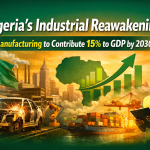
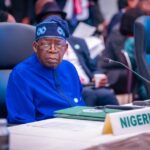
 The recent appeal by the Manufacturers Association of Nigeria (MAN) for the approval of a ₦1 trillion stabilisation fund from the Federal Government has sparked a heated debate among economic experts, accountants, and private sector stakeholders. While MAN insists the fund is essential to cushion the effects of high interest rates and production costs, critics argue that the association’s request raises deeper concerns about financial discipline, transparency, and innovation within the manufacturing sector.
At a media briefing in Lagos, Segun Ajayi-Kadir, Director-General of MAN, reaffirmed the association’s call for the fund, saying it would help stabilise industrial production and protect jobs. He confirmed that the ₦75 billion loan earlier disbursed under the Federal Government’s Presidential Palliative Programme had been fully utilised by members.
“We fully utilised the opportunities granted by the memorandum of understanding with the government. I can confirm to you that the ₦75bn has been fully disbursed, and our members were involved in the process,” Ajayi-Kadir stated, adding that the association’s efficient handling of the earlier loan demonstrates readiness to manage larger interventions.
But not everyone is convinced. Dr. Celestine Ukpong, an economic analyst, said the call for a ₦1tn bailout fund exposes a lingering culture of dependency within the manufacturing sector.
“This is not about whether manufacturers deserve support, it’s about the sustainability of that support. MAN needs to prove performance before asking for more. If you’ve managed ₦75 billion successfully, then show measurable results, job creation numbers, output data, export growth. Without that, asking for ₦1 trillion looks like another attempt to share the ‘national cake,’” Ukpong said.
He added that the manufacturing sector’s heavy reliance on government bailouts instead of market-based funding strategies raises concerns about competitiveness.
“If the Dangote Group, BUA, and even mid-sized firms can raise capital through the debt and bond markets, what stops MAN members from doing the same?” Ukpong questioned. “Government intervention should be strategic and conditional, not habitual.”
Similarly, Peter Adebayo, a chartered accountant and financial governance consultant, criticised MAN’s over-dependence on public funds, calling for a stronger shift toward private-sector credit systems and transparent fund utilisation mechanisms.
“The real issue isn’t access to capital, it’s how capital is managed. We’ve seen institutions waste interventions because there’s no accountability structure. MAN should explore debt instruments, commercial papers, or syndicated loans through the Bank of Industry rather than depending solely on government grants,” Adebayo noted.
He emphasised that before any ₦1 trillion fund is approved, MAN must present a performance audit report showing how the ₦75bn earlier disbursed improved productivity or expanded manufacturing capacity.
Ajayi-Kadir, however, maintained that current borrowing costs in the banking system — averaging over 30 per cent, have made it nearly impossible for manufacturers to access commercial loans. “Many of our members have cut back on borrowing because of the interest burden. The stabilisation fund will offer a lifeline for survival,” he said.
MAN also urged the Federal Government to increase the capital base of the Bank of Industry (BOI) and establish a Manufacturing Refinancing and Rediscounting Facility that would allow banks to refinance approved manufacturing loans at single-digit rates for up to seven years.
To promote accountability, the association recommended creating a publicly accessible lending dashboard to track disbursements, loan approvals, and interest rate spreads in real time.
But economists insist that Nigeria’s manufacturing revival cannot rely solely on more funding. The true challenge lies in addressing inefficiencies, energy costs, and policy inconsistencies that continue to undermine productivity.
As Adebayo put it, “You don’t solve a structural problem by throwing money at it. You solve it by enforcing discipline, transparency, and long-term industrial planning. That’s what Dangote did, and that’s why investors trust his balance sheet.”
For many industry watchers, MAN’s request has reignited the broader conversation about whether Nigeria’s manufacturing sector wants sustainable growth, or just another slice of the national cake.
Experts Celestine Ukpong and Peter Adebayo challenge MAN’s ₦1tn stabilisation fund request, urging the association to show results and explore debt markets like Dangote Group instead of relying on government bailouts.
Discover more from Ameh News
Subscribe to get the latest posts sent to your email.