 Nigeria’s telecoms sector—once a fast-growing frontier business—is now a crucial backbone of the digital economy. Between the Buhari and Tinubu administrations, the industry has shifted from rapid scale expansion to quality-led growth. But rising macroeconomic pressure under Tinubu threatens to stall some of the hard-earned gains.
Buhari Years: Building the Foundation
From 2015 to 2023, under President Muhammadu Buhari, Nigeria’s telecommunications industry experienced a period of highly aggressive growth — driven by major capital investments, subscriber expansion, and soaring economic contribution.
- By 2021, total investment (domestic CAPEX + foreign) in the telecom sector had reached US$ 75.6 billion, according to the Nigerian Communications Commission (NCC).
- Telecoms played a growing role in the national economy. According to NCC Executive Vice Chairman Prof. Umar Danbatta, the sector’s contribution to Nigeria’s GDP climbed from roughly 8.5% in 2015 to 15% in Q2 2022, with quarterly contributions of ₦2.593 trillion.
- In 2022, the sector contributed an aggregate ₦10.126 trillion to GDP.
- By 2023, in nominal (current price) terms, the telecom sector added ₦25.22 trillion to Nigeria’s GDP — a striking increase of ₦8.44 trillion over 2022.
- Beyond its direct output, the telecom ecosystem’s broader value (including productivity gains in other sectors) was estimated at ₦33 trillion in 2023, with ₦2.4 trillion paid in taxes, according to GSMA.
Expert Reflection
Telecom policy analyst Engr. Chigozie Aroh reflects on this era:
“That period was the fastest telecom expansion in Nigeria’s history — network rollout was aggressive, investments were strong, and consumer demand kept rising.”
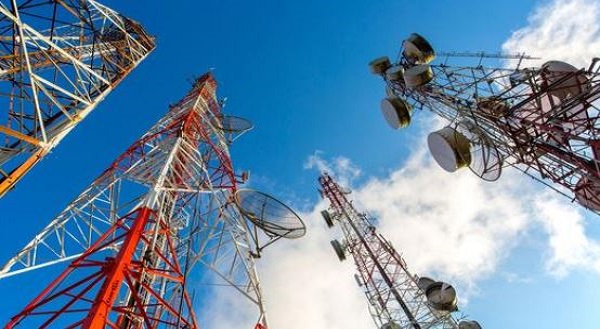
Under Buhari, the telecoms architecture was built: more masts, more fibre, and a mass market of mobile users. The foundation was laid.
Tinubu Era: Improving Quality, Battling Economics
When President Bola Ahmed Tinubu took office in mid-2023, the telecom industry entered a new phase — one focused less on scale and more on resilience, quality, and sustainability.
Economic Performance & Value
- According to NCC’s 2023 year-end report, telecom operators earned ₦5.3 trillion in revenue that year.
- The sector’s GDP share in 2023 was reported at 13.5%, according to NCC.
- On the macro side, ongoing regulatory reforms by the NCC aim to raise the annual telecom sector contribution to US$ 25 billion in the medium term.
- Meanwhile, the broader ICT sector (of which telecoms is the largest component) contributed 17.68% to GDP in Q4 2024, with telecoms alone accounting for 14.4%.
Financial Pressures & Cost Headwinds
Despite growth in revenue and usage, telecom operators face intense financial pressure:
- Operating costs are ballooning. The NCC report shows operators spent ₦3.158 trillion on operating expenses in 2023.
- Domestic CAPEX remained strong: the NCC report states ₦990.55 billion was spent in 2023.
- But foreign direct investment (FDI) into the sector collapsed sharply: in 2023, FDI inflow was only about US$ 134.8 million, down from US$ 399.9 million in 2022.
Expert Voices
- Telecom economist Mariam Okezie warns:“We are seeing real improvements in network experience, but the financial underpinnings are fragile. If macro conditions don’t get better, network expansion could stall.”
- Telecommunications engineer Dr. Tunde Aina emphasizes:“Technically, things have improved since 2021 – users in rural areas are seeing faster speeds and more reliability. But sustaining that depends on stable capital.”
Policy Shift: From Expansion to Sustainment
Under Tinubu, regulatory focus has shifted significantly. Rather than just pushing for coverage, the NCC (led by its reformed leadership) is prioritizing long-term sustainability: ensuring operators can afford to maintain and upgrade networks, not just build them.
- According to industry consultant Ikenna Obioha:
“The debate is no longer solely about coverage or 5G. It’s about ensuring that telcos survive financially while continuing to invest. The regulator has to help create a cost-reflective, investor-friendly climate.”
- NCC reforms under Executive Vice Chairman Aminu Maida (appointed in October 2023) are designed to boost transparency, support infrastructure sharing, and strengthen digital inclusion initiatives.
Persistent Risks Despite Gains
Some challenges remain stubbornly persistent across both administrations:
- High Power Costs: Telecom base stations still rely heavily on diesel generators.
- Vandalism / Right-of-Way Issues: Physical damage to fibre ducts and lengthy permitting continue to drive up cost.
- Cable Vulnerability: Undersea cable cuts remain a frequent risk, threatening national connectivity.
- Capital Strain: The sharp rise in equipment costs (especially due to forex devaluation) threatens future rollouts.
Key Takeaways
- Buhari’s Legacy: Massive investments (US$ 75.6B), huge GDP contributions (₦25.2T in 2023), and a broad telecom ecosystem (₦33T value ecosystem) built the foundation.
- Tinubu’s Era: Focus is on quality over quantity — 2023 revenue hit ₦5.3T, but rising costs and low FDI raise serious risks.
- Policy Pivot: The NCC is pushing reforms to make telecom investments more sustainable; projected long-term contribution could reach US$ 25B annually.
- Fragile Progress: Improved network quality and rural coverage are real, but economic instability could undermine future growth.
- Strategic Sector: Telecoms remains a key pillar of Nigeria’s digital economy, but its future depends on macro stability, regulatory support, and capital sustainability.
Discover more from Ameh News
Subscribe to get the latest posts sent to your email.