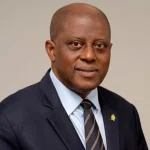
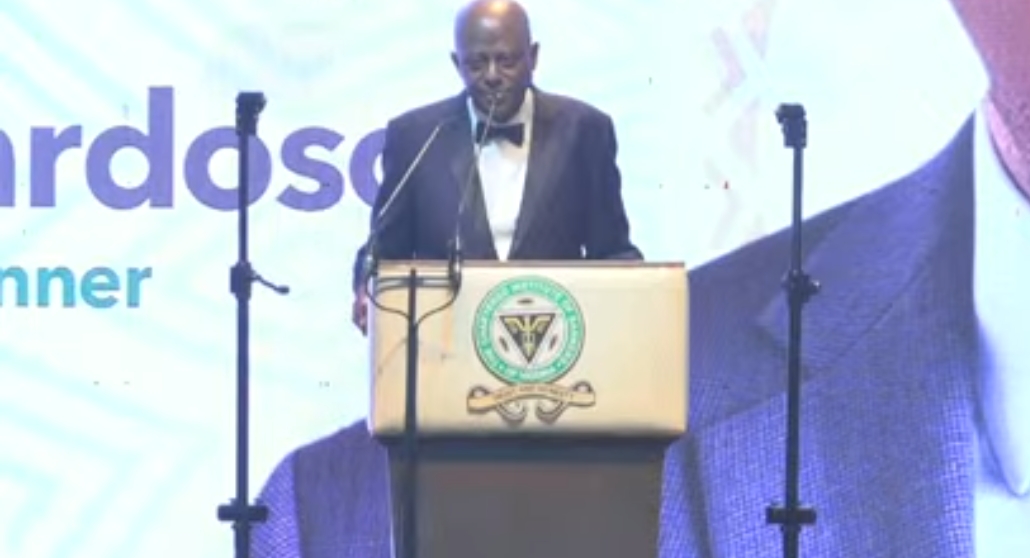
 The Governor of the Central Bank of Nigeria (CBN), Mr. Olayemi Cardoso, has declared that Nigeria is witnessing one of its most decisive periods of economic recovery in decades, following sweeping monetary and structural reforms implemented over the last year. Cardoso made this known on Friday at the 60th Annual Bankers’ Dinner of the Chartered Institute of Bankers of Nigeria (CIBN), where he delivered a landmark keynote that assessed the nation’s economic transformation from November 2024 to date.
Addressing an audience of industry leaders, policymakers, and financial professionals, Cardoso said the CBN has moved Nigeria “from the edge of a macroeconomic cliff” to a path of stability, transparency, and renewed investor confidence. He described the turnaround as the result of “difficult, disciplined choices” anchored on orthodox monetary policy and institutional rebuilding.
Nigeria’s Economic Rebirth After a Period of Distress
Cardoso reminded stakeholders that upon assuming office, the apex bank inherited severe distortions—ballooning inflation, FX scarcity, a $7 billion backlog of unmet FX obligations, low reserves, a collapsing exchange rate system, and broken confidence in economic management.
According to him, “This was not a nation approaching crisis. It was a nation that had already gone over the cliff.”
However, he noted that within 12 months, Nigeria has moved from crisis management to measurable stability, with GDP accelerating to 4.23% in Q2 2025, the fastest in four years, driven by telecoms, finance, and improved oil output.
Disinflation Taking Hold, Monetary Policy Regains Credibility
Inflation, once as high as 34.6% in November 2024, has now fallen for seven consecutive months to 16.05% in October 2025, with food inflation dropping sharply to 13.12%.
Cardoso attributed this improvement to halting monetary financing of deficits, improved liquidity management, and the ongoing transition to an inflation-targeting framework. He said inflation will continue to moderate through 2026 as reforms deepen.
FX Market Transformation and Record Investor Confidence
Perhaps the most celebrated achievement, Cardoso said, is the complete clearing of the multi-billion-dollar FX backlog and the unification of Nigeria’s fragmented FX windows.
With the introduction of the Nigerian Foreign Exchange Code and the Bloomberg-powered Electronic Foreign Exchange Management System (EFEMS), market transparency has improved significantly, shrinking the disparity between the official and parallel markets to below 2%, down from over 60%.
Foreign capital inflows surged to $20.98 billion in the first 10 months of 2025—over four times the inflows of 2023—while remittances grew by 12%.
Nigeria’s external reserves now stand at $46.7 billion, the highest level in nearly seven years.
Rating Agencies Validate Nigeria’s Reform Path
Global rating agencies have responded positively to Nigeria’s reforms:
- Fitch upgraded Nigeria from B- to B (Stable)
- Moody’s raised its rating to B3
- S&P revised Nigeria’s outlook to Positive
The CBN Governor also celebrated Nigeria’s successful $2.35 billion Eurobond issuance, which attracted $13 billion in investor orders—the largest order book in the nation’s history.
Banking Sector Recapitalisation Ahead of Schedule
Cardoso reported steady progress in the ongoing recapitalisation drive, with 16 banks already meeting or surpassing new capital requirements ahead of the March 31, 2026 deadline.
To reinforce stability, the CBN has strengthened supervision, updated cash-management protocols, enforced stricter ATM servicing rules, and tightened oversight of POS agents and digital lenders.
Fintech Leadership, Digital Payments Expansion, and FATF Grey-List Exit
Nigeria remains Africa’s fintech powerhouse, with over 12 million contactless cards, more than 40 startups in the CBN’s regulatory sandbox, and multiple apps surpassing 10–50 million downloads.
Cardoso described Nigeria’s exit from the FATF grey list as one of the year’s most important achievements—one that restored credibility and unlocked smoother cross-border financial flows.
Financial Inclusion Progress
Financial inclusion now stands at 74%, approaching global standards, supported by over 3 million agent bankers nationwide. New initiatives—including a Women’s Financial Inclusion Dashboard and a roadmap for displaced persons—aim to deepen participation for underserved groups.
A New Era of Policy Discipline and Coordination
Cardoso reaffirmed the CBN’s commitment to orthodox, data-driven policymaking and announced a permanent end to deficit monetisation. Stronger alignment with fiscal authorities, he said, has improved liquidity, reduced borrowing costs, and stabilised macroeconomic indicators.
He concluded by urging financial institutions to sustain their partnership with the apex bank as Nigeria enters 2026 “with a clearer vision, stronger institutions, and a more resilient economic foundation.”
CBN Governor Olayemi Cardoso announces Nigeria’s strongest economic turnaround in years at the 2025 CIBN Annual Bankers’ Dinner, highlighting falling inflation, FX reforms, rising reserves, recapitalisation progress, and renewed investor confidence.
Discover more from Ameh News
Subscribe to get the latest posts sent to your email.