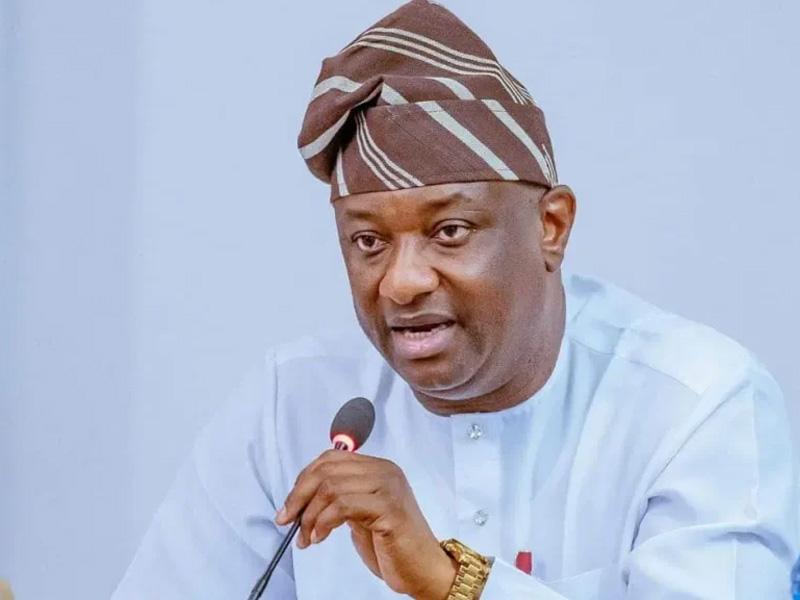
 The Minister of Aviation and Aerospace Development, Festus Keyamo, has restated that the Federal Government has no legal or economic authority to regulate domestic airfares, insisting that the sector has operated under a free-market structure for more than three decades.
Keyamo made the position clear in an Arise News interview, following nationwide uproar over the steep rise in flight ticket prices across domestic routes.
According to him, the deregulation of Nigeria’s aviation sector dates back to the era of former military president Ibrahim Babangida, when private airlines were allowed into the market, effectively liberalising pricing and competition.
“Once the Babangida administration opened the skies to private airlines, pricing became fully deregulated,” Keyamo said.
“The government has absolutely no powers to fix prices for private enterprise, including the aviation industry.”
His remarks come on the heels of some fares reportedly increasing by more than 300%, prompting the Senate’s decision to summon the Minister, the NCAA, and other regulators to explain the surge.
Feature Analysis: Understanding the Economics Behind the Spike
While many travellers argue that the current fares are outrageous, aviation analysts say the situation is a complex interplay of economic realities, seasonal behaviour, and long-standing structural deficiencies.
Alex Nwuba: “This is not exploitation; it is basic economics.”
Aviation expert and President of the Aircraft Owners and Pilots Association of Nigeria, Dr. Alex Nwuba, told Arise News that the December surge is neither new nor abnormal.
“Every December, prices rise sharply. It’s demand-driven and compensates for low fares during the off-peak months.”
He explained that airline seats are sold through a bucket system, where those who buy early secure cheaper seats, while late bookers — especially during festive seasons — face higher fare classes.
Nwuba noted that many passengers wait until the last minute, causing available seats to move quickly into premium brackets.
Broader Expert Reactions
1. Celestine Ukpong, Economist: “The fare hike reflects the deeper inflationary pressures in the economy.”
Economist Celestine Ukpong argues that aviation pricing cannot be examined in isolation from the broader macroeconomic environment.
“Air travel depends heavily on dollar-priced inputs—fuel, maintenance, insurance. With the naira consistently under pressure, operating costs climb sharply. Airlines are simply passing costs down the line.”
Ukpong added that unless Nigeria stabilises its exchange rate and reduces cost-push inflation, airfare volatility will persist.
2. Peter Adebayo, FCA: “Multiple aviation charges are choking the industry.”
Financial expert and chartered accountant Peter Adebayo, FCA, believes that Nigerians underestimate the burden of aviation taxes and statutory charges airlines must pay.
“From landing fees to navigational charges, parking fees, and regulatory levies — Nigerian airlines face multiple layers of cost that airlines in many competitive markets do not deal with. It affects ticket pricing directly.”
Adebayo warned that price control by the government would cripple airline sustainability and lead to mass grounding of fleets.
Deeper Structural Issues
Experts identify several systemic problems hindering the sector:
▪ Very Low Aviation Penetration
Only 0.02% of Nigeria’s population flies regularly. This means airlines cannot achieve economies of scale enjoyed in Europe or the U.S., where annual flight volumes can surpass population size.
▪ High Cost of Jet A1 Fuel
Jet fuel in Nigeria remains about 17% more expensive than global averages, largely due to import dependence and currency fluctuations.
Limited Aircraft Capacity
With fewer operational aircraft than needed, airlines cannot accommodate peak demand without raising prices to manage load factors.
▪ Dollar-Protective Maintenance Regime
Aircraft maintenance, insurance, and spare parts are paid for in U.S. dollars, leaving airlines exposed to exchange rate volatility.
▪ Harsh Operating Environment
Overregulation, multiple charges, infrastructure constraints, and bureaucratic inefficiencies worsen operational costs.
What Experts Say Government SHOULD Do Instead
Rather than regulating fares, experts recommend long-term reforms:
1. Remove or harmonise burdensome aviation taxes.
2. Invest in modern airport infrastructure.
3. Strengthen forex stability to reduce airlines’ dollar exposure.
4. Support aircraft leasing and financing mechanisms.
5. Encourage competition through policy incentives, not price controls.
6. Expand aviation penetration by improving affordability and route development.
Dr. Nwuba put it succinctly:
“It is not the price that is the problem; it is the system. Until the system is reformed, spikes will remain a December tradition.”
The current airfare crisis is not merely a seasonal challenge but a window into the deeper structural fragilities of Nigeria’s aviation sector. While passengers bear the immediate burden, experts insist that sustained reforms — not government price caps — are the real solution to stabilising fares and making aviation accessible for the average Nigerian.
Experts analyse why domestic airfares in Nigeria have surged, as Aviation Minister Festus Keyamo insists the government cannot regulate prices in a deregulated market. Economists and aviation specialists highlight structural inefficiencies, fuel costs, inflation, and seasonal demand as key drivers.
Discover more from Ameh News
Subscribe to get the latest posts sent to your email.