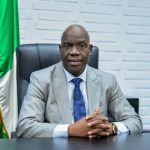
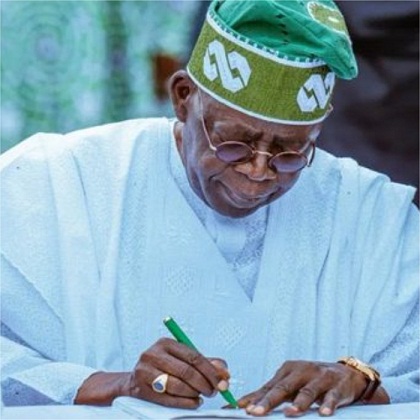
 President Bola Ahmed Tinubu has requested the Senate’s approval for the appointment of two new chief executives to lead Nigeria’s petroleum regulatory agencies following the resignation of Engineer Farouk Ahmed and Mr. Gbenga Komolafe.
In a formal communication read on the floor of the Senate on Wednesday, the President sought expedited confirmation of Oritsemeyiwa Amanorisewo Eyesan as Chief Executive Officer of the Nigerian Upstream Petroleum Regulatory Commission (NUPRC) and Engineer Saidu Aliyu Mohammed as Chief Executive Officer of the Nigerian Midstream and Downstream Petroleum Regulatory Authority (NMDPRA).
The nominations follow the exit of Ahmed and Komolafe, who were appointed in 2021 by former President Muhammadu Buhari to head the two regulators created under the Petroleum Industry Act (PIA). While no official reasons were disclosed for their resignations, analysts believe the changes signal a renewed push by the Tinubu administration to deepen reforms, strengthen regulatory oversight, and improve investor confidence in the oil and gas sector.
Confirming the development, the President’s Special Adviser on Information and Strategy, Mr. Bayo Onanuga, described the nominees as seasoned professionals with extensive industry experience, noting that their appointments align with the administration’s broader economic and energy reform agenda.
Profiles of the Nominees
Oritsemeyiwa Amanorisewo Eyesan, nominated to head the NUPRC, is an accomplished economist and energy professional with nearly 33 years of experience at the Nigerian National Petroleum Company Limited (NNPC) and its subsidiaries. A graduate of Economics from the University of Benin, she retired in 2024 as Executive Vice President, Upstream, having earlier served as Group General Manager, Corporate Planning and Strategy between 2019 and 2023. Her career spans upstream operations, strategic planning, and policy execution within Nigeria’s petroleum industry.
Engineer Saidu Aliyu Mohammed, nominated as CEO of the NMDPRA, is a veteran chemical engineer with deep expertise across Nigeria’s gas, refining, and downstream segments. Born in 1957 in Gombe State, he graduated from Ahmadu Bello University in 1981 with a Bachelor’s degree in Chemical Engineering.
He was recently announced as an independent non-executive director at Seplat Energy and has previously served as Managing Director of Kaduna Refining and Petrochemical Company and the Nigerian Gas Company. He also chaired the boards of the West African Gas Pipeline Company, Nigeria LNG subsidiaries, and NNPC Retail.
As Group Executive Director and Chief Operating Officer, Gas & Power Directorate, Engineer Mohammed provided strategic leadership for major national gas projects and policy frameworks, including the Gas Master Plan, Gas Network Code, and contributions to the Petroleum Industry Act. He played pivotal roles in delivering landmark projects such as the Escravos–Lagos Pipeline Expansion, the Ajaokuta–Kaduna–Kano (AKK) Gas Pipeline, and Nigeria LNG Train projects.
Experts React
Reacting to the development, Celestine Ukpong, an economist, said the leadership changes reflect the President’s intention to align petroleum regulation with his broader economic reform agenda.
“Regulatory certainty is critical for attracting investment into the oil and gas sector,” Ukpong said. “By nominating technocrats with deep industry and policy experience, the Tinubu administration appears focused on restoring investor confidence, improving transparency, and ensuring that the Petroleum Industry Act delivers real economic value.”
Also commenting, Mr. Peter Adebayo, FCA, noted that beyond technical expertise, accountability and financial discipline would be key expectations from the new regulators.
“The upstream and downstream regulators control billions of dollars in assets and revenues,” Adebayo said. “Strong governance, compliance with financial reporting standards, and prudent oversight will be essential if Nigeria is to maximise the fiscal benefits of the PIA and stabilise the energy sector.”
Both experts agreed that timely Senate confirmation and operational independence of the regulators would be crucial to sustaining reforms and unlocking growth across the petroleum value chain.
If confirmed, the new leadership is expected to consolidate ongoing reforms, accelerate implementation of the PIA, and support the government’s objectives of energy security, revenue optimisation, and economic diversification.
President Bola Tinubu has nominated new CEOs for Nigeria’s oil regulators following the resignation of Farouk Ahmed and Gbenga Komolafe. Experts say the move signals deeper petroleum sector reforms and renewed investor confidence.
Discover more from Ameh News
Subscribe to get the latest posts sent to your email.