The Central Bank of Nigeria (CBN) has reaffirmed that cash remains a critical component of Nigeria’s payment ecosystem, even as digital transactions continue to expand rapidly across the country.
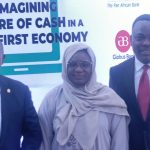
This position was articulated on Thursday, January 23, 2026, at the Annual Conference of the Committee of Heads of Bank Operations (CHBO) held at the Chartered Institute of Bankers of Nigeria (CIBN), Adeola Hopewell, Victoria Island, Lagos. The conference was themed “Re-Imagining the Future of Cash in a Digital-First Economy.”
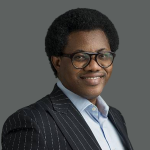
Speaking on behalf of the CBN Governor, Dr. Olayemi Cardoso, the Special Adviser to the Governor, Mr. Fatai Karim, delivered a keynote address that underscored the regulator’s vision of a balanced payment system where physical cash and digital channels coexist and reinforce each other.
Hybrid Payments Now the Reality
To illustrate changing consumer behavior, Cardoso opened with an interactive exercise, asking participants to reflect on their payment choices over the previous week—ranging from smartphone payments and debit cards to online transactions and cash purchases.
The exercise revealed that most Nigerians routinely use multiple payment channels, reinforcing the argument that no single method dominates the system.
“This clearly shows that Nigeria operates a hybrid payment environment,” Cardoso said. “There is no single channel that is not being used for transactions.”
Digital Payments Surge, Cash Also Grows
Drawing from data provided by the Nigeria Inter-Bank Settlement System (NIBSS), the CBN disclosed that digital payment volumes increased by 276 percent over the last five years, while transaction values surged by 581 percent, amounting to over ₦82 trillion.
However, contrary to the assumption that digital payments are replacing cash, the apex bank noted that currency in circulation has continued to rise steadily. Between 2020 and 2025, cash in circulation grew from ₦2.4 trillion to ₦5.1 trillion, reflecting sustained demand for physical money.
“Electronic payments are expanding, but cash is not declining,” Cardoso stated. “Both are growing side by side.”
Evolution, Not Elimination
Cardoso traced the historical evolution of money—from barter systems and coins to paper currency, cards, and digital payments—arguing that each innovation has complemented rather than eliminated previous forms of money.
He highlighted global discussions around central bank digital currencies (CBDCs), including Nigeria’s eNaira, stressing that innovation must enhance resilience, inclusion, and choice within the financial system.
What Makes a Viable Currency
According to him, any viable national currency must meet five core criteria: access, availability, acceptance, authentication, and affection.
“Our currency must be accessible to all, widely accepted, secure against counterfeiting, and inspire national pride,” Cardoso said, adding that the naira continues to meet these standards.
Regulation, Trust, and Infrastructure
Reflecting on reforms undertaken since the last CHBO conference, Cardoso credited improved collaboration between the CBN, deposit money banks, and payment service providers for stabilizing cash management and distribution.
He revealed that the CBN is finalizing new policies aimed at strengthening cash access and infrastructure, including tighter alignment between card issuance and ATM deployment. According to him, banks will no longer be permitted to issue cards without adequate supporting infrastructure.
“The era of issuing cards without sufficient ATM and payment infrastructure is coming to an end,” he said.
Cash Still Central to Inclusion
Despite rapid fintech growth, Cardoso emphasized that cash remains indispensable for informal markets, rural communities, and small businesses. As of December 2025, currency in circulation recorded a 4.6 percent year-on-year increase, underlining its continued relevance.
He noted that cash availability depends not only on currency issuance but also on logistics, infrastructure, and coordination across the financial system.
A Balanced Path Forward
The CBN concluded that Nigeria’s payment future will not be defined by a choice between cash and digital payments, but by a deliberate integration of both.
Electronic and digital channels will continue to drive efficiency and transparency, while cash will remain a trusted and stabilizing medium of exchange.
“The future of money in Nigeria is not digital or physical,” Cardoso said. “It is both.”
At the CHBO 2026 conference in Lagos, the Central Bank of Nigeria says cash remains vital despite rapid growth in digital payments, outlining a hybrid payment future that balances innovation, trust, and financial inclusion.
Discover more from Ameh News
Subscribe to get the latest posts sent to your email.