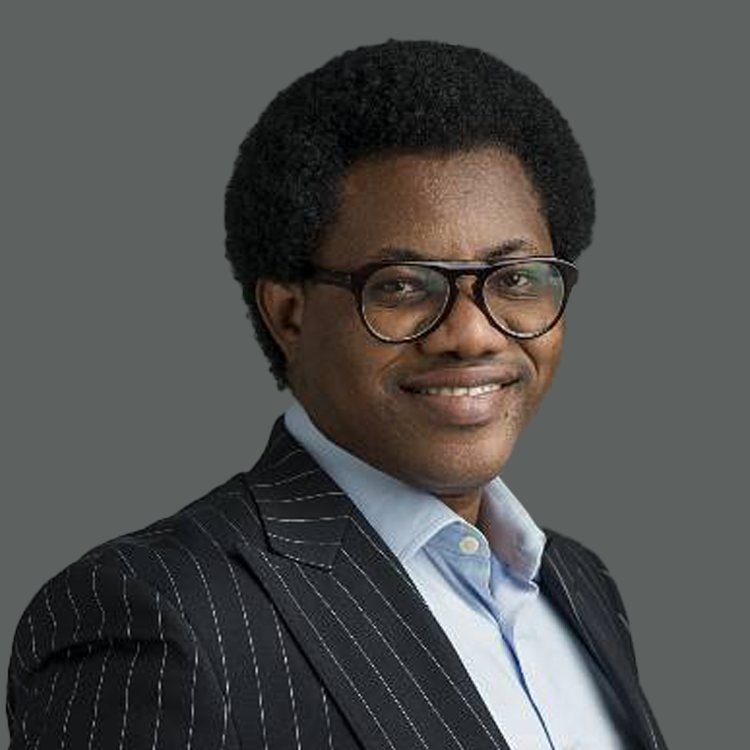
 LLOYD ONAGHINON, CEO Bankers Warehouse Limited
The future of physical cash in Nigeria’s fast-evolving digital economy came under intense scrutiny on 23 January 2026, as banking operations leaders, regulators and financial infrastructure experts gathered at the Chartered Institute of Bankers of Nigeria (CIBN), Adeola Hopewell, Victoria Island, Lagos, for the Annual Conference of the Committee of Heads of Bank Operations (CHBO).
Held under the theme “Re-Imagining the Future of Cash in a Digital-First Economy,” the conference provided a timely platform to reassess Nigeria’s monetary direction amid accelerating electronic payments, fintech innovation and the global debate on digital currencies.
The conversation was anchored by Mr. Lloyd Onaghinon, Managing Director/Chief Executive Officer of Bankers Warehouse Plc, who delivered the opening session titled “Cash as a Cultural Artifact: Will It Ever Disappear?” His presentation blended policy insight, economic theory and decades of practical experience across Nigeria’s financial services ecosystem.
A Career Rooted in Nigeria’s Financial Evolution
Before joining Bankers Warehouse, Onaghinon built a career spanning small, medium and large multinational corporations across key sectors of the Nigerian economy. His work has involved financing and advisory roles in fast-moving consumer goods (FMCG), telecommunications, media, technology, retail, hospitality, and other critical industries.
These experiences have seen him serve on various corporate boards and advisory committees, shaping strategy, governance and sector development. He holds a degree in Economics from the University of Lagos and a Master’s degree in Finance and Management from Cranfield University, United Kingdom.
Onaghinon is a Fellow of the Institute of Chartered accountant of Nigeria, an Associate Member of the institute of Taxation of Nigeria, and an Honorary Senior Member of the Institute of Bankers of Nigeria. His professional journey has also taken him through executive programmes at Harvard Business School, London Business School, the University of Cape Town, the Gordon Institute of Business Science.
He is also a Cheiveng alumnus and an alumnus of the prestigious International Visitors Leadership Program (IVLP) and has played active roles in sector-building initiatives, including the early formation of the Africa Venture Capital Association, the development of the Equipment Leasing Association of Nigeria, and policy-shaping engagements with regulators that influenced the evolution of credit bureaus in Nigeria.
Collectively, these experiences, he said, have shaped his understanding of how finance, policy and real-sector activity intersect—and why simplistic narratives around “ending cash” often fail.
In his address, Onaghinon traced the evolution of money from the gold-backed era to today’s fiat systems, noting that modern currencies are underpinned not by commodities but by law and trust. He explained that every form of money—physical, electronic or digital—derives its legitimacy from legal frameworks.
“Cash,” he argued, “remains the substructure upon which electronic money and emerging digital currencies are built.” Cards, transfers and mobile payments represent electronic derivatives of cash, while cryptocurrencies, stablecoins and tokenised assets represent a further digital evolution.
The real debate, he stressed, is not cash versus technology, but the interaction between physical currency, electronic payments and digital currencies—and how these layers coexist within a regulated monetary system.
Generational Shifts, But Not Cash Extinction
Onaghinon acknowledged generational changes in payment behaviour. While older Nigerians grew up transacting almost exclusively in cash, younger, urban populations increasingly rely on transfers, cards and mobile devices. Yet, he cautioned that behavioural change does not equate to cash irrelevance.
“Some countries have tried to eliminate cash privately—and failed,” he warned, urging Nigeria to avoid abrupt transitions that could destabilise commerce and trust.
The Economics Behind the Debate
Drawing on the quantitative theory of money (MV = PT) popularised by economist Milton Friedman, Onaghinon explained that inflation, output and economic growth are functions of money supply and velocity. In a fiat system driven by fractional reserve lending, commercial banks—not just central banks—play a central role in money creation through lending.
He highlighted a critical policy challenge: digital currencies currently fall outside traditional definitions of money supply (M0–M3), complicating central banks’ ability to manage macroeconomic stability. This, he noted, explains the growing global interest in Central Bank Digital Currencies (CBDCs).
“If central banks do not evolve,” he cautioned, “anyone can issue currency—and that leads to chaos.”
Global and Nigerian Data: Cash Is Still Growing
Using global and Central Bank of Nigeria (CBN) data, Onaghinon challenged the assumption that cash is declining. Globally, he said, physical cash in circulation grew from about $1–1.5 trillion a decade ago to nearly $9 trillion by 2025, consistently outpacing global GDP growth.
In Nigeria, the data is even more striking. Following the 2022 naira redesign, cash in circulation dropped sharply to about ₦900 billion by early 2023, before rebounding to nearly ₦5 trillion—a 455 percent increase.
However, a worrying trend emerged: much of this cash remains outside the banking system, weakening monetary policy transmission and increasing economic risk.
“Cash is meant to circulate through banks,” he said. “When it stays outside, trust erodes, policy weakens, and the economy becomes harder to manage.”
A Call for Collaboration, Not Conflict
Onaghinon stressed that the solution lies in collaboration—between banks, cash-in-transit (CIT) companies, regulators and policymakers. Rather than viewing cash as an enemy of innovation, he urged stakeholders to optimise the balance between cash, electronic payments and digital currencies, taking into account literacy levels, rural demographics and inclusion goals.
He also pointed to renewed global interest in gold reserves as a store of value and a confidence booster for fiat currencies, noting that stronger reserves enable central banks to support growth without undermining trust.
Re-Imagining, Not Eliminating Cash
By the close of the session, a clear consensus had emerged: Nigeria’s journey to a $1 trillion economy cannot ignore the structural role of cash. Attempts to suppress cash growth without addressing economic fundamentals risk repeating past dislocations.
The challenge, participants agreed, is not whether cash should disappear, but how it can be better integrated, efficiently recycled through the banking system, and aligned with digital innovation.
As the CHBO Annual Conference concluded, Onaghinon’s message resonated strongly:
the future of money in Nigeria is hybrid, collaborative and grounded in economic reality—not ideology.
At the CHBO Annual Conference in Lagos, Bankers Warehouse CEO Lloyd Onaghinon delivered a data-driven analysis of cash, digital payments and monetary policy, arguing that Nigeria’s digital future must still be anchored on trust, inclusion and economic fundamentals.
Discover more from Ameh News
Subscribe to get the latest posts sent to your email.