The Nigeria Deposit Insurance Corporation (NDIC) has intensified efforts to reinforce trust in Nigeria’s financial system, combining grassroots engagement with a high-level stakeholders’ meeting held Saturday, February 14, 2026, in Lagos—an initiative widely viewed by industry observers as critical to strengthening confidence in deposit protection and banking stability.
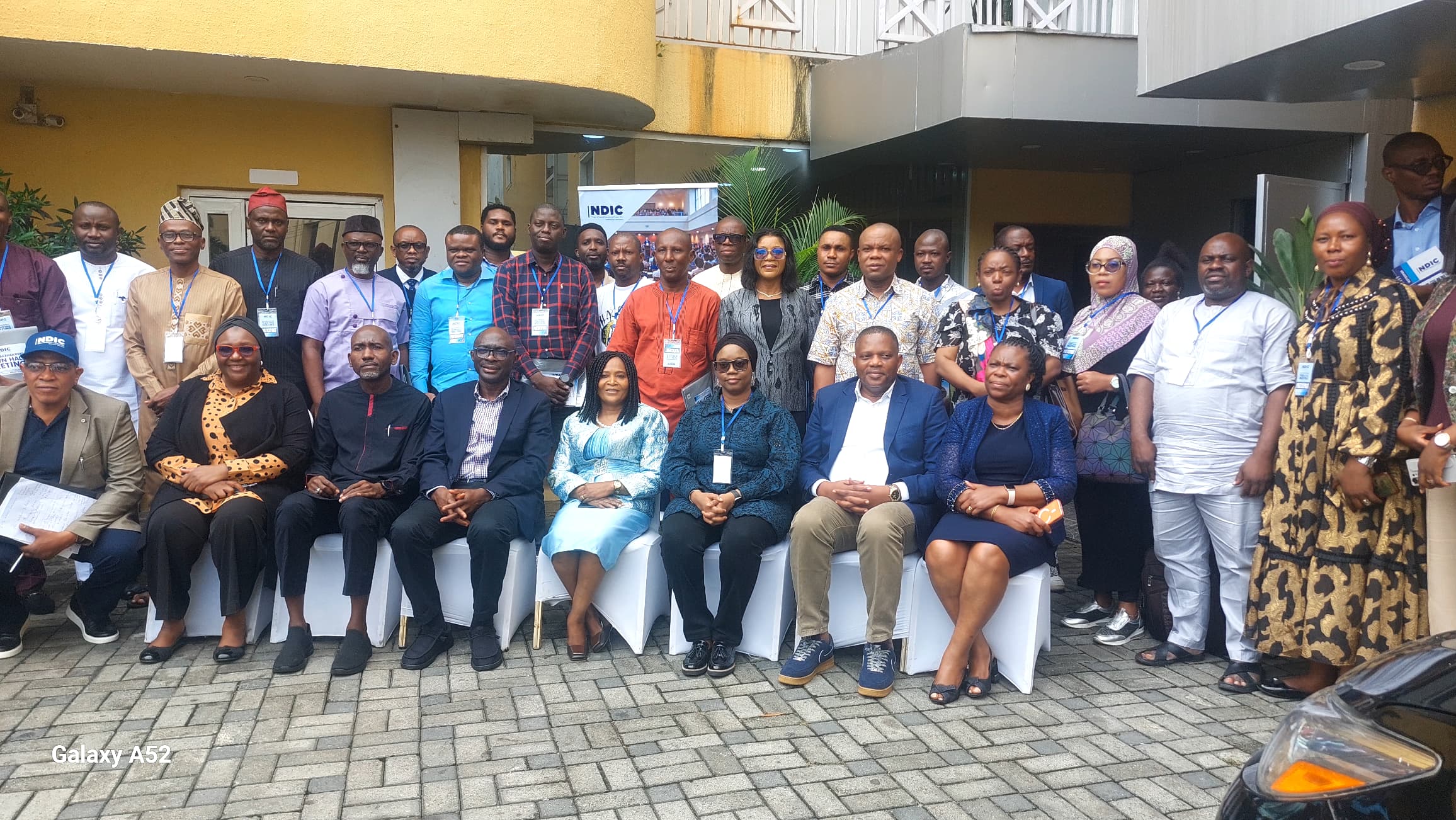
The 2026 stakeholders’ engagement at the prestigious Beni Gold Hotel, located within Parkview Estate, Ikoyi—one of Lagos’ most prominent residential and commercial districts. The gathering brought together regulators, financial institutions, policymakers, consumer advocates, academia, civil society groups, and the media to deliberate on depositor protection, financial literacy, and the resilience of Nigeria’s banking architecture.
This engagement builds on NDIC’s ongoing grassroots town hall initiatives designed to correct misconceptions surrounding the Deposit Insurance System (DIS), expand public awareness of insurance coverage, and reassure depositors of the safety of their funds within licensed financial institutions.
At Lagos town hall, NDIC leadership—represented by the Director of the Bank Examination Department, Adeyinka Olukoya, on behalf of the Managing Director/Chief Executive, Thompson Sunday—emphasised that many Nigerians remain uncertain about the scope and limitations of deposit insurance, including what deposits are covered, procedures following bank closure, and how reimbursement is processed after licence revocation.
He explained that NDIC has strengthened depositor protection, with insurance coverage now set at ₦5 million for customers of deposit money banks, mobile money operators, and non-interest banks, while depositors in microfinance banks, primary mortgage institutions, and payment service banks are insured up to ₦2 million. The enhanced framework, he noted, protects about 99 per cent of depositors nationwide.
According to NDIC, insured deposits are paid promptly once a bank fails. Customers with balances exceeding insured thresholds receive the guaranteed sum first, while outstanding balances are recovered and paid as liquidation dividends after asset realisation and debt recovery. The Corporation also continues to improve payout efficiency and has urged depositors to ensure their Bank Verification Number (BVN) is properly linked to their accounts for seamless reimbursement.
Director of Asset Management, Patricia Okosun, said the stakeholders’ engagements reflect NDIC’s statutory mandate to safeguard depositors’ funds and sustain public confidence in the financial system. She noted that beyond prompt insured payments, NDIC actively pursues asset recovery to secure additional dividends for depositors with balances above insured limits, while also deepening financial literacy through interactive public forums nationwide.
Further insight from NDIC’s Head of Communication and Public Affairs, Hawwau Gambo, indicates that recent regulatory actions within the banking sector—including licence revocations, depositor reimbursements, and ongoing recapitalisation efforts—have heightened public interest and, in some cases, generated uncertainty. She stressed that sustained stakeholder dialogue remains essential for providing clarity, countering misinformation, and strengthening depositor confidence.
With the February 14, 2026 high-level meeting in Lagos, NDIC is positioning stakeholder collaboration, transparency, and public enlightenment as central pillars for safeguarding savings and ensuring long-term stability in Nigeria’s banking system.
Nigeria Deposit Insurance Corporation fixes February 14, 2026 Lagos stakeholders’ meeting to boost depositor protection, improve insurance awareness, and strengthen confidence in the banking system.
Discover more from Ameh News
Subscribe to get the latest posts sent to your email.