 Forty-five years after the formation of the Nigerian National Petroleum Company Limited (NNPCL), the nation’s oil champion is reflecting on a journey marked by ambition, challenge, and transformation. Founded in 1977, NNPCL has overseen Nigeria’s oil and gas industry, navigating operational hurdles, infrastructural deficits, and complex joint ventures with global oil majors.
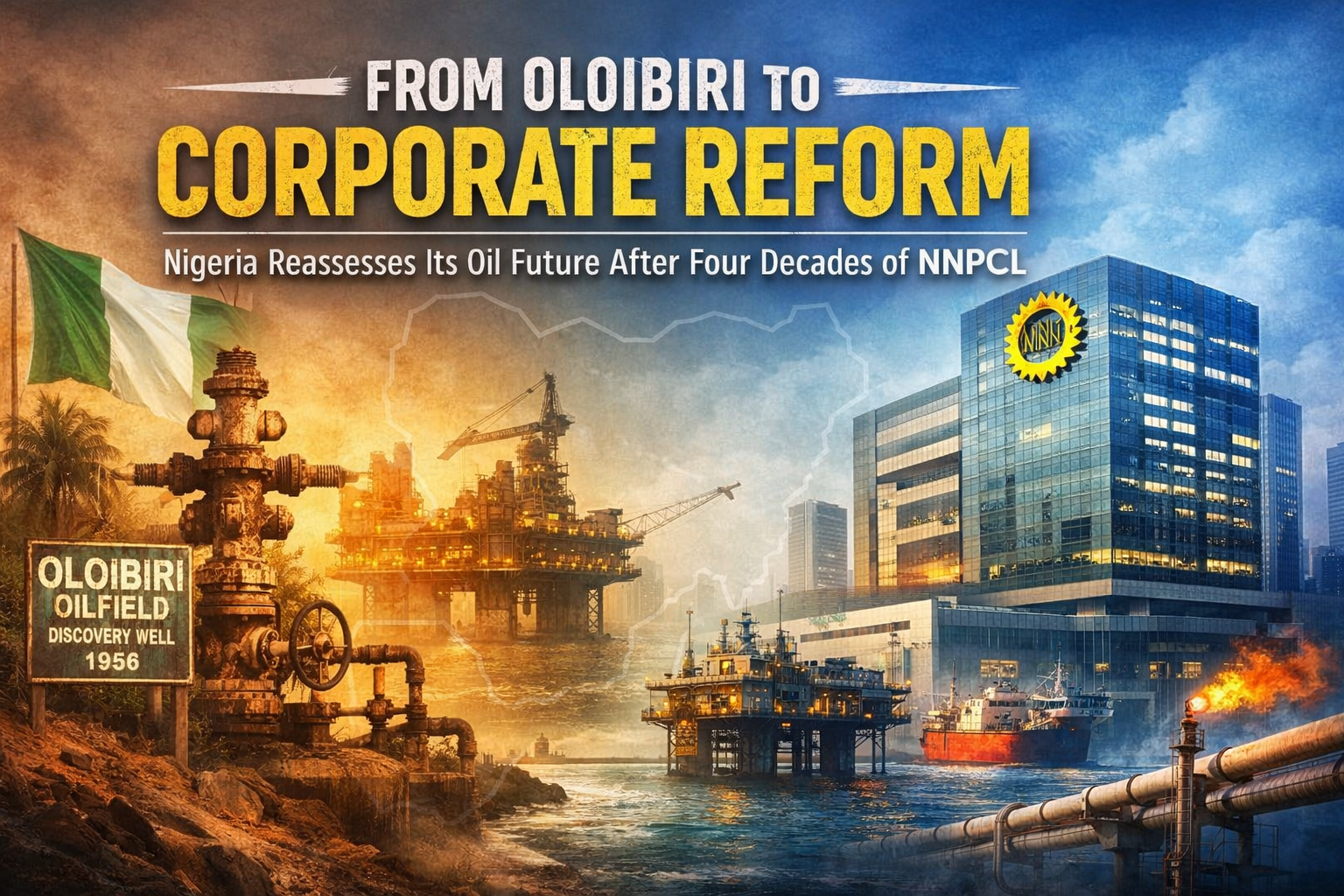
Nigeria’s oil story began much earlier, in 1956, with the discovery of crude at Oloibiri, leading to the first exports in 1958. NNPCL emerged two decades later to consolidate Nigeria’s vast hydrocarbon resources, managing upstream, midstream, and downstream operations. However, unlike its Brazilian counterpart, Petrobras, which began operations in 1953 and rapidly developed deepwater expertise, NNPCL’s path has been shaped by partnership-driven growth and domestic infrastructural constraints.
Throughout the 1980s and 1990s, NNPCL expanded its operational units to cover refining, transport, marketing, and petrochemicals. Yet, ageing refineries and pipeline disruptions often limited its impact on domestic fuel security. Meanwhile, Petrobras was making global headlines, pioneering offshore exploration and technology, and setting benchmarks in profitability and efficiency.
Experts now say the Petroleum Industry Act (PIA) has been pivotal in repositioning NNPCL. By incorporating the company as a limited liability entity in 2022, Nigeria aims to transition from a state‑operated oil monopoly to a commercially driven enterprise capable of attracting private investment and improving operational transparency.
Economist Celestine Ukpong reflects, “NNPCL has historically been the backbone of Nigeria’s oil economy, but the real test is in its ability to combine governance reforms with technological adoption to match international standards like Petrobras.”
Financial analyst Peter Adebayo, FCA, adds, “Comparatively, Petrobras’ early start and international expansion gave Brazil a strategic advantage. NNPCL is now leveraging reforms to modernize operations, increase crude output, and strengthen gas infrastructure, positioning Nigeria to better compete on the global energy stage.”
Today, NNPCL oversees multi-trillion-naira operations, including ongoing upstream production targets of 1.8–2 million barrels per day and expanding gas infrastructure such as the Ajaokuta–Kaduna–Kano (AKK) pipeline, critical for industrialization. As Petrobras eyes a return to Nigerian deepwater acreage, the synergy between local capability and global expertise may define the next chapter for Nigeria’s energy sector.
Reflecting on decades of growth, setbacks, and reforms, NNPCL stands at a crossroads: a story of resilience and ambition, where lessons from the past meet strategic modernization for a future that could rival global oil benchmarks.
Explore NNPCL’s 45-year journey in Nigeria’s oil sector, its transformation under the Petroleum Industry Act, and a comparison with Petrobras’ global oil leadership, highlighting milestones, challenges, and future prospects.
Discover more from Ameh News
Subscribe to get the latest posts sent to your email.