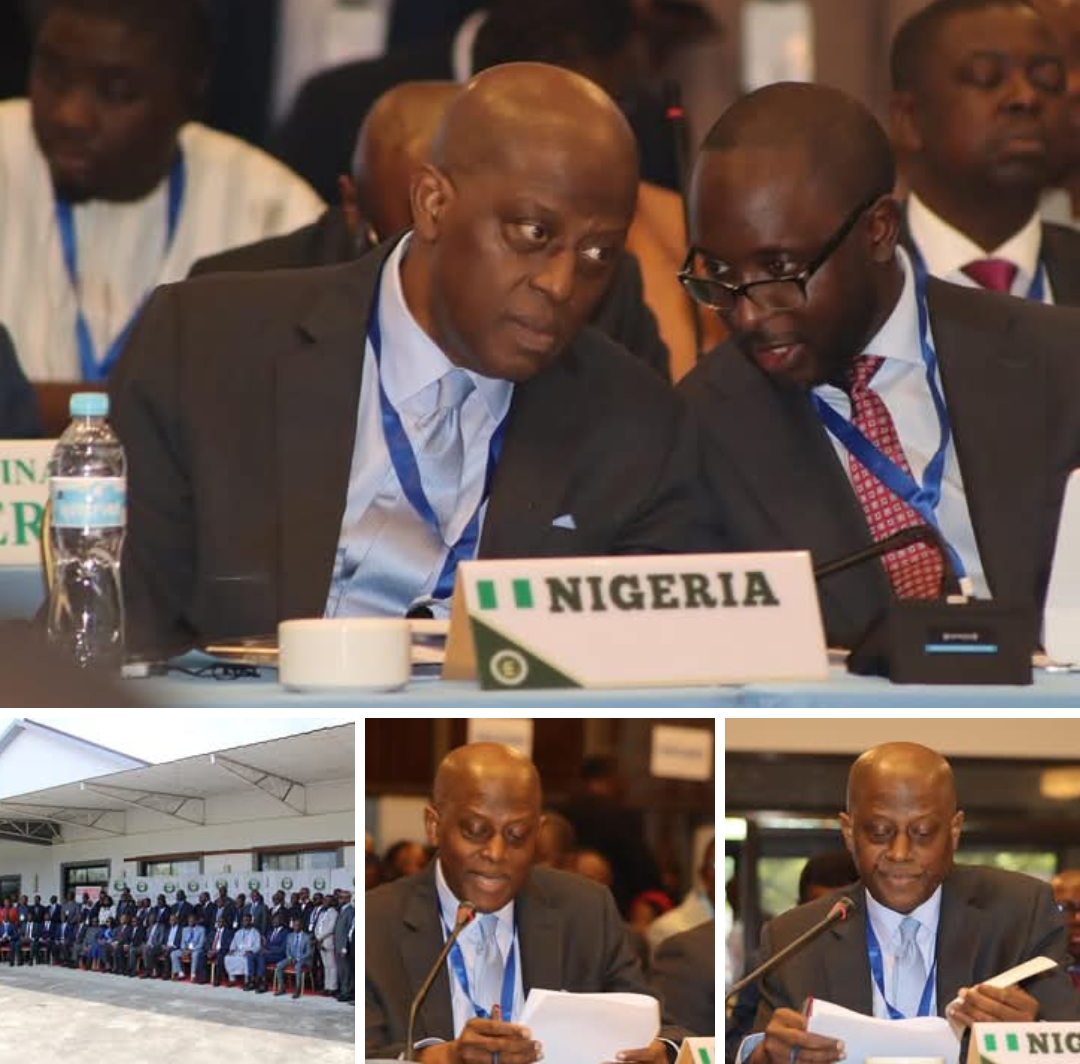
 The Governor of the Central Bank of Nigeria, Olayemi Cardoso, has reaffirmed Nigeria’s strategic commitment to regional monetary integration after leading the country’s delegation to the Committee of Governors Meeting held in Monrovia, Liberia.
Cardoso was accompanied by the CBN Deputy Governor (Economic Policy), Muhammad Sani Abdullahi, alongside other senior monetary authorities, as West African policymakers intensified consultations on the proposed single regional currency, the Eco.
The high-level engagement formed part of the statutory meetings jointly convened by the Economic Community of West African States, the West African Monetary Agency, the West African Monetary Institute, and the West African Institute for Financial and Economic Management.
Deliberations centred on macroeconomic convergence, fiscal discipline, inflation control, exchange-rate stability, and financial system coordination—core requirements for launching a unified currency across the sub-region.
Signals emerging from the Monrovia discussions indicate growing political will among participating countries to gradually transition from individual national currencies to the Eco, drawing inspiration from Europe’s monetary integration framework.
If successfully implemented, the single currency is expected to lower transaction costs, deepen intra-regional trade, stabilise exchange-rate volatility, and enhance West Africa’s collective economic bargaining power globally.
Experts React
Reacting to the development, economist Celestine Ukpong described the renewed momentum toward the Eco as “a significant step in West Africa’s long journey toward true economic integration.”
According to him, a successful transition would depend largely on strict compliance with convergence benchmarks, policy credibility, and strong regional institutions capable of managing asymmetric economic shocks among member states.
Similarly, financial expert and chartered accountant Peter Adebayo noted that while the Eco could unlock trade expansion and investment mobility, member countries must first address structural imbalances, public debt pressures, and inflation disparities.
He emphasised that Nigeria’s dominant economic size places a special responsibility on its monetary authorities to ensure stability, transparency, and investor confidence throughout the transition process.
Nigeria’s Strategic Position
For Nigeria—the region’s largest economy—the Eco initiative carries profound implications for monetary sovereignty, inflation management, and financial-sector coordination.
Cardoso’s participation at the governors’ summit underscores the CBN’s intention to shape the region’s future monetary architecture while safeguarding domestic economic resilience.
Outcomes from the statutory meetings are expected to guide the next phase of technical preparation, policy harmonisation, and institutional readiness as West Africa edges closer to one of its most ambitious economic integration projects.
CBN Governor Olayemi Cardoso joins ECOWAS governors in Monrovia to advance the Eco currency plan, as economists warn success depends on convergence, fiscal discipline, and regional stability.
Discover more from Ameh News
Subscribe to get the latest posts sent to your email.