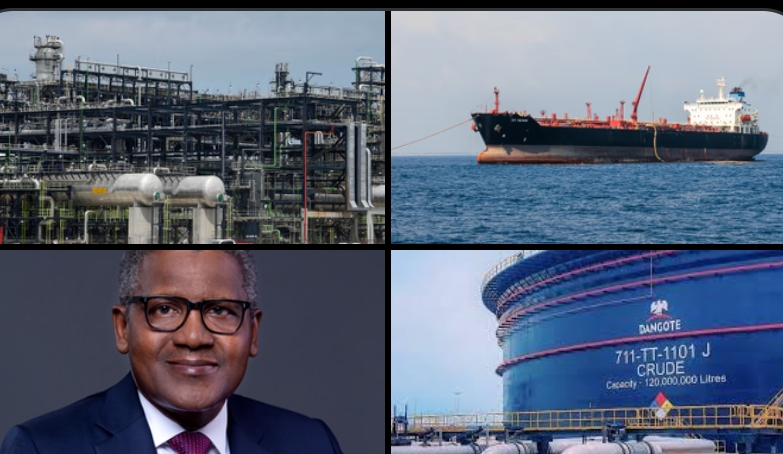
 The Dangote Refinery is preparing for a major escalation in maritime activity as it ramps up full commercial operations, with plans to handle approximately 600 vessels annually in a move that could significantly reshape West Africa’s refined fuel trade.
Chief Executive Officer, David Bird, disclosed that the refinery’s global merchant model is heavily dependent on efficient and large-scale maritime logistics, placing shipping operations at the center of its growth strategy.
Located in the Lekki Free Trade Zone, the refinery—recognized as one of the largest single-train facilities globally—is designed to process substantial volumes of crude oil and supply refined petroleum products to both domestic and international markets. As production scales up, vessel traffic is expected to intensify, underscoring the strategic importance of marine infrastructure and logistics management.
Nearly Two Vessels Daily
Handling 600 vessels annually translates to an average of nearly two ships per day, either delivering crude oil feedstock or lifting refined products such as petrol, diesel, aviation fuel, and other derivatives.
Industry analysts note that managing this scale of marine traffic requires advanced port coordination, streamlined scheduling systems, high-capacity storage facilities, and rapid turnaround mechanisms. The refinery’s deep-water jetty is built to accommodate large crude carriers and product tankers, reinforcing its ambition to function as a regional export hub rather than solely a domestic supplier.
Maritime Logistics as Strategic Backbone
According to Bird, the refinery’s merchant-driven structure means its commercial success is closely tied to the reliability and efficiency of shipping operations. Unlike traditional refineries that operate within narrower domestic supply chains, the Dangote Refinery’s model is outward-facing, targeting regional and global markets.
Energy experts say this positioning gives Nigeria a stronger foothold in international downstream markets, particularly in West Africa, where many countries rely heavily on fuel imports from Europe and other global refining centers.
Fleet Acquisition Under Consideration
In a significant strategic shift, the company is also considering acquiring vessels as part of efforts to tighten supply chain control. Owning or leasing dedicated tankers would reduce exposure to freight market volatility, enhance delivery predictability, and strengthen operational flexibility.
Maritime analysts suggest that vertical integration into shipping could shield the refinery from disruptions in global freight rates while lowering long-term transportation costs. It would also allow for tighter coordination between crude procurement and product distribution cycles.
If executed, the move could stimulate Nigeria’s maritime sector, creating opportunities in ship management, marine insurance, port services, and ancillary logistics operations.
Reshaping West Africa’s Fuel Trade
The refinery’s expanding shipping footprint is widely viewed as a potential game-changer for the region’s fuel supply chain. Historically, West African nations have depended on imported refined products from outside the continent due to limited local refining capacity.
With large-scale exports from the Dangote Refinery, regional fuel sourcing patterns could shift significantly. Shorter shipping routes, reduced freight costs, and improved supply security may encourage neighboring countries to source products within the region.
Energy market observers believe this transition could gradually reposition Nigeria as a dominant refining and distribution hub in the Gulf of Guinea, altering established trade flows and increasing intra-African energy commerce.
Economic Ripple Effects
Beyond fuel supply, the anticipated surge in vessel traffic is expected to generate broader economic benefits. Increased port activity could boost revenue for marine service providers, freight operators, bunkering companies, and logistics firms.
The refinery’s maritime expansion aligns with Nigeria’s broader ambition to deepen local value chains and strengthen its role in global energy markets. By integrating refining capacity with robust shipping logistics, the Dangote Refinery is positioning itself as a fully integrated downstream powerhouse.
As operations gather pace, the refinery’s vessel-handling strategy may prove pivotal—not only for corporate profitability but also for redefining West Africa’s energy trade architecture.
Dangote Refinery plans to handle 600 vessels annually as it ramps up operations, with CEO David Bird highlighting maritime logistics as central to its global merchant model. The company is also considering vessel acquisitions, a move analysts say could reshape West Africa’s refined fuel trade.
Dangote Refinery targets 600 vessels per year and explores fleet acquisition to strengthen supply chain control. Experts say the strategy could transform West Africa’s fuel trade and position Nigeria as a regional export hub.
Discover more from Ameh News
Subscribe to get the latest posts sent to your email.