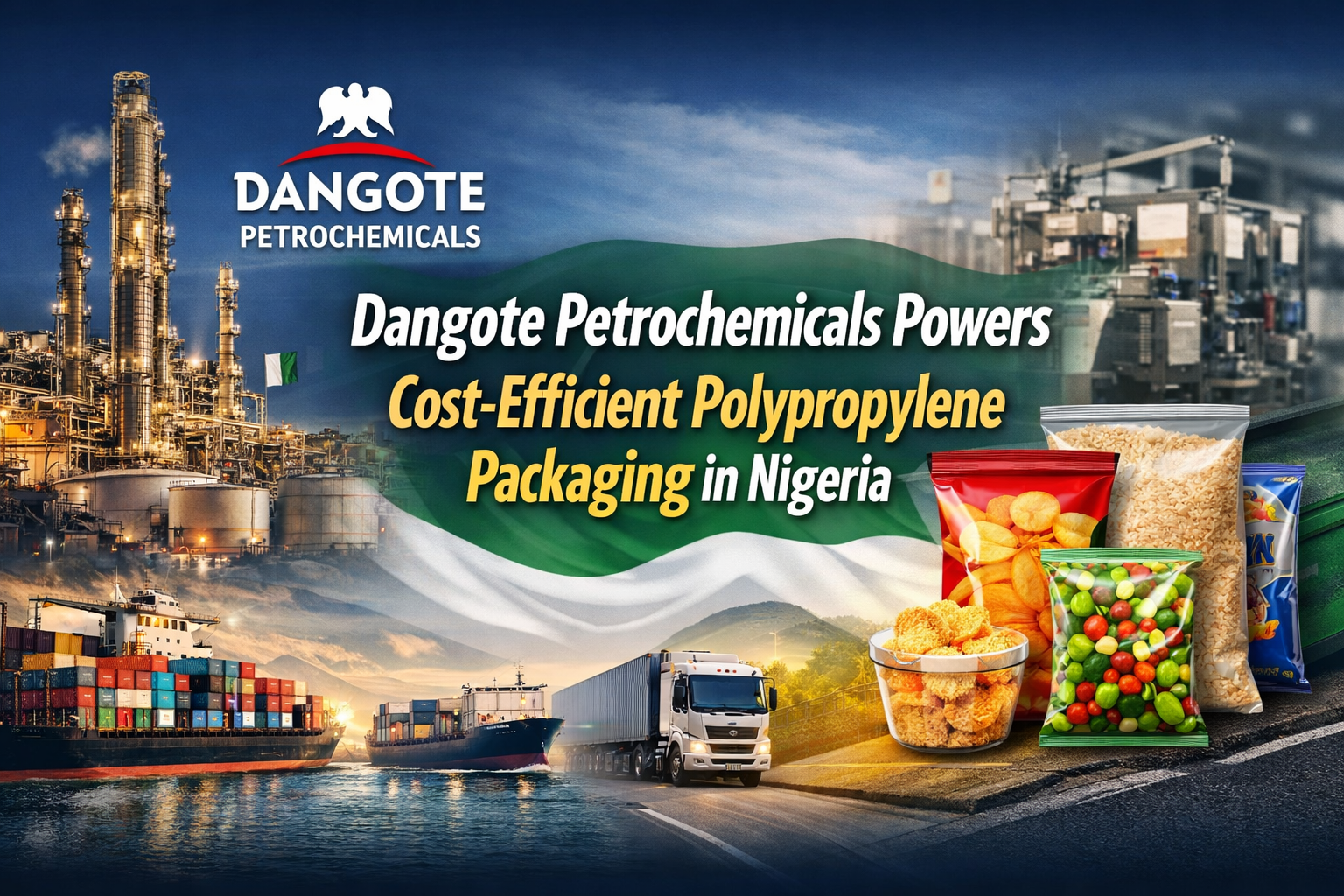
 Polypropylene (PP) flexible packaging is rapidly redefining the economics of food packaging in Nigeria, offering manufacturers a powerful combination of cost efficiency, durability, and scalability. With the expansion of domestic production capacity led by Dangote Petrochemicals, industry analysts say the material is becoming a cornerstone of Nigeria’s industrial and food security ambitions.
Across the food value chain—from rice millers and flour processors to snack manufacturers and fast-moving consumer goods (FMCG) companies—polypropylene flexible packaging is emerging as a practical response to rising production costs, foreign exchange volatility, and supply chain disruptions.
The Cost Advantage Driving Adoption
Polypropylene flexible packaging requires significantly less raw material than rigid alternatives such as glass, metal cans, or thick plastic containers. Its lightweight structure reduces production inputs while maintaining strength and barrier protection. For manufacturers battling inflationary pressures, this reduction in packaging cost per unit can make a measurable difference.
Industry players note that packaging accounts for a significant portion of total product cost. By switching to flexible PP films, companies can optimize expenses without compromising food safety or shelf appeal.
The material’s moisture resistance and durability also extend product shelf life—minimizing spoilage, reducing returns, and limiting food waste. In a country where post-harvest losses remain a challenge, such efficiency gains translate into tangible economic benefits.
Dangote’s Role in Strengthening Local Supply
The expansion of domestic polypropylene production is reshaping the industry landscape. Dangote Petrochemicals, as part of the broader industrial investments of the Dangote Group, is positioned to enhance local access to polypropylene resins—key raw materials used in film extrusion and packaging conversion.
Analysts say local production reduces dependence on imports, cushions manufacturers against currency shocks, and improves supply stability. The availability of competitively priced PP resin within Nigeria could lower manufacturing costs further, encouraging expansion among packaging converters and food processors alike.
Beyond cost savings, increased local petrochemical capacity strengthens industrial linkages. It stimulates downstream sectors such as film production, lamination, printing, and packaging design—creating jobs and deepening value addition within the economy.
Economists Weigh In
Speaking on the broader economic implications, economist Celestine Ukpong described polypropylene flexible packaging as “a silent enabler of industrial competitiveness.”
According to Ukpong, reducing packaging costs has a multiplier effect across the food ecosystem. “When manufacturers spend less on packaging inputs, they gain flexibility to reinvest in production capacity, distribution, or price stabilization. In an inflationary environment, that flexibility can determine survival,” he said.
Ukpong further emphasized that local polypropylene production helps conserve foreign exchange. “Import substitution in petrochemicals strengthens the naira indirectly by reducing demand for foreign currency. Over time, this supports macroeconomic stability,” he added.
Financial Perspective: Efficiency and Margin Protection
Peter Adebayo, FCA, a chartered accountant and financial analyst, highlighted the accounting and margin implications for food manufacturers.
“Flexible polypropylene packaging improves cost-to-weight ratios and reduces freight charges. When you factor in lower warehousing costs and reduced damage during transit, the savings accumulate across the value chain,” Adebayo explained.
He noted that in financial reporting terms, improved packaging efficiency enhances gross margins and reduces inventory write-offs. “Spoilage and expired goods impact profitability. Better barrier properties mean better inventory turnover and stronger balance sheets,” he said.
Adebayo also pointed to capital efficiency. “Flexible packaging lines are often less capital-intensive than rigid alternatives. This lowers entry barriers for small and medium-scale food processors, promoting entrepreneurship and industry diversification.”
Branding, Innovation, and Consumer Appeal
Polypropylene flexible packaging offers high-quality printability, resealable options, and transparent display windows—features that enhance brand visibility and consumer convenience. As modern retail formats expand across Nigeria, packaging aesthetics increasingly influence purchasing decisions.
Manufacturers are leveraging stand-up pouches and laminated PP films to create visually compelling products while maintaining affordability. For emerging brands, this blend of cost control and shelf impact can be decisive in competitive markets.
Sustainability and the Road Ahead
While polypropylene is derived from petrochemicals, industry stakeholders are advancing mono-material PP solutions that are easier to recycle. Growing awareness of environmental standards is encouraging investments in circular economy models and recycling infrastructure.
Experts argue that the future of food packaging will depend on balancing cost efficiency with sustainability. With increased domestic resin supply and technological innovation, polypropylene flexible packaging is expected to remain central to Nigeria’s food and manufacturing sectors.
Conclusion
As Nigeria pushes for industrialization and economic diversification, polypropylene flexible packaging stands out as more than just a packaging solution—it is an economic catalyst. Backed by expanding domestic production from Dangote Petrochemicals and supported by favorable cost dynamics, the material is empowering food manufacturers to navigate inflationary pressures, protect margins, and compete more effectively.
For economists and financial analysts alike, the message is clear: strengthening the polypropylene value chain is not merely about packaging—it is about building a more resilient and competitive economy.
Polypropylene flexible packaging is transforming Nigeria’s food industry economics as Dangote Petrochemicals boosts local resin supply, with experts highlighting cost savings, forex conservation, and industrial growth benefits.
Polypropylene flexible packaging drives cost efficiency in Nigeria’s food sector, with Dangote Petrochemicals enhancing local supply. Experts Celestine Ukpong and Peter Adebayo, FCA, highlight economic and financial impacts.
Discover more from Ameh News
Subscribe to get the latest posts sent to your email.