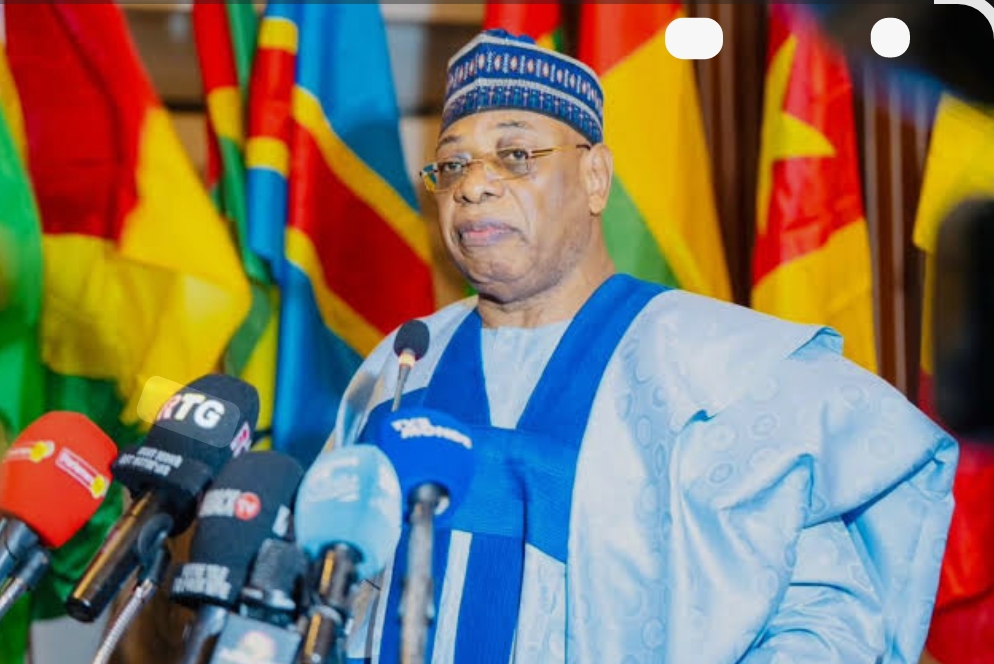
 The re-election of Nigeria’s Paul Adalikwu for a second term as Secretary-General of the Maritime Organisation of West and Central Africa (MOWCA) has been widely interpreted as a vote of confidence in a first tenure defined by institutional reform, diplomatic reawakening, and strategic repositioning of the regional maritime body.
Before securing his renewed mandate, Adalikwu had already overseen what many industry stakeholders describe as a structural turnaround for MOWCA — an organization pivotal to maritime cooperation across West and Central Africa.
Institutional Reset and Governance Reform
When Paul Adalikwu assumed office, MOWCA was grappling with limited visibility, inconsistent member-state participation, and structural inefficiencies. His first order of business was restoring administrative discipline and strengthening governance frameworks.
Through deliberate diplomatic engagements across the 25-member bloc, Adalikwu revitalized statutory meetings, improved compliance with financial obligations, and enhanced transparency in operations. Observers note that this governance reset restored confidence in MOWCA’s coordinating mandate and re-established its voice within Africa’s maritime policy ecosystem.
His leadership style — built on consensus across Anglophone, Francophone, and Lusophone member states — helped reduce fragmentation and foster regional alignment on maritime priorities.
Maritime Security and Regional Cooperation
Security in the Gulf of Guinea remained central to his first-term agenda. He consistently advocated stronger maritime domain awareness and collaborative enforcement mechanisms to tackle piracy, illegal fishing, and transnational maritime crime. Dr. Adalikwu has continued to articulate a bold strategic vision for the blue economy, anchored on the proposed establishment of a Regional Maritime Development Bank (RMDB) and deeper collaboration with global partners, including Indonesia, to enhance capacity building and professional training within the sector. His agenda remains focused on restoring the confidence of Member States in the regional maritime framework while positioning Africa’s maritime domain as a catalyst for inclusive prosperity — benefiting both coastal and landlocked nations across West and Central Africa.
Under his watch, MOWCA intensified policy dialogue among coastal administrations, complementing continental maritime safety initiatives. Analysts say his tenure sustained momentum for coordinated action at a time when global shipping stakeholders were closely monitoring security trends in West African waters.
Advancing the Blue Economy Framework
Beyond security, Adalikwu positioned MOWCA within the broader blue economy conversation — encouraging member states to harness marine resources sustainably for trade expansion, fisheries development, offshore energy growth, and port modernization.
Capacity building, digitalization, and environmental sustainability featured prominently in his engagements. His administration amplified discussions around decarbonization and green shipping practices, aligning regional maritime governance with evolving global standards.
Industry stakeholders say this forward-looking posture enhanced the organization’s strategic relevance in a rapidly changing global maritime landscape.
Experts React: From Stabilization to Measurable Impact
Economist Celestine Ukpong described Adalikwu’s first term as “an institutional stabilization phase that laid a credible foundation for regional maritime integration.”
According to Ukpong, “Regional maritime institutions are critical enablers of trade competitiveness. What Adalikwu achieved in his first term was structural repair — rebuilding confidence, strengthening governance, and restoring operational clarity. Without those fundamentals, economic gains would remain elusive.”
Ukpong added that improved coordination among West and Central African maritime authorities enhances investor confidence and facilitates smoother trade corridors — key factors in unlocking regional GDP potential.
Peter Adebayo, FCA, a financial governance expert, emphasized the significance of transparency reforms during Adalikwu’s tenure.
“Financial discipline in multilateral institutions is not always easy to achieve,” Adebayo noted. “By reinforcing accountability structures and compliance mechanisms, he strengthened MOWCA’s institutional credibility. That credibility is essential for partnerships, technical cooperation, and long-term sustainability.”
Adebayo further observed that Adalikwu’s diplomatic outreach reduced policy inertia within the bloc. “Predictability in leadership builds trust among member states. His re-election reflects recognition of that stability.”
Nigeria’s Maritime Diplomacy Consolidated
Adalikwu’s performance also reinforced Nigeria’s standing in regional maritime diplomacy. His stewardship projected Abuja as a proactive driver of policy cohesion in West and Central Africa’s maritime sector.
By bridging geopolitical divides and promoting collective maritime interests, he repositioned MOWCA as a more assertive platform within Africa’s integration agenda.
The Second-Term Imperative
While the first term focused on institutional rebuilding, experts believe the second must prioritize measurable economic outcomes.
Ukpong argues that the next phase should emphasize performance benchmarks. “The organization now needs quantifiable metrics — improvements in port efficiency, trade facilitation, maritime safety compliance, and blue economy investment flows.”
Adebayo echoed this sentiment, stressing financial sustainability. “The structural groundwork has been laid. The challenge ahead is converting governance reform into economic impact across member states.”
A Leadership Chapter Under Scrutiny
As Paul Adalikwu begins his second term at the Maritime Organisation of West and Central Africa, expectations are elevated. Stakeholders across the maritime industry view his renewed mandate as an opportunity to consolidate reforms and translate diplomatic goodwill into tangible regional growth.
His first term marked a period of stabilization and strategic repositioning. The second, analysts suggest, will determine whether that reform momentum evolves into an enduring economic transformation for West and Central Africa’s maritime sector.
Paul Adalikwu secures a second term as MOWCA Secretary-General following a reform-focused first tenure. Experts Celestine Ukpong and Peter Adebayo highlight governance restructuring, maritime security advocacy, and blue economy advancement.
In addition to re-election as MOWCA Secretary-General. Experts commend his governance reforms, maritime security coordination, and blue economy strategy while urging measurable economic impact in his second term.
Discover more from Ameh News
Subscribe to get the latest posts sent to your email.