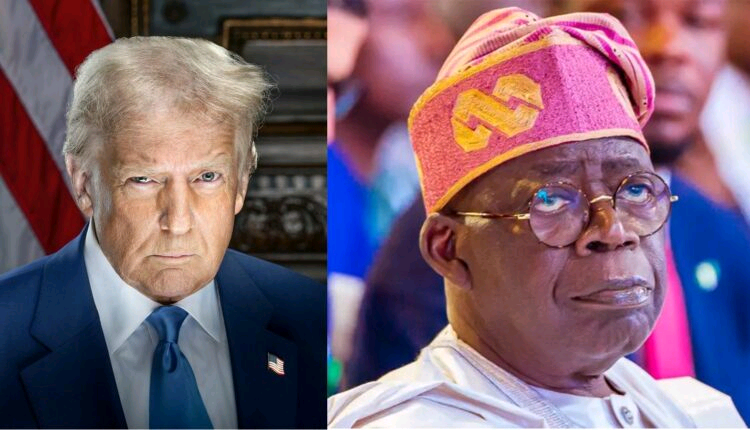
 The recent ruling by the Supreme Court of the United States striking down former President Donald Trump’s sweeping tariffs has stirred global conversations about executive power, constitutional limits, and economic governance. For many observers in Nigeria, the decision carries important lessons — particularly as debates intensify over President Bola Ahmed Tinubu’s recent executive actions affecting the oil and gas sector.
In a 6–3 judgment, the U.S. Supreme Court held that President Trump exceeded his authority by imposing broad tariffs under emergency economic powers. Writing for the majority, Chief Justice John Roberts ruled that the 1977 emergency law cited by the president did not authorize such sweeping trade measures, emphasizing that Congress retains constitutional authority over interstate and international commerce.
The ruling reaffirmed a key democratic principle: economic measures with far-reaching implications must align strictly with statutory authority and constitutional boundaries.
Echoes in Nigeria’s Oil Sector
Back home, similar constitutional questions are being raised over aspects of President Tinubu’s recent Executive Orders aimed at accelerating investment and addressing revenue concerns in Nigeria’s oil and gas industry.
Critics argue that certain provisions of the Executive Orders appear to override or alter key frameworks established under the Petroleum Industry Act (PIA), the landmark legislation signed into law in 2021 to reform Nigeria’s petroleum sector.
The PIA was designed to establish clear fiscal terms, governance structures, and regulatory independence — including the roles of the Nigerian Upstream Petroleum Regulatory Commission (NUPRC) and the Nigerian Midstream and Downstream Petroleum Regulatory Authority (NMDPRA). It sought to ensure transparency, attract foreign direct investment, and reduce political interference in regulatory processes.
However, stakeholders within the industry have expressed concern that elements of the new Executive Orders may conflict with provisions of the PIA, particularly in areas relating to fiscal incentives, royalty frameworks, and regulatory discretion. Some legal analysts contend that altering statutory fiscal structures through executive instruments — rather than through legislative amendment — raises constitutional questions similar in principle to those addressed in the U.S. ruling.
Separation of Powers and Economic Reform
Nigeria’s Constitution, like that of the United States, vests lawmaking powers in the National Assembly. While the president retains authority to issue Executive Orders to implement existing laws, such directives cannot lawfully amend or override primary legislation passed by Parliament.
The PIA itself was the product of nearly two decades of legislative debate and stakeholder engagement. As such, any substantial modification to its core fiscal or governance architecture arguably requires parliamentary review.
Legal scholars note that bypassing legislative processes — even in pursuit of urgent economic reform — could expose policies to judicial scrutiny and potential reversal, thereby creating uncertainty for investors.
Why It Matters
The stakes are high. Nigeria’s oil and gas sector remains central to government revenue and foreign exchange earnings. Investor confidence depends not only on favorable fiscal terms but also on regulatory predictability and respect for statutory frameworks.
The U.S. Supreme Court’s decision demonstrates that even powerful executives are constrained by law. Although President Trump’s tariffs reportedly generated over $130 billion in revenue, the court ruled that revenue generation does not justify actions beyond constitutional authority.
Similarly, in Nigeria, while the objective of boosting production and investment is widely supported, the means of achieving those objectives must remain within the legal boundaries established by the PIA and the Constitution.
A Defining Governance Moment
For President Tinubu, widely regarded as a bold reformer, this moment could define the balance between executive decisiveness and institutional respect. Sustainable reform often requires collaboration with the legislature rather than circumvention.
The American example serves as a cautionary tale: policy durability is anchored not just in ambition, but in legality.
As debates over the Executive Orders and the Petroleum Industry Act continue, Nigeria faces a fundamental governance question — whether economic urgency should reshape statutory frameworks by executive decree, or whether reform must travel the longer, but constitutionally secure, legislative path.
In both Washington and Abuja, the message is clear: institutions matter, and the rule of law ultimately shapes the legacy of reform.
Discover more from Ameh News
Subscribe to get the latest posts sent to your email.