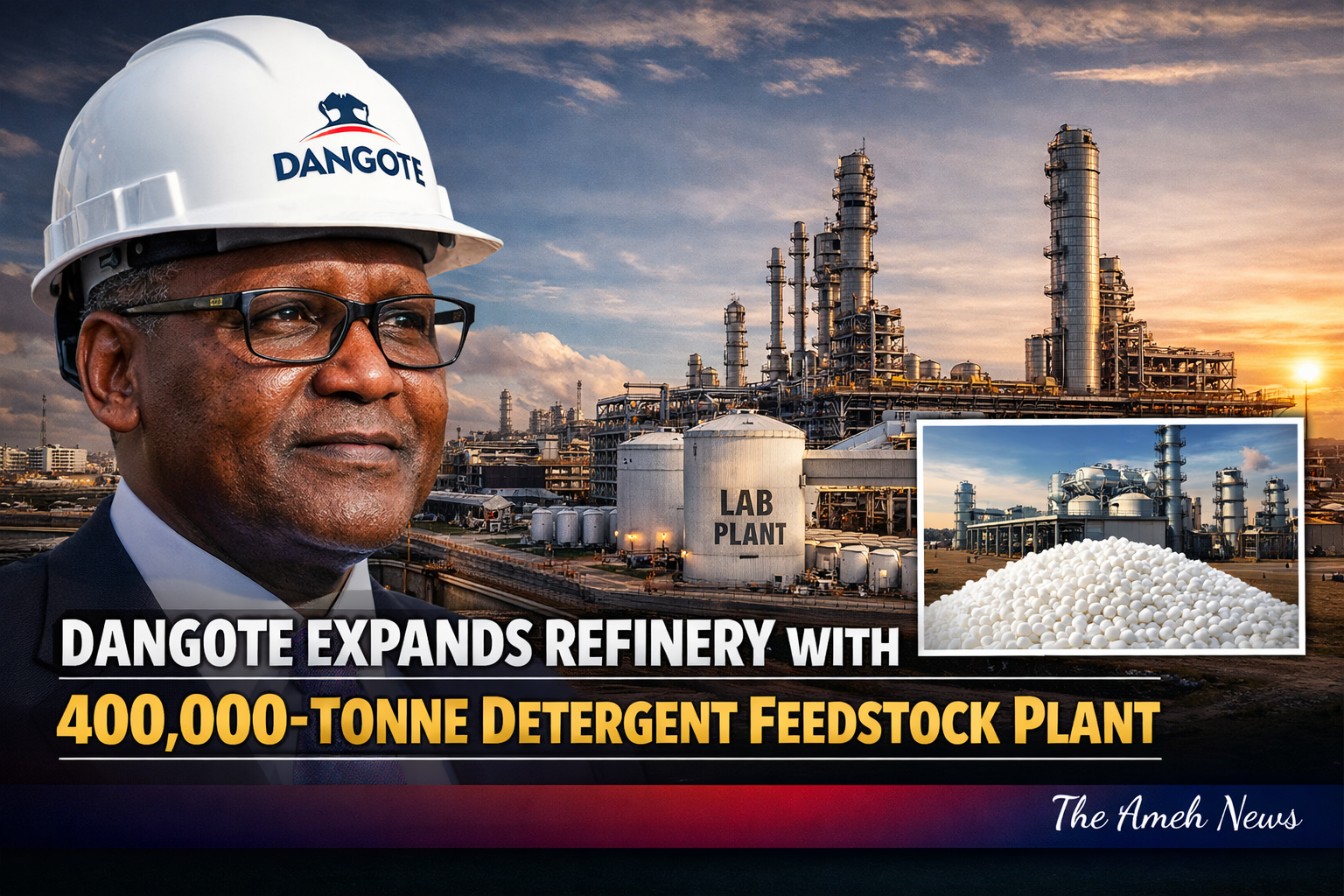
 Experts hail 400,000-tonne LAB project as strategic boost for Nigeria’s petrochemical dominance and continental self-sufficiency
Africa’s industrial landscape is poised for a significant shift as Aliko Dangote announced plans to construct the continent’s largest Linear Alkyl Benzene (LAB) plant within the $20 billion Dangote Refinery complex.
The proposed facility, with an annual production capacity of 400,000 tonnes, is designed to meet Africa’s entire demand for LAB—a critical petrochemical input used in the manufacture of detergents and cleaning products. The project is expected to be completed within 30 months, marking another milestone in the refinery’s transformation from a fuel-processing plant into a diversified industrial hub.
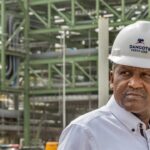
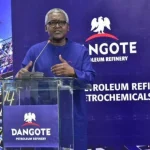
Dangote disclosed the development during a tour of the refinery alongside Bayo Ojulari, Group Chief Executive Officer of the Nigerian National Petroleum Company Limited, underscoring growing collaboration between the private refinery and Nigeria’s national oil company.
“This is not just a refinery; it is an industrial hub,” Dangote said. “That’s why we are building a Linear Alkyl Benzene plant. Africa currently has only two such plants — 1onein Algeria,aproducing 100,000tonnes , and anotherin Egypt., producing 50,000 tonnes We are going for 400,000 tonnes, and we will deliver within 30 months.”
Bridging Africa’s Industrial Gap
Africa remains heavily dependent on imports for LAB, the essential raw material used to produce surfactants — the active cleaning agents in soaps and detergents. With only two relatively small-scale plants on the continent, manufacturers have long relied on overseas suppliers, increasing production costs and foreign exchange pressures.
Industry observers say the new plant could dramatically reverse that trend.
By producing 400,000 tonnes annually — nearly triple the continent’s current combined output — the Dangote facility is expected to:
Eliminate Africa’s reliance on imported LAB
Strengthen local detergent manufacturing
Reduce foreign exchange outflows
Enhance Nigeria’s export earnings
Deepen value addition within the petroleum value chain
The move further consolidates Dangote’s footprint across fertiliser, cement, agriculture, oil refining, and petrochemicals.
Experts React: “A Structural Economic Shift”
Economic analysts have described the project as a strategic pivot capable of reshaping Nigeria’s industrial architecture.
Celestine Ukpong, an economist, said the LAB plant signals a deliberate shift from primary commodity exports to industrial processing and value addition.
“This is a structural economic shift,” Ukpong noted. “For decades, Africa exported crude and imported finished or semi-finished petrochemical products. Producing LAB at this scale means Nigeria is moving up the value chain. It reduces pressure on foreign reserves and positions the country as a supplier rather than a buyer.”
According to him, the multiplier effect could be substantial, particularly for Nigeria’s fast-moving consumer goods (FMCG) sector.
“Lower raw material costs will encourage domestic manufacturing, create jobs, and stimulate downstream industries. The impact goes beyond detergents — it strengthens the petrochemical ecosystem,” he added.

“From an investment standpoint, this improves the refinery’s revenue diversification and long-term sustainability,” Adebayo said. “Petrochemicals typically offer stronger and more stable margins than fuel refining alone. Integrating LAB production strengthens the refinery’s balance sheet and export potential.”
He further emphasized the foreign exchange implications.
“Nigeria spends significant forex importing industrial inputs. If this plant meets continental demand, it could turn Nigeria into a net exporter of LAB, boosting non-oil revenue streams and improving trade balances.”
Refinery at Full Capacity, Expanding Frontiers
With refining operations stabilizing toward full capacity, the Dangote Refinery is gradually transitioning into a multi-product industrial zone — combining fuel production, petrochemicals, and manufacturing feedstock in one integrated complex.
Analysts say this integrated model reduces operational inefficiencies while maximizing output from crude oil derivatives.
The LAB plant represents the next strategic layer in Dangote’s broader industrialization blueprint — one that positions Nigeria not merely as an oil-producing nation but as a continental manufacturing powerhouse.
If delivered within the projected 30 months, the facility could redefine Africa’s detergent supply chain and cement Nigeria’s status as the continent’s leading petrochemical hub.
Aliko Dangote announces plans for Africa’s largest 400,000-tonne LAB plant within the Dangote Refinery complex. Experts Celestine Ukpong and Peter Adebayo say the project will reduce imports, boost exports, and transform Nigeria’s petrochemical industry.
Discover more from Ameh News
Subscribe to get the latest posts sent to your email.