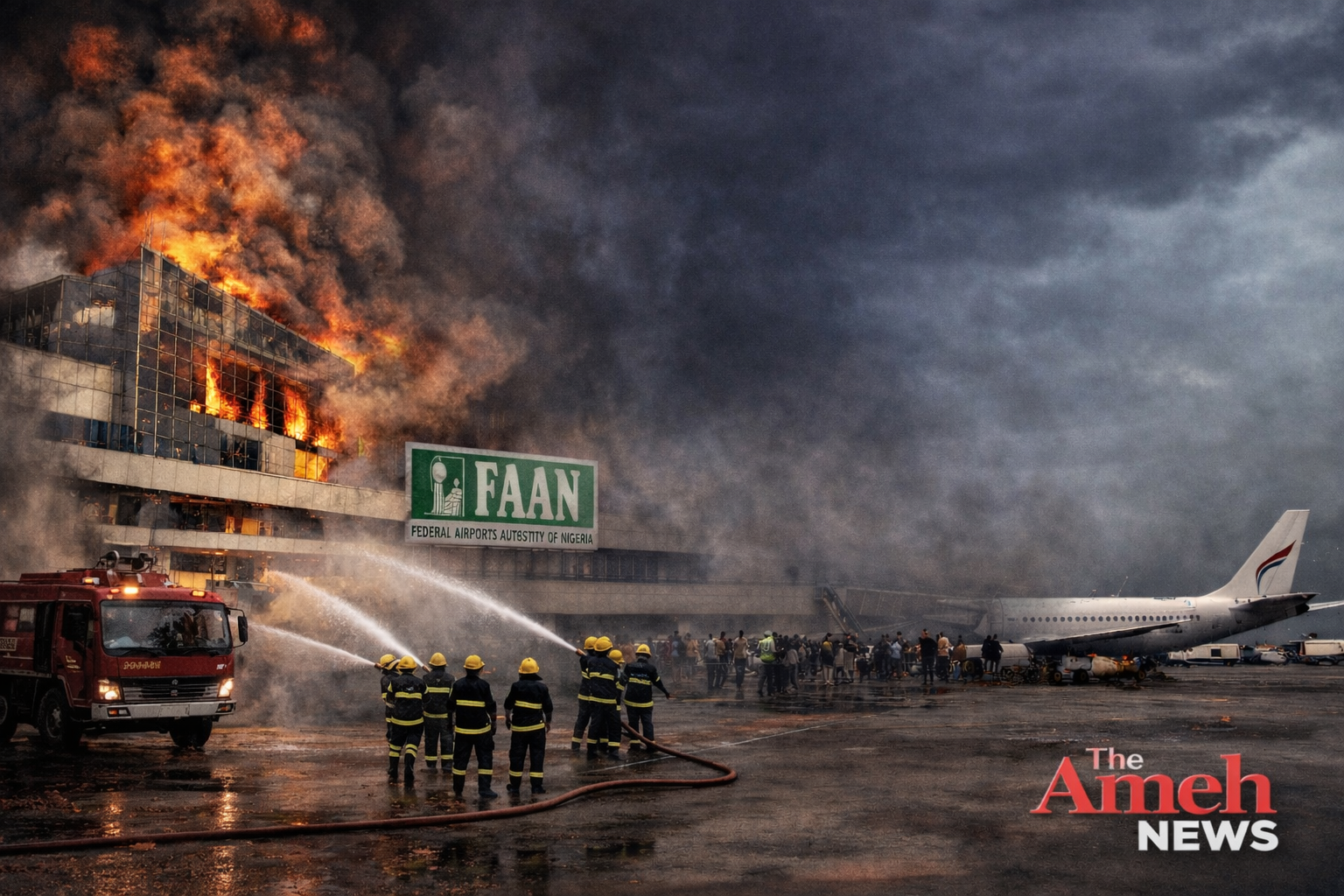
 The devastating fire at the Nigerian Murtala Muhammed International 1 Airport Terminal (NMMAI), Ikeja has exposed potential shortcomings in the airport’s insurance coverage, raising serious questions about whether policy limits and exclusions adequately protected its high-value infrastructure and operational assets.
Investigations by industry experts revealed insurance operators are worrying about the gaps between estimated losses and existing coverage. The terminal building may have suffered an estimated loss of ₦200 million, with insurance covering only ₦180 million, leaving a shortfall of ₦20 million. Baggage handling equipment faced damages of ₦100 million, while coverage was limited to ₦50 million, creating a ₦50 million gap. Security and IT systems incurred losses estimated at ₦120 million, but the policy provided just ₦40 million, resulting in an ₦80 million shortfall. HVAC and electrical systems were damaged to the tune of ₦80 million, with insurance covering ₦30 million, leaving a ₦50 million gap. Miscellaneous operational assets had no estimated losses or coverage. In total, NMMAI faces ₦500 million in estimated damages, with only ₦300 million potentially recoverable through insurance, leaving a total coverage deficit of ₦200 million.
“Airports are high-risk facilities, and standard fire policies rarely reflect the true value of critical assets,” said, senior underwriter at a leading Nigerian insurance firm. “Equipment such as baggage handling systems, security scanners, and IT infrastructure are often underinsured or excluded, which can significantly delay recovery and operational restart.”
Economist, Celestine Ukpong highlighted the broader economic implications: “A fire at a major airport terminal isn’t just about physical damage. Passenger disruption, airline delays, and cargo handling interruptions ripple across the aviation sector, impacting national revenue. Insurance must account for all critical assets, not just the building itself.”
Accounting and risk specialist Peter Adebayo FCA emphasized the dangers of underinsurance: “Institutions often rely on generic policies without properly valuing specialized assets. In cases like this, the gap between actual losses and payouts can be substantial, delaying reconstruction and operational continuity.”
Other insurance operators corroborated these concerns. A renowned senior risk consultant, noted: “NMMAI’s policy covers basic fire damage to the terminal but does not fully include high-value systems that are essential for operations. Bespoke coverage with catastrophe endorsements would have reduced the airport’s financial exposure.”
The incident has intensified discussion within Nigeria’s aviation sector about proactive risk management and insurance adequacy. Experts recommend periodic insurance audits, accurate asset valuation, and policy limits aligned with real-world replacement costs to ensure swift recovery and operational resilience.
As NMMAI navigates post-fire recovery, stakeholders are closely monitoring insurance claims and payouts. The consensus is clear: proper underwriting is not a bureaucratic formality—it is a strategic tool to safeguard infrastructure, operational continuity, and national aviation capacity.
NMMAI fire exposes significant insurance gaps. Estimated losses of ₦500 million contrast with policy coverage of ₦300 million, leaving a ₦200 million shortfall, warn insurance operators and experts.
Investigative report on NMMAI fire: Estimated losses reach ₦500 million, but insurance may only cover ₦300 million. Experts highlight coverage gaps and urge comprehensive risk-based policies for airports.
Discover more from Ameh News
Subscribe to get the latest posts sent to your email.