By The Ameh News Editorial Board
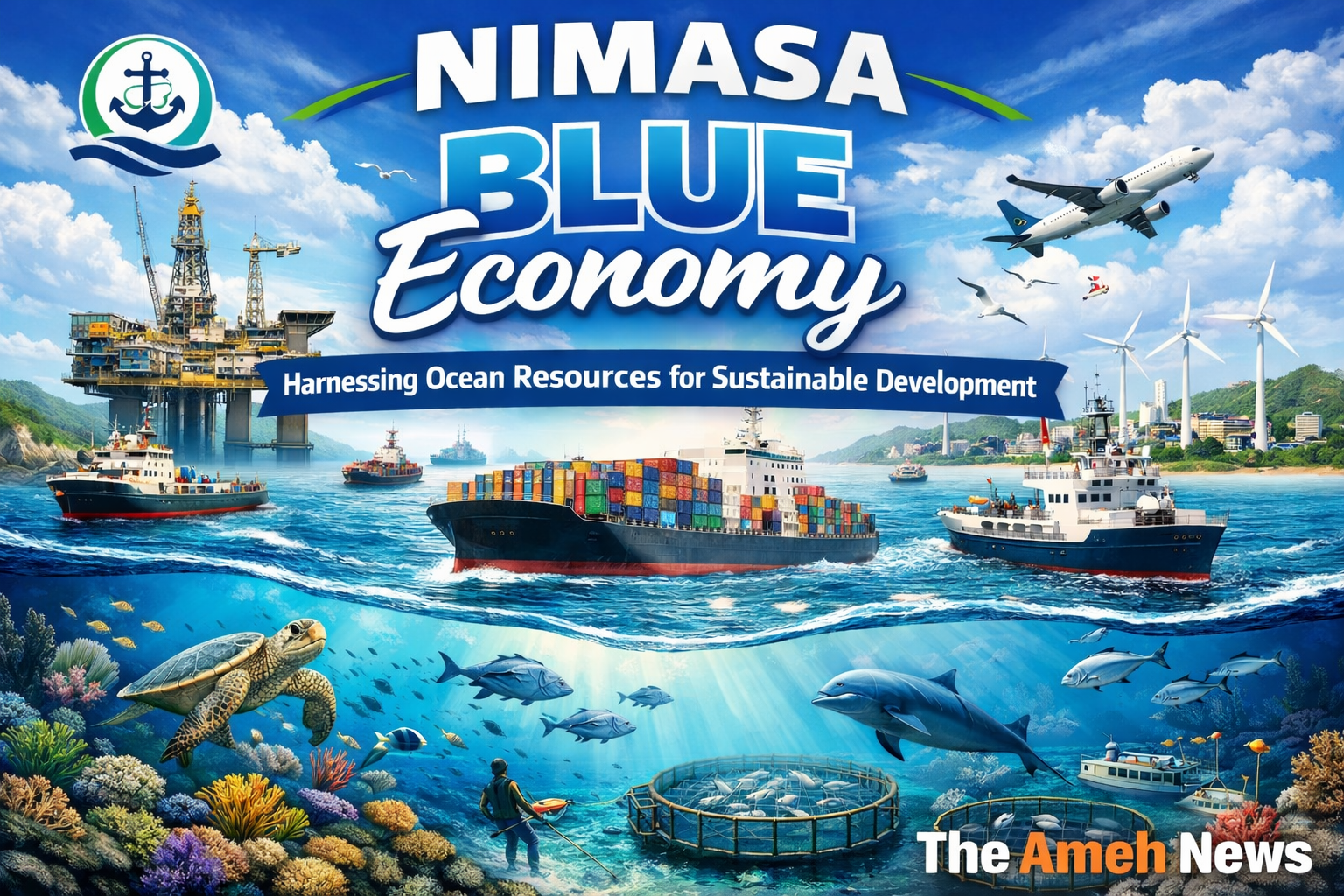 Nigeria’s maritime sector is regaining national attention as policymakers intensify efforts to unlock the vast opportunities within the country’s Blue Economy. With more than 850 kilometres of coastline and a strategic location along the Gulf of Guinea, Nigeria holds one of the most commercially valuable maritime corridors in Africa.
Yet, despite its geographic advantage, the country has historically underperformed in harnessing its maritime potential. Industry stakeholders now say the time has come for decisive investments that will reposition Nigeria as a dominant maritime hub in West and Central Africa.
The renewed focus under the Federal Ministry of Marine and Blue Economy, alongside regulatory oversight from the Nigerian Maritime Administration and Safety Agency (NIMASA), signals a broader policy shift aimed at transforming ports, shipping, marine security, and coastal infrastructure into engines of economic diversification.
Port Modernisation and Infrastructure Imperatives
The Nigerian Ports Authority (NPA) has made significant strides in automation and port reforms; however, infrastructure gaps remain substantial. Congestion, shallow channel drafts, aging cargo-handling equipment, and limited rail connectivity continue to increase turnaround time and logistics costs.
Maritime analysts note that modern deep seaports, integrated port community systems, and efficient cargo evacuation networks are critical to boosting trade competitiveness. Without aggressive modernization, Nigeria risks losing transshipment traffic to competing ports across West Africa.
Efficient ports are not just gateways for imports; they are catalysts for export growth, industrialization, and revenue generation.
Indigenous Shipping and Freight Retention
Nigeria’s limited indigenous fleet capacity remains a key structural challenge. Although the Cabotage regime was introduced to promote local participation in coastal trade, freight earnings are still largely retained by foreign operators.
Industry stakeholders maintain that unlocking the Cabotage Vessel Financing Fund (CVFF) and improving access to long-term financing for indigenous shipowners could significantly expand local participation. A stronger domestic fleet would help retain freight revenue within the economy, create skilled maritime jobs, and reduce foreign exchange pressures.
Building national shipping capacity is increasingly viewed as both an economic and strategic imperative.
Maritime Security and Investor Confidence
Security improvements in the Gulf of Guinea have helped restore confidence in Nigerian waters. Coordinated naval patrols and enhanced maritime surveillance have contributed to a decline in piracy incidents in recent years.
However, experts emphasize that sustaining investor confidence requires continued investment in maritime domain awareness systems, intelligence coordination, and legal enforcement mechanisms. Stability at sea directly influences trade flows and foreign direct investment.
Maritime security, therefore, is no longer just a defense issue — it is an economic priority.
Shipbuilding, Repairs and Marine Industrialisation
Nigeria continues to lose substantial revenue to foreign dry-docking and ship repair facilities. Establishing world-class shipyards and marine engineering hubs within the country could stimulate industrial growth and reduce capital flight.
Public-private partnerships are increasingly seen as viable pathways for developing floating docks, fabrication yards, offshore support services, and maintenance facilities. Such investments could create thousands of technical jobs while positioning Nigeria as a regional marine services hub.
Expanding the Blue Economy Frontier
Beyond shipping and ports, the Blue Economy offers diverse investment opportunities in fisheries, aquaculture, offshore renewable energy, coastal tourism, and marine biotechnology.
Stakeholders argue that a holistic maritime investment framework — integrating environmental sustainability, climate resilience, and economic planning — is essential. Coastal erosion and flooding already threaten billions of naira in infrastructure, underscoring the need for long-term sustainable development strategies.
Diversification through the Blue Economy presents Nigeria with an opportunity to build a more inclusive and employment-intensive growth model.
Financing the Transformation
Transforming Nigeria’s maritime sector will require significant capital beyond federal budget allocations. Infrastructure bonds, development finance, maritime-focused investment funds, and structured public-private partnerships are expected to play a central role.
Regulatory consistency, policy transparency, and investor protection mechanisms will ultimately determine whether capital flows into the sector at the scale required.
The Editorial Position
The Ameh News believes Nigeria stands at a maritime crossroads. Oil wealth shaped the past. Maritime wealth can shape the future.
The country has the coastline, the market size, and the strategic geographic advantage. What remains is disciplined execution, coordinated reform, and sustained investment.
If policy alignment meets private sector commitment, Nigeria can emerge as a maritime powerhouse within the African Continental Free Trade framework.
The tide is rising.
The moment to invest in Nigeria’s Blue Economy is now.
Nigeria’s maritime sector gains renewed momentum as stakeholders call for deeper investment in ports, indigenous shipping, marine security, and Blue Economy expansion to drive economic diversification.
Nigeria’s Blue Economy push intensifies as industry stakeholders urge bold maritime investment in port modernization, fleet development, security, and marine infrastructure to unlock long-term economic growth.
Discover more from Ameh News
Subscribe to get the latest posts sent to your email.