By The Ameh News Editorial Board
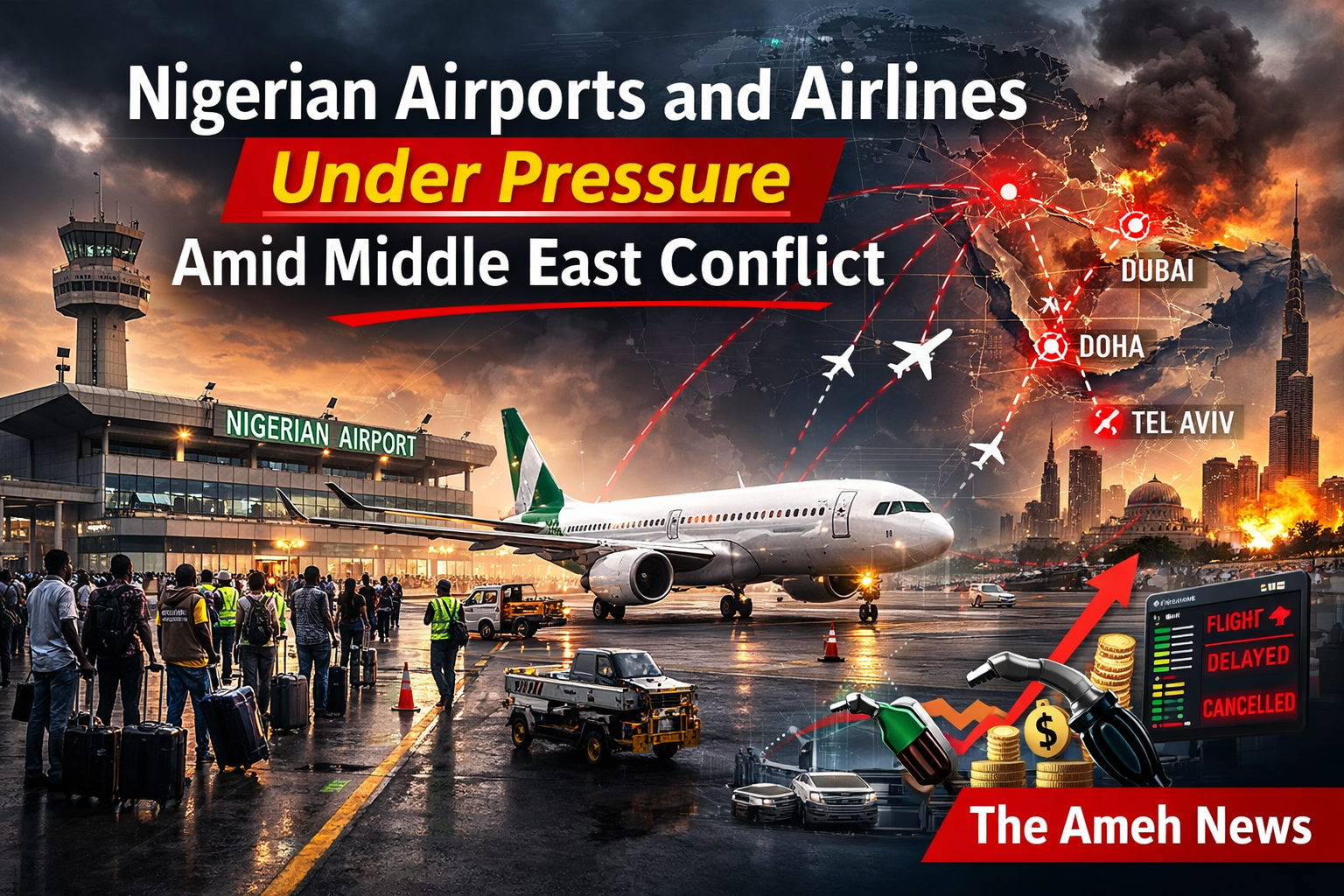 The escalating tensions across the Middle East are no longer just geopolitical headlines; they are creating tangible economic and operational shocks for the global aviation sector — and Nigeria is directly in the path.
Airspace closures, volatile jet fuel prices, rising war-risk insurance premiums, and disrupted passenger movements are reshaping international flight operations. For Nigeria’s aviation regulators and operators, this is not merely a moment for issuing advisories — it is a moment that demands strategic leadership.
At the center of this stress test are institutions such as the Federal Airports Authority of Nigeria (FAAN), the Nigerian Civil Aviation Authority (NCAA), and the Nigerian Airspace Management Agency (NAMA), alongside both international and domestic airlines servicing key Middle East routes.
Airspace Restrictions and Rising Operational Costs
With tensions involving Iran and Israel affecting parts of the region’s air corridors, airlines flying between Nigeria and hubs such as Dubai and Doha are adjusting flight paths.
Longer routes translate into:
Higher fuel consumption
Extended crew duty hours
Increased maintenance cycles
Elevated insurance premiums
An airline executive operating the Lagos–Middle East corridor told The Ameh News:
“Every additional nautical mile has a cost implication. When multiplied across daily operations, the financial exposure becomes significant.”
UAE Sets Benchmark: Passenger Welfare in Crisis
The recent closure of Middle Eastern airspace has left more than 20,200 travelers stranded, prompting the United Arab Emirates to step in with a comprehensive support program. Passengers were provided with hotels, meals, and rebooking assistance — a move hailed by aviation experts as an example of proactive passenger protection.
A senior Aviation Stakeholder, speaking on background, commented:
“While the UAE response is impressive, it highlights the need for Nigerian airports and airlines to have fully integrated contingency plans for international disruptions.”
Meanwhile, an NCAA noted:
“Passenger rights remain paramount. Airlines operating to and from Nigeria must ensure clear communication and timely compensation in crisis situations.”
For Nigerian travelers, transparency and rapid response are essential to maintain confidence in the aviation system.
Jet Fuel Volatility: Nigeria’s Vulnerability
The Middle East remains central to global oil markets. Any escalation threatening supply chains directly affects jet fuel pricing worldwide.
An industry analyst explained:
“Nigeria’s aviation sector already operates on tight margins. Even a 10–15% spike in jet fuel costs can ripple through ticket pricing and airline profitability.”
Domestic refining capacity, particularly with the Dangote Refinery, may offer some insulation. But global volatility remains a dominant factor.
Overflight Revenue and Strategic Opportunity
With Middle Eastern corridors restricted, African airspace may see increased traffic. An aviation economist observed:
“If managed efficiently, increased overflight traffic could generate additional revenue for Nigeria. But airspace management must match the opportunity to ensure safety.”
This underscores the strategic importance of NAMA’s readiness to handle increased air traffic without compromising safety standards.
Cargo and Trade: The Quiet Impact
Beyond passengers, cargo operations face risk. Many Nigerian imports, including pharmaceuticals and electronics, transit through hubs like Dubai. Even minor delays have significant economic consequences.
A Lagos-based logistics operator said:
“Disruptions in Dubai or Doha cascade across supply chains. Nigerian businesses ultimately bear the cost.”
War-Risk Insurance: The Invisible Cost
Conflict zones trigger higher war-risk premiums for airlines operating nearby. An aviation insurance consultant told The Ameh News:
“War-risk premiums can spike quickly. For Nigerian carriers already managing high operating costs, this is an added financial pressure.”
Editorial Position: From Reaction to Reform
The Middle East conflict is a strategic wake-up call. Nigeria’s aviation economy faces structural challenges: reliance on foreign carriers for long-haul connectivity, exposure to global fuel price fluctuations, and limited domestic insurance depth.
The Ameh News Editorial Board believes this moment should catalyze:
Strengthened crisis response coordination
Investment in regional and intra-African connectivity
Strategic aviation fuel reforms
Enhanced passenger protection enforcement
Risk mitigation frameworks for indigenous airlines
Geopolitical instability may be beyond Nigeria’s control. Preparedness is not.
Conclusion: Navigating Turbulence with Foresight
Aviation is more than transport infrastructure — it is economic infrastructure.
The ongoing Middle East tensions will test Nigeria’s regulatory institutions, airline resilience, and passenger protection frameworks. But as the UAE demonstrates, proactive support and planning can mitigate the human and economic cost of disruptions. Nigeria has the opportunity to follow suit.
With strategic foresight, turbulence can become a catalyst for a more resilient aviation economy.
The Ameh News Editorial examines how the Middle East conflict is impacting Nigeria’s aviation economy, including airspace disruptions, rising fuel and insurance costs, and the UAE’s proactive support for 20,200 stranded travelers. It calls for stronger passenger protection, crisis management, and strategic reforms.
Discover more from Ameh News
Subscribe to get the latest posts sent to your email.