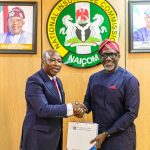
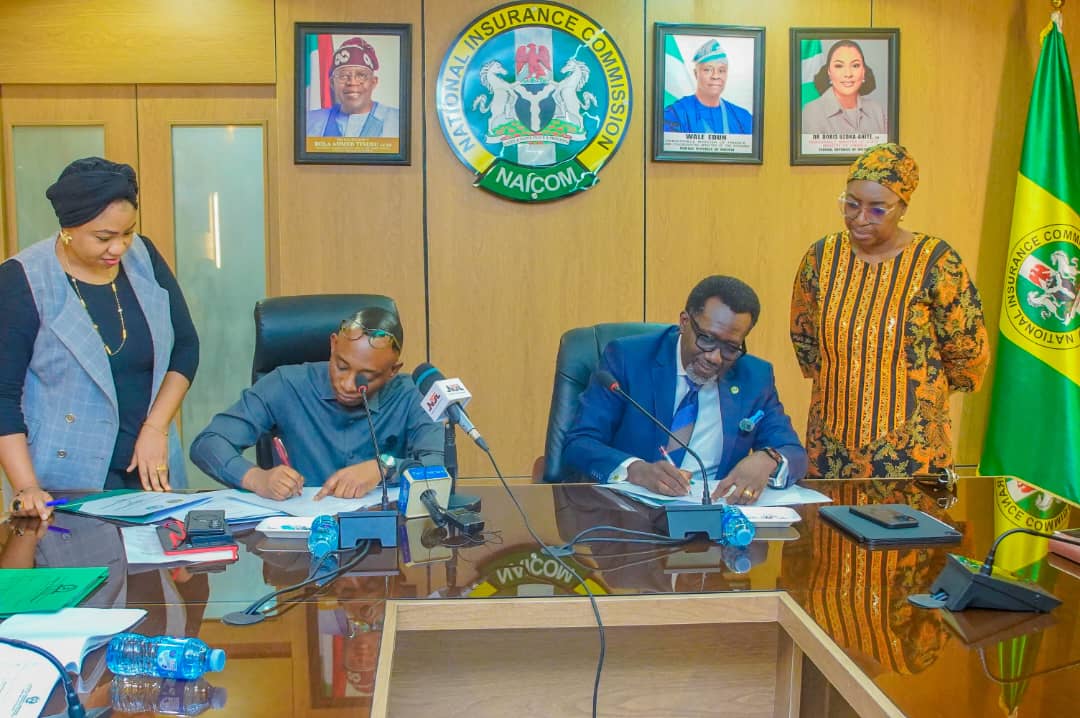
 In a decisive step toward strengthening governance, risk management, and financial accountability in Nigeria’s public sector, the National Insurance Commission (NAICOM) and the Bureau of Public Procurement (BPP) have signed a Memorandum of Understanding (MoU) aimed at deepening insurance compliance across federal procurement processes.
The landmark agreement was sealed during a high-level working visit by the Director-General of BPP, Dr. Adebowale Adedokun, to NAICOM headquarters in Abuja, where he was received by the Commissioner for Insurance (CFI), Mr. Olusegun Ayo Omosehin.
The partnership is widely seen as a strategic alignment of regulatory institutions to reinforce transparency, protect public assets, and position insurance as a cornerstone of Nigeria’s broader economic transformation agenda.
Embedding Insurance into Public Procurement
Speaking at the signing ceremony, Mr. Omosehin reiterated NAICOM’s statutory mandate to supervise, regulate, and promote the growth of the insurance industry. He emphasized that strengthening compliance in public procurement is critical to safeguarding government projects and ensuring value for money.
According to the Commissioner, NAICOM’s current reform priorities include policyholder protection, regulatory capacity building, legal modernization, recapitalization of insurers, and deepening insurance penetration nationwide.
He noted that achieving President Bola Ahmed Tinubu’s vision of building a $1 trillion economy requires strong institutional collaboration and enforcement of financial safeguards across public transactions.
“Our reform objectives cannot be fully realized without strategic partnerships with agencies like BPP,” Omosehin stated. “This MoU provides a framework for monitoring, verifying, and enforcing insurance coverage on public procurement items to ensure compliance and protect national resources.”
He disclosed that NAICOM plans to deploy a structured verification platform that will authenticate insurance policies and bonds tied to government contracts, ensuring only qualified and financially sound operators participate.
Reform Momentum Under NIIRA 2025
The MoU comes amid sweeping reforms within the insurance sector under the Nigerian Insurance Industry Reform Act 2025 (NIIRA 2025). The reform has initiated recapitalization and verification exercises designed to enhance insurers’ financial resilience, improve market confidence, and stimulate innovation.
Industry analysts believe that aligning insurance regulation with procurement compliance will close longstanding gaps that previously exposed public projects to financial and operational risks.
BPP’s sector-specific procurement model and digitalization drive complement NAICOM’s reform strategy. The procurement agency has migrated to a fully digital submission and approval framework, aimed at reducing bureaucratic delays and minimizing opportunities for corruption.
Implementation, Not Just Agreement
In his remarks, Dr. Adebowale Adedokun described the MoU as a forward-looking step but emphasized that execution remains the ultimate measure of success.
“Signing the MoU is only the beginning — what truly matters is implementation,” he said.
Adedokun revealed that BPP has adopted a fully digital procurement process to accelerate approvals and improve transparency. He urged contractors and procuring entities to prioritize insurance bonds in public contracts as a means of strengthening risk mitigation and boosting the growth of Nigeria’s local insurance market.
He further reaffirmed BPP’s commitment to enforcing the Nigeria First policy and affirmative procurement principles, which prioritize local industry participation, including women, youth, startups, and persons with disabilities.
Under his leadership, he stressed, BPP will not condone unethical practices or grant approvals to unqualified operators. Insurance firms were encouraged to ensure their inclusion in the BPP database to facilitate monitoring and regulatory oversight.
Key Commitments in the MoU
The agreement outlines several joint commitments, including:
Standardizing and clarifying insurance requirements in public procurement.
Institutionalizing the use of insurance bonds for government contracts.
Promoting financial stability and consumer protection.
Supporting local content development within public contracts.
Establishing a joint technical working group and periodic review sessions to monitor compliance and refine procurement templates.
The MoU was formally signed by Mr. Olusegun Ayo Omosehin and Dr. Adebowale Adedokun, marking a significant milestone in regulatory synergy between Nigeria’s insurance and procurement authorities.
Boosting Confidence in Government Transactions
Observers note that embedding insurance compliance more firmly into procurement processes will not only protect public funds but also strengthen investor confidence in government projects.
By aligning regulatory oversight and procurement enforcement, NAICOM and BPP are setting a new standard for accountability, transparency, and sustainable risk management.
As Nigeria advances its economic renewal agenda, the partnership underscores the Federal Government’s commitment to modernizing the insurance sector and positioning it as a strategic driver of national development.
NAICOM reaffirmed that it remains dedicated to reforms that deepen trust, strengthen compliance, and elevate insurance as an indispensable tool for safeguarding public resources and enabling sustainable economic transformation.
NAICOM and BPP sign a strategic MoU to enforce insurance compliance in public procurement, strengthen transparency, and support Nigeria’s economic reform agenda under NIIRA 2025. NAICOM and the Bureau of Public Procurement sign a landmark MoU to standardize insurance compliance in public contracts, boost transparency, protect public assets, and support Nigeria’s $1 trillion economic transformation vision.
Discover more from Ameh News
Subscribe to get the latest posts sent to your email.