By Benjamin A Ameh, The Ameh News
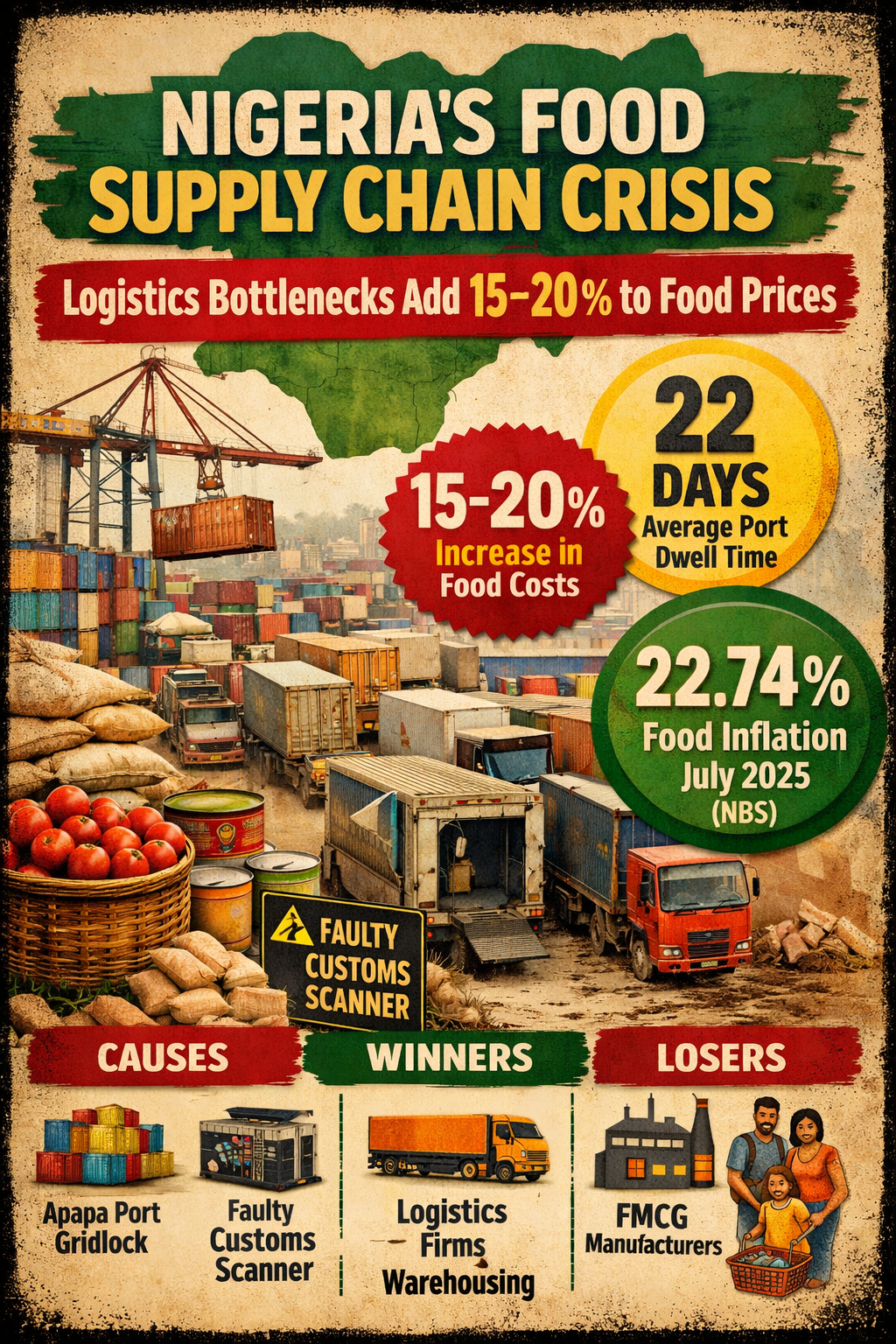
Nigeria’s rising food prices are increasingly being linked to structural inefficiencies within the country’s logistics and port systems, with analysts estimating that supply chain bottlenecks now add between 15 and 20 percent to the final cost of food products.
Data from the National Bureau of Statistics (NBS) shows that food inflation stood at 32.5 percent in Q1 2024 before rising sharply to 39.9 percent in Q2 2024, reflecting mounting pressure within Nigeria’s food distribution and manufacturing ecosystem. Economists say the Q1 figures already signaled rising logistics costs, which intensified further in the second quarter.
A key factor behind the surge is the disruption in the movement of imported raw materials used by food manufacturers. Critical inputs such as wheat, sugar, dairy ingredients, cocoa derivatives, and packaging materials enter the country mainly through Apapa Port and Tin Can Island Port.
However, operational inefficiencies continue to slow cargo clearance. According to the Nigerian Ports Authority (NPA), average cargo dwell time rose to about 22 days in 2024, significantly above the global benchmark of 3–7 days. The delays worsened after a three-week cargo scanner malfunction at the Nigeria Customs Service, which slowed inspection and clearance processes.
These delays increase demurrage, storage charges, and haulage costs as trucks struggle through congestion along the Apapa corridor before transporting cargo to factories nationwide. Manufacturers such as Cadbury Nigeria Plc, Nestlé Nigeria Plc, and Kaduna-based Crown Flour Mill Limited have reported periodic shortages of imported production inputs.
“Extended port delays are a major headwind for our supply chain, at Nestlé Nigeria Plc, Mr Kasum Diabate said “When key inputs arrive late or unpredictably, it increases production costs and ultimately puts upward pressure on prices for consumers.”
In the supply chain, transport unions, warehouse operators, and commodity traders benefit from higher freight and storage charges created by delays. The losers remain FMCG manufacturers, retailers, and Nigerian households, who ultimately bear the burden through persistently rising food prices.
Discover more from Ameh News
Subscribe to get the latest posts sent to your email.