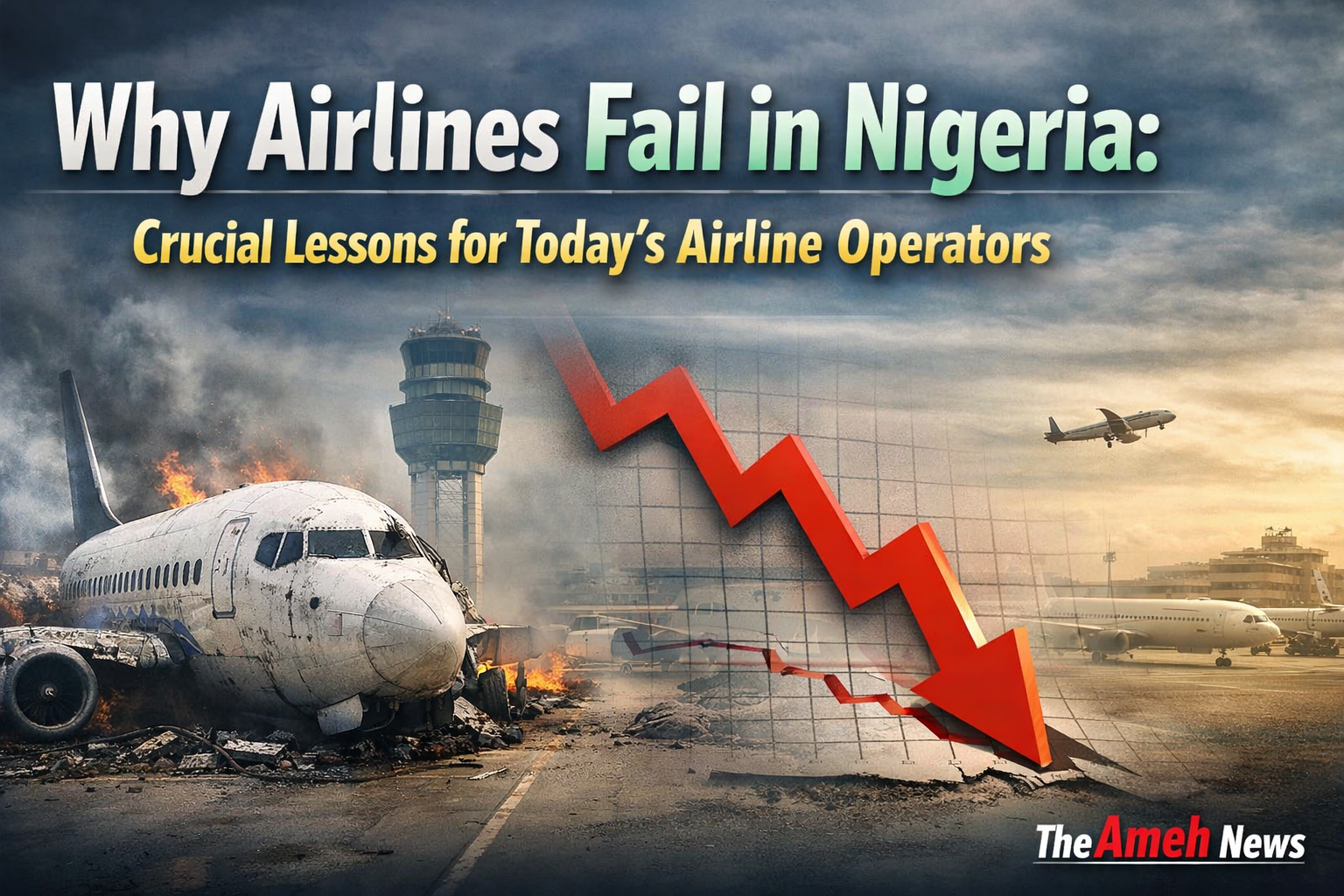
 The story of Okada Air remains one of the most remarkable chapters in Nigeria’s aviation history—a tale of ambition, rapid growth, and eventual decline that continues to shape conversations about the sustainability of airlines in Africa’s largest economy.
Founded by respected Nigerian businessman and philanthropist Gabriel Igbinedion, the airline began charter operations in September 1983. At the time, Nigeria’s aviation industry was largely dominated by government-owned carriers, making Okada Air one of the earliest successful private aviation ventures in the country.
The airline adopted the iconic Queen Idia mask of the Benin Kingdom as its official logo, reflecting both cultural heritage and corporate ambition. Within a short time, Okada Air expanded its domestic operations, serving at least nine airports across Nigeria and offering charter services that connected major cities and economic hubs.
From Domestic Flights to Global Operations
By the early 1990s, Okada Air had grown into a major aviation brand in West Africa. In 1992, the airline secured government approval to operate international routes, allowing it to compete in the global aviation market.
During its peak years, the airline operated wide-body aircraft, including the Boeing 747-100, which it used for international charter flights across continents. Some of these long-haul operations included flights across the Pacific Ocean—an impressive achievement for a privately owned African airline at the time.
The airline also played a significant role in religious travel, transporting thousands of Nigerian pilgrims annually to the Holy Lands for both Muslim and Christian pilgrimages.
Despite its success and global reach, Okada Air eventually ceased operations in 1997 due to struggles with mounting operational costs, financial pressures, and industry-wide structural challenges.
Experts Examine the Rise and Collapse
Economic analyst Celestine Ukpong said the rise of Okada Air represented a defining moment for private sector participation in Nigeria’s aviation industry.
“Okada Air proved that Nigerian entrepreneurs could build globally competitive aviation businesses. It expanded connectivity, created employment, and inspired other private investors to enter the industry,” Ukpong said.
However, he explained that the airline’s collapse was not an isolated case but part of a broader pattern affecting many Nigerian carriers.
“The aviation sector operates in an extremely volatile economic environment. When you combine high fuel costs, exchange rate instability, and infrastructure gaps, even strong airlines can face sustainability challenges,” he added.
Branding Success but Operational Pressures
Public relations expert Dr. Ejike Nduilo, a communications strategist, noted that Okada Air’s cultural branding strategy helped distinguish the airline during its era.
“The use of the Queen Idia symbol made the airline instantly recognizable. It was not just an aviation brand; it was a symbol of Nigerian pride and private enterprise,” he said.
However, Nduilo stressed that branding alone cannot sustain airlines without operational resilience.
“In aviation, reputation and safety are everything. Airlines must maintain strong operational management and crisis communication systems to withstand economic and operational shocks,” he noted.
Financial Structure Challenges
Chartered accountant Peter Adebayo, FCA, emphasized that financial sustainability remains the most critical factor for airline survival.
“Aviation requires massive capital investment and long-term financial planning. Aircraft acquisition, maintenance, crew training, and insurance are extremely expensive,” Adebayo explained.
He added that many Nigerian airlines historically relied heavily on short-term borrowing, which made them vulnerable during economic downturns.
“Without strong financial structures and risk management frameworks, airlines can quickly collapse under operational costs,” he said.
Major Causes of Airline Failures in Nigeria
Experts say the collapse of Okada Air and several other carriers highlights structural challenges that have historically plagued Nigeria’s aviation sector. Key factors include:
High Aviation Fuel Costs:
Jet fuel, known as Jet A1, represents one of the largest operational expenses for airlines. Price volatility has repeatedly strained airline finances.
Foreign Exchange Instability:
Most aviation costs—such as aircraft leasing, spare parts, insurance, and maintenance—are paid in foreign currency. Fluctuations in the naira have significantly increased operating costs.
Weak Financial Structures:
Many airlines lacked long-term financing and strong capital reserves necessary to survive economic downturns.
Regulatory and Policy Inconsistencies:
Frequent policy changes and regulatory uncertainties have made long-term planning difficult for operators.
Infrastructure Limitations:
Inadequate airport infrastructure, limited maintenance facilities, and operational inefficiencies have historically increased costs for airlines.
Safety Incidents and Public Confidence:
Aviation accidents involving some carriers in the past damaged public confidence and accelerated the collapse of certain airlines. According to the research, Nigeria’s aviation history includes several airlines that once dominated the skies but eventually ceased operations, including:
Okada Air (1983–1997)
ADC Airlines (1984–2006)
Afrijet Airlines (1998–2009)
Sosoliso Airlines (1994–2006)
Albarka Air (1999–2005)
Bellview Airlines (1992–2010)
Concord Airlines (1990–1993)
Nigeria Airways (1971–2003)
Virgin Nigeria Airways (2004–2009)
EAS Airlines (1993–2006)
NICON Airways (2006–2007)
Pan African Airways Nigeria (1961–2000)
Lessons for Today’s Aviation Operators
Experts say the experiences of these airlines provide valuable lessons for today’s operators and policymakers.
Strong Financial Planning:
Airlines must maintain solid capital structures and access to long-term financing.
Efficient Fleet Management:
Operating fuel-efficient aircraft and maintaining an optimal fleet size can reduce operational costs.
Policy Stability:
Government support through consistent policies and improved aviation infrastructure can strengthen industry resilience.
Safety and Public Confidence:
Maintaining strict safety standards and transparent communication is essential for passenger trust.
Diversification of Revenue:
Airlines can expand into cargo operations, charter services, and ancillary services to stabilize revenue streams.
A Legacy That Still Shapes the Industry
Although Okada Air disappeared from Nigeria’s skies nearly three decades ago, its story continues to resonate in the country’s aviation sector.
The airline’s rise demonstrated the possibilities of private investment in aviation, while its collapse highlighted the structural challenges that must be addressed to ensure the sustainability of Nigeria’s airline industry.

The rise and fall of Okada Air reveals key causes behind airline failures in Nigeria. Experts outline the challenges that grounded several carriers and the lessons today’s aviation operators must learn.
Experts analyze the collapse of Okada Air and other defunct Nigerian airlines, highlighting major challenges and lessons for sustainable growth in Nigeria’s aviation industry.
Discover more from Ameh News
Subscribe to get the latest posts sent to your email.