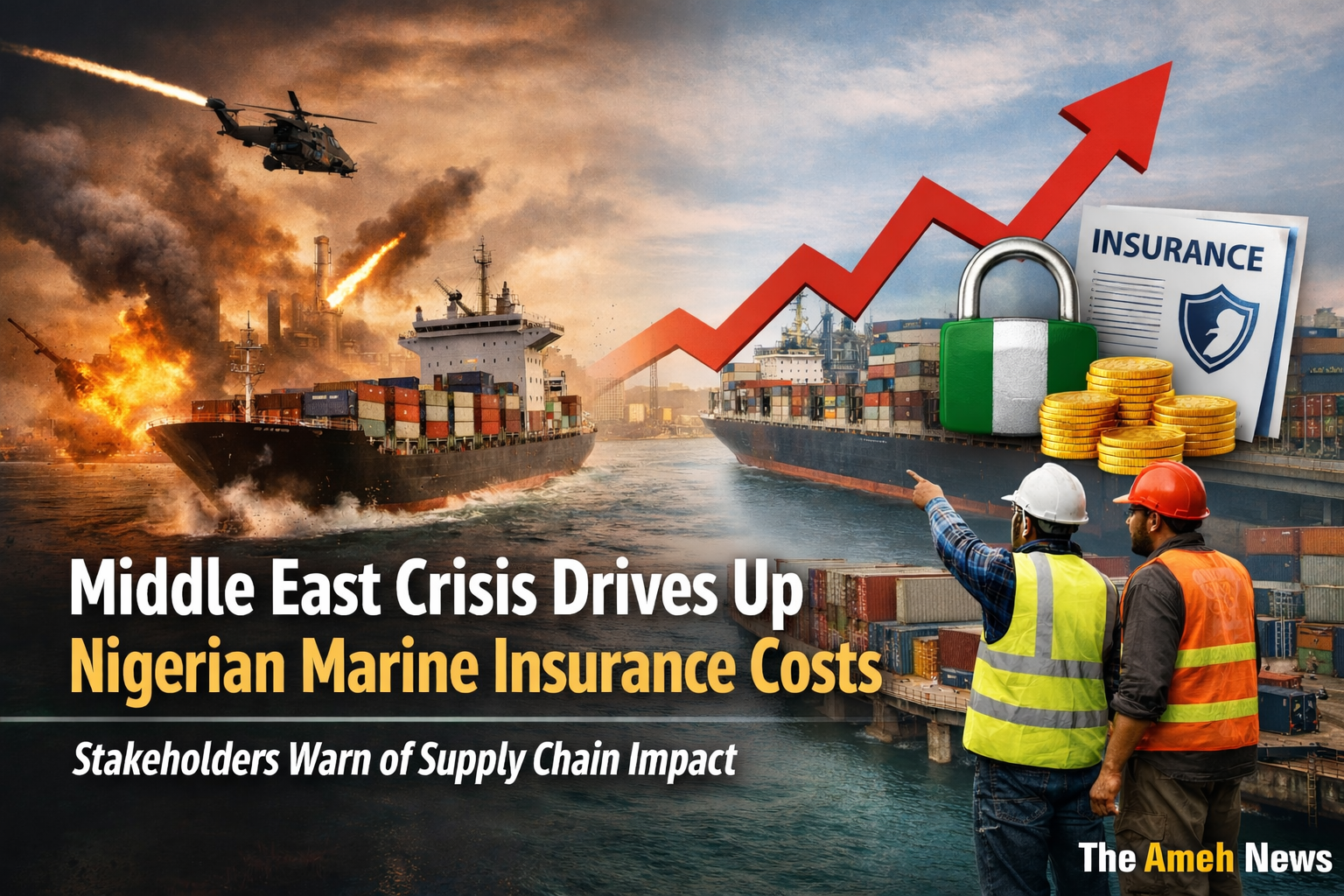
 The ongoing geopolitical tensions in the Middle East are sending ripples across global shipping lanes, and Nigeria’s marine insurance ecosystem is feeling the pressure. Rising risks along critical trade routes have led to increased premiums, prompting insurers, shipowners, and maritime stakeholders to adjust strategies to safeguard operations.
Industry reports indicate that marine insurance premiums for vessels transiting high-risk Middle Eastern waters have surged, reflecting the heightened threat of conflict, piracy, and sanctions. Local insurers are exploring alternative risk-sharing mechanisms and reinsurance arrangements to maintain coverage capacity without overburdening clients.
Economist Celestine Ukpong explained, “The Middle East crisis elevates geopolitical risk in maritime operations, which translates directly into higher insurance costs. Shipping companies must carefully weigh operational routes, cargo value, and premiums to maintain profitability.”
PR experts highlight the importance of clear stakeholder communication. Dr. Ejike Nduilo, a PR agency specialist, said, “Marine insurers must proactively inform clients about evolving risk landscapes. Transparent messaging reduces panic, builds trust, and ensures business continuity in volatile markets.”
From a financial perspective, Peter Adebayo, FCA, emphasized the need for strong risk management frameworks: “Insurance companies must maintain liquidity and solvency while managing increased claims exposure. Nigerian insurers are learning to balance risk and profitability amid global uncertainties.”
Adding a practical industry perspective, a senior executive at a Lagos-based logistics firm, who requested anonymity, stated: “The rising insurance costs are already impacting supply chain operations. We are reviewing shipping routes and timing to minimize exposure, but ultimately, our customers may face higher costs. Collaboration with insurers and shipping partners is now critical to keep goods moving safely.”
Stakeholders are urging NAICOM, Nigeria’s insurance regulator, to issue clear guidance encouraging marine insurers to adopt prudent underwriting practices, maintain adequate reserves, and strengthen claims management protocols in response to heightened geopolitical risks. Experts emphasize that NAICOM’s top priority should be ensuring insurers remain solvent, protecting customers, and enabling the marine insurance sector to continue supporting national trade even under elevated global risk conditions.
The reports revealed that Port authorities and shipping operators in Lagos and other Nigerian coastal cities are closely monitoring these developments. Some shipping firms have revised contracts, implemented stricter safety protocols, and leveraged technology such as real-time cargo tracking and predictive risk analytics to reduce exposure.
While the crisis poses immediate operational challenges, analysts see potential long-term opportunities. The Nigerian marine insurance sector may accelerate adoption of advanced risk assessment tools, foster partnerships with global reinsurers, and improve regulatory frameworks to enhance resilience.
As Celestine Ukpong concluded, “This is a stress test for the marine insurance ecosystem. Companies that adapt quickly, under the guidance of regulators like NAICOM, will not only survive but gain competitive advantage in a world where maritime risks are increasingly volatile.
”Middle East tensions push up Nigerian marine insurance costs, affecting shipping and supply chains. Stakeholders and experts urge NAICOM to enforce prudent underwriting, reserves, and claims management to protect insurers, customers, and trade.
Discover more from Ameh News
Subscribe to get the latest posts sent to your email.