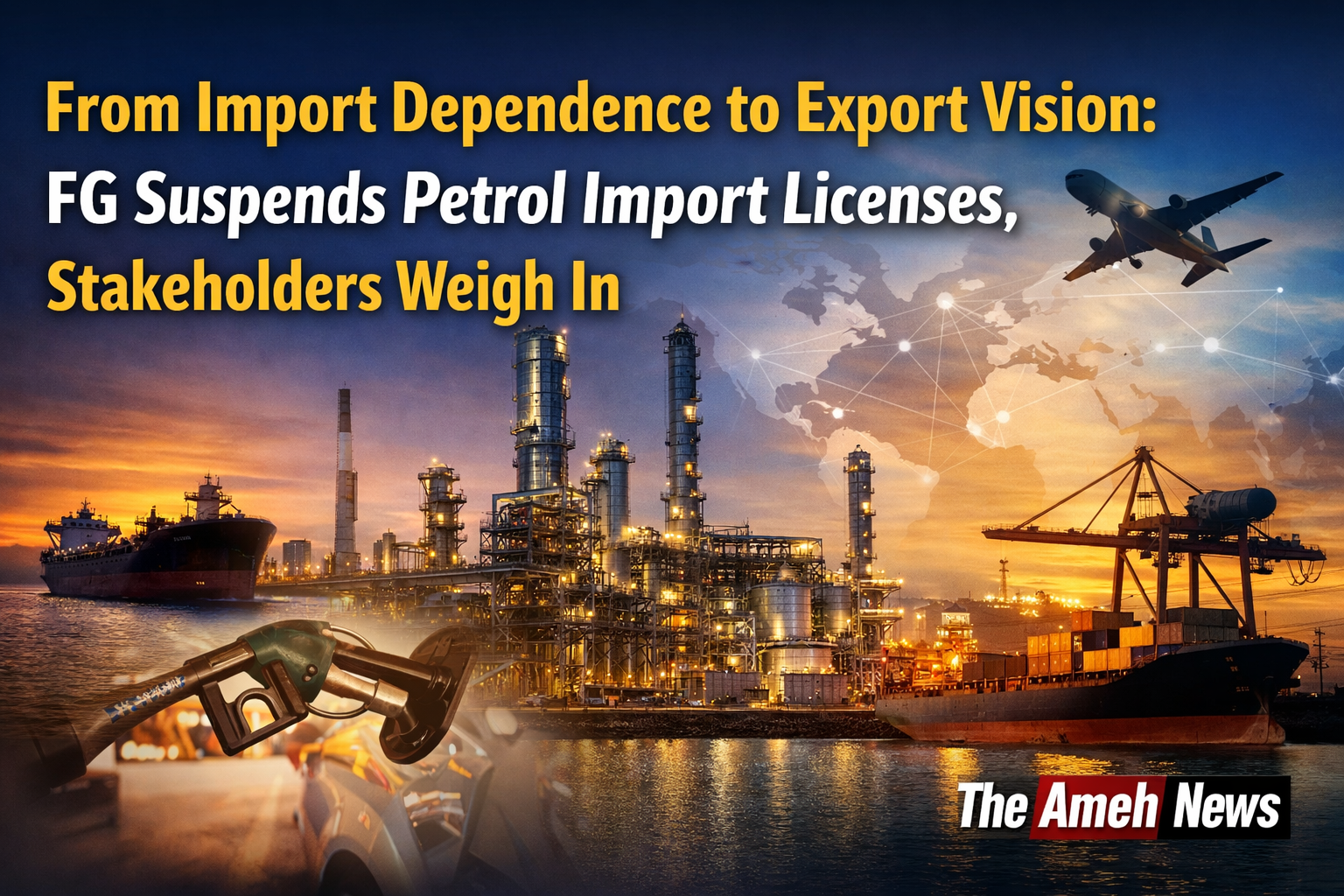
 In a landmark policy shift, the Federal Government has suspended petrol import licenses, signaling Nigeria’s move from decades of fuel import dependence toward a domestic refining and export-oriented energy strategy. Industry experts and stakeholders have described the decision as strategic, timely, and potentially transformative for the country’s energy transition.
In a statement endorsed and sent by George Ene-Ita, Head of Public Affairs at the Nigerian Midstream and Downstream Petroleum Regulatory Authority (NMDPRA), emphasized that the measure is designed to prioritize local production where domestic refineries can meet demand, citing the capacity of the Dangote Refinery to supply the majority of Nigeria’s petrol needs.
Stakeholders’ Reactions
Celestine Ukpong, economist, described the move as a welcome development:
“This policy is strategic in Nigeria’s energy transition history. It encourages self-reliance, conserves foreign reserves, and positions oil marketers to think beyond imports toward export-ready operations.”
Dr. Ejike Nduilo, PR specialist, highlighted the long-term communication and investor benefits:
“Making this permanent could significantly enhance public confidence and attract foreign and local investors into domestic refining and downstream infrastructure.”
Peter Adebayo FCA, financial analyst, reflected on sustainability and market impact:
“If maintained, the suspension promotes efficient resource use, reduces exposure to volatile global markets, and drives structural transformation in the oil marketing sector. It is a strategic step in Nigeria’s energy independence journey.”
Abubakar Maigandi, President of the Independent Petroleum Marketers Association of Nigeria, noted that oil marketers must now pivot inward:
“This gives marketers a clear signal to focus on local operations, optimize efficiencies, and prepare for export trade. It’s sustainable if supported by a steady crude supply and effective regulatory oversight.”
Strategic Significance
Analysts say the policy is more than a regulatory measure—it is a milestone in Nigeria’s energy transition history:
Reduces dependency on imported fuel.
Strengthens domestic refining and storage capacity.
Encourages oil marketers to build export-oriented strategies, aligning with global market opportunities.
Preserves foreign reserves, stabilizes the naira, and promotes investor confidence.
If this action is turned permanent, experts agree it could be a defining step in Nigeria’s journey toward energy self-sufficiency and export readiness, marking a historic pivot in the country’s petroleum industry.
Nigeria suspends petrol import licenses, marking a strategic shift toward domestic refining and export-ready operations. Nigeria suspends petrol import licenses, marking a strategic shift toward domestic refining and export-ready operations. Experts highlight sustainability and energy transition significance.
Discover more from Ameh News
Subscribe to get the latest posts sent to your email.