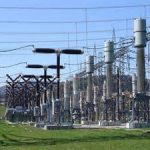
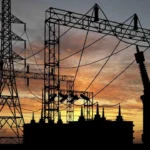
 For decades, Nigeria’s electricity sector has suffered from a paradox: billions of dollars invested in power infrastructure, yet millions of households and businesses still struggle with unreliable electricity.
Across the country, power plants built with public funds operate far below their installed capacity. Transmission lines often lack the capacity to evacuate the electricity generated, resulting in significant volumes of power being stranded.
Successive ministers of power have struggled to untangle Nigeria’s deeply entrenched electricity problems, with generation and distribution becoming a persistent burden of their tenures
Nigeria’s electricity challenge is both structural and longstanding. Despite having an installed generation capacity estimated at over 13,000 megawatts, the actual power delivered to the national grid often fluctuates between 3,500 megawatts and 5,000 megawatts.
This shortfall stems from several interconnected problems: gas supply constraints affecting thermal plants, transmission bottlenecks limiting evacuation of generated power, poor maintenance regimes in many facilities, and weak commercial structures, including non-bankable power purchase agreements.
As a result, substantial infrastructure financed with public funds remains either underutilised or idle.
President Bola Tinubu, in a 6 March 2026, statement signed by the Special Adviser to the President on Information and Strategy, Bayo Onanuga, proposed Grid Asset Management Company Limited, designed as a response to this long-standing structural challenge.
The President constituted an 11-member committee to ensure the smooth incorporation of GAMCO, following the Federal Executive Council’s approval for the establishment of the company at its Wednesday, 4 March 2026, meeting.
The Chief of Staff to the President, Femi Gbajabiamila, who performed the inauguration on behalf of the President, said the committee was critical to the realisation of the President’s aspirations in Nigeria’s power sector, which was one of his campaign promises.
“The proposed establishment of GAMCO is one of the revolutionary steps taken by Mr President and this administration in the all-important power sector. We are here for the inauguration of the Committee on Grid Asset Management Company, which is basically to optimise and revolutionise power generation and, in particular, the grid and transmission sector,” the Chief of Staff said.
Gbajabiamila is the chairman of the committee, with the Attorney-General of the Federation and Minister of Justice, Lateef Fagbemi (SAN); Minister of Power, Adebayo Adelabu; Minister of Works, David Umahi; and Minister of Finance, Wale Edun, as members.
Other members are the Minister of Communication and Digital Economy, Bosun Tijani; Minister of Science, Technology and Innovation, Kingsley Udeh (SAN); Minister of Aviation and Aerospace Development, Festus Keyamo; Minister of State (Petroleum), Heineken Lokpobiri; Chairman of the Nigeria Revenue Service, Zacchaeus Adedeji; and energy expert Prof. Yemi Oke.
The Permanent Secretary of the Cabinet Affairs Office, Dr John Chidiebere Ezeamama, is the committee’s secretary.
At the inauguration of the committee, Gbajabiamila said it would conduct a comprehensive review of existing laws, regulations, policies, and institutional frameworks governing the electricity value chain, including generation, transmission, distribution, and market operations.
“The committee will examine the implications of the Electricity Reform Laws (2025) and related unbundling arrangements on asset ownership, management, and regulatory oversight. It will identify areas of conflict, overlap, or inconsistency between the proposed GAMCO framework and extant legal and regulatory instruments.
“The committee will also assess the legal status, ownership structure, and contractual obligations of the Niger Delta Power Holding Company and National Integrated Power Project assets, including the Omotosho, Olorunshogo, and Ihovbor plants, which GAMCO plans to use for its pilot phase.
“It will evaluate the interface between GAMCO’s proposed mandate and the statutory functions of the Nigeria Electricity Regulatory Commission and determine the fiscal, financial, and market implications of the proposal, including subsidy exposure, market liquidity, and revenue frameworks.
“In addition, the committee will determine whether the establishment and operationalisation of GAMCO require amendments to primary legislation, subsidy regulations, and executive directives,” he said.
The GAMCO proposal seeks to unlock underutilised electricity capacity and improve power supply without requiring immediate investment in new power plants. By revitalising existing assets, GAMCO aims to deliver more reliable electricity to homes and businesses, reduce waste of public investment, and attract private sector participation, ultimately supporting economic growth.
At its core, GAMCO represents a shift in thinking: instead of building new infrastructure first, the government wants to extract value from assets already in place.
As the policy concept driving the initiative states: “The cheapest megawatt is the one already built but not working.”
Recovering power already built
Nigeria has invested heavily in the National Integrated Power Projects, which were conceived in the mid-2000s to address the country’s chronic electricity shortage. Funded largely through excess crude oil revenues, the projects resulted in several gas-fired power plants across the country.
However, many of these plants have struggled with operational challenges ranging from gas supply constraints and maintenance gaps to transmission evacuation bottlenecks.
For example, some plants operate far below their installed capacity, while others experience long periods of inactivity due to gas supply disruptions.
The proposed GAMCO structure aims to address these issues by transforming stranded government-owned power assets into commercially viable projects capable of attracting private investment.
According to the proposal currently under review by an interministerial committee, the company will be fully owned by the Federal Government through the Ministry of Finance Incorporated.
Unlike a traditional government agency, GAMCO will operate as a commercially structured entity incorporated under the Companies and Allied Matters Act, designed to mobilise private capital through ring-fenced project financing structures.
Its mandate is narrowly focused: optimise existing assets and turn them into reliable megawatts delivered to the national grid.
The Benin–Lagos corridor pilot
The initiative will begin with a pilot project focused on one of the most economically strategic parts of Nigeria’s electricity system — the Benin–Lagos transmission corridor.
This corridor supplies electricity to Lagos and Ogun states, Nigeria’s industrial and commercial heartland, where power demand is among the highest in the country.
The pilot phase will focus on three major NIPP power plants: Omotosho Power Plant, with 513 MW installed capacity; Olorunsogo Power Plant, having 754 MW installed capacity; and Ihovbor Power Plant, with 508 MW installed capacity. Together, the plants represent one of the largest clusters of underutilised generation capacity in Nigeria.
Collectively, the plants have a combined installed capacity of 1,775 megawatts, but much of this capacity remains underutilised.
By focusing on three key NIPP plants, the GAMCO pilot aims to demonstrate that existing infrastructure can be revitalised and made commercially productive.
Through operational improvements, gas supply agreements, maintenance upgrades and improved transmission evacuation, the government believes GAMCO can recover at least 1,600MW within 18 to 24 months.
If achieved, this would represent a significant increase in electricity available to the national grid.
New transmission model
One of the most critical barriers to improved electricity supply in Nigeria is the transmission network. While generation capacity has expanded in recent years, the transmission grid has struggled to keep pace.
Beyond improving generation, the initiative also proposes a major shift in how transmission infrastructure is developed.
Nigeria’s power system traditionally builds transmission lines linked to individual power plants. If that line fails, the plant effectively loses its ability to evacuate electricity. Experts often describe the grid as the weakest link in Nigeria’s electricity value chain.
Discover more from Ameh News
Subscribe to get the latest posts sent to your email.