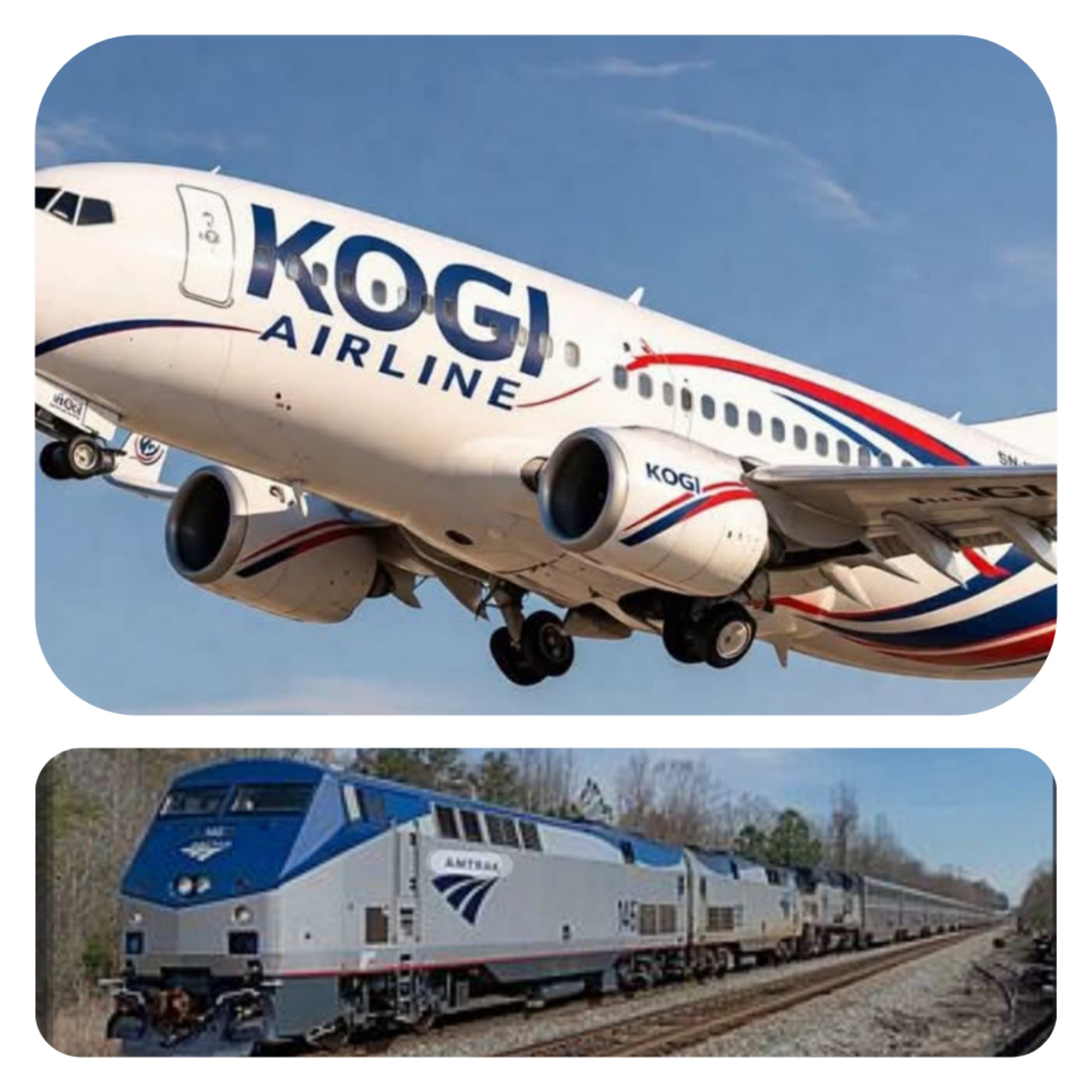
 The intensifying debate over the proposed airport project in Kogi State has taken a decisive turn, evolving beyond a question of infrastructure into a broader examination of economic viability, strategic planning, and the future of subnational development in Nigeria.
What began as a sharp critique by Prince Omera Ugbede Opaluwa directed at the administration of Governor Ahmed Usman Ododo has now matured into a nuanced policy conversation—one that is increasingly pointing toward integrated transport systems, particularly rail connectivity, as a more viable pathway to growth.
At the heart of this emerging consensus is a compelling proposition: if Kogi must pursue airport development, it should be strategically tied to a rail-linked economic corridor—particularly through the proposed Kogi International Airport, Zariagi.
Flashback: The Airport That Sparked a Statewide Debate
The now-famous assertion that “airport is not a priority” triggered widespread reactions across Kogi and beyond. The critique centered on a fundamental issue—whether building a passenger airport in a state with low air travel demand makes economic sense.
Citing data and national trends, Omera questioned the sustainability of such a project, noting that Nigeria already operates numerous underutilized airports. Even major aviation hubs like Nnamdi Azikiwe International Airport and Murtala Muhammed International Airport require substantial traffic and continuous investment to remain viable.
For Kogi, located just a short distance from Abuja, the need for a standalone passenger airport appeared questionable.
A New Dimension: The Zariagi Airport and Rail Link Vision
Amid the criticism, a new perspective has emerged—one that reframes the airport not as an isolated project, but as part of a broader, integrated transport ecosystem.
The proposed Kogi International Airport, Zariagi, is now being viewed through a different lens: not merely as an aviation facility, but as a multi-modal transport hub linked directly to the Federal Capital Territory through rail.
This model introduces a powerful economic logic:
Rail connectivity between Kogi and Abuja would significantly reduce travel time
It would expand passenger catchment beyond Kogi to include FCT commuters
It could stimulate business travel, logistics, and regional trade
More importantly, such integration could transform the airport from a potentially underutilized asset into a functional node within a larger economic network.
Rail as the Missing Link
Transport economists increasingly agree that rail connectivity is the critical factor that could determine the viability of the Zariagi airport project.
By linking Kogi directly to Abuja via rail:
Passenger volume could increase organically
Logistics and cargo movement could be streamlined
Businesses could operate across both locations seamlessly
This is not just a transport solution—it is an economic strategy.
Globally, successful regional airports are rarely standalone projects; they thrive when embedded within integrated transport systems that include rail, road, and logistics infrastructure.
Revenue Implications: Boosting Internally Generated Revenue (IGR)
One of the most compelling arguments in favor of the rail-linked airport model is its potential impact on Kogi’s internally generated revenue (IGR).
With a functional rail-air integration:
Increased passenger traffic translates to higher airport revenues
Logistics and cargo services create new income streams
Commercial activities around the transport hub stimulate taxation and business growth
In essence, the project could evolve into a self-reinforcing economic ecosystem, where infrastructure drives commerce, and commerce sustains infrastructure.
Passenger vs Cargo Debate Revisited
The ongoing discourse has also sharpened the distinction between passenger-focused airports and cargo-driven aviation infrastructure.
For Kogi:
A purely passenger airport remains economically risky without sufficient demand
A cargo-focused model requires strong industrial and agricultural output
However, a hybrid model supported by rail connectivity offers a middle ground—one that leverages both passenger movement and emerging logistics opportunities.
Kogi’s Broader Economic Strengths Still Hold the Key
Even as the airport debate evolves, experts insist that Kogi’s long-term prosperity lies in its broader economic ecosystem.
Logistics Hub Potential
Strategically positioned between northern production zones and southern markets like Lagos State, Kogi can serve as Nigeria’s central distribution hub.
Inland Water Transport Advantage
Lokoja’s location at the confluence of major rivers offers opportunities for barge transport and inland ports—critical for reducing logistics costs.
Industrial and Mineral Wealth
With abundant solid minerals, Kogi can develop industrial clusters that support manufacturing and export.
Agricultural Value Chain
The state’s fertile land and proximity to markets position it as a key player in Nigeria’s food security strategy.
The Real Issue: Integration vs Isolation
The central lesson emerging from the debate is clear:
Infrastructure must be integrated to be effective.
An airport built in isolation may struggle.
An airport connected to rail, roads, and economic clusters can thrive.
Policy Direction: What Should Kogi Do Next?
Drawing from the ongoing discourse, experts outline a clear roadmap:
1. Prioritize Rail Connectivity
Link Kogi directly to Abuja to unlock passenger and economic flow.
2. Develop Zariagi as a Multi-Modal Hub
Position the airport within a network of rail, road, and logistics infrastructure.
3. Focus on Economic Clusters
Align the airport with agriculture, mining, and industry to drive demand.
4. Avoid Standalone Prestige Projects
Ensure every major investment is backed by clear economic returns.
Final Reflection: A Turning Point for Strategic Development
The Kogi airport debate has evolved from criticism into constructive dialogue—one that is gradually shaping a more sophisticated understanding of development.
It is no longer about whether the state should build an airport.
It is about how that airport fits into a broader economic vision.
With the integration of rail transport linking Kogi to Abuja, the proposed Zariagi airport could shift from being a contested project to a transformative one—capable of boosting connectivity, stimulating commerce, and significantly increasing the state’s internally generated revenue.
Conclusion: From Controversy to Opportunity
Kogi stands at a defining moment.
By embracing integrated infrastructure—where rail, road, and aviation work together—the state can unlock its full potential as a central economic hub in Nigeria.
The path forward is clear:
Build systems, not symbols. Connect markets, not just locations.
If executed strategically, the Kogi International Airport, Zariagi—anchored by rail connectivity—could become more than an airport.
It could become the engine of a new economic era for Kogi State.
Kogi State’s airport debate shifts as experts propose a rail-linked Zariagi airport model to boost connectivity, economic growth, and internally generated revenue.
An in-depth analysis of Kogi’s airport controversy, highlighting how rail connectivity to Abuja could transform the Zariagi airport into a viable economic hub driving revenue and growth.
Discover more from Ameh News
Subscribe to get the latest posts sent to your email.