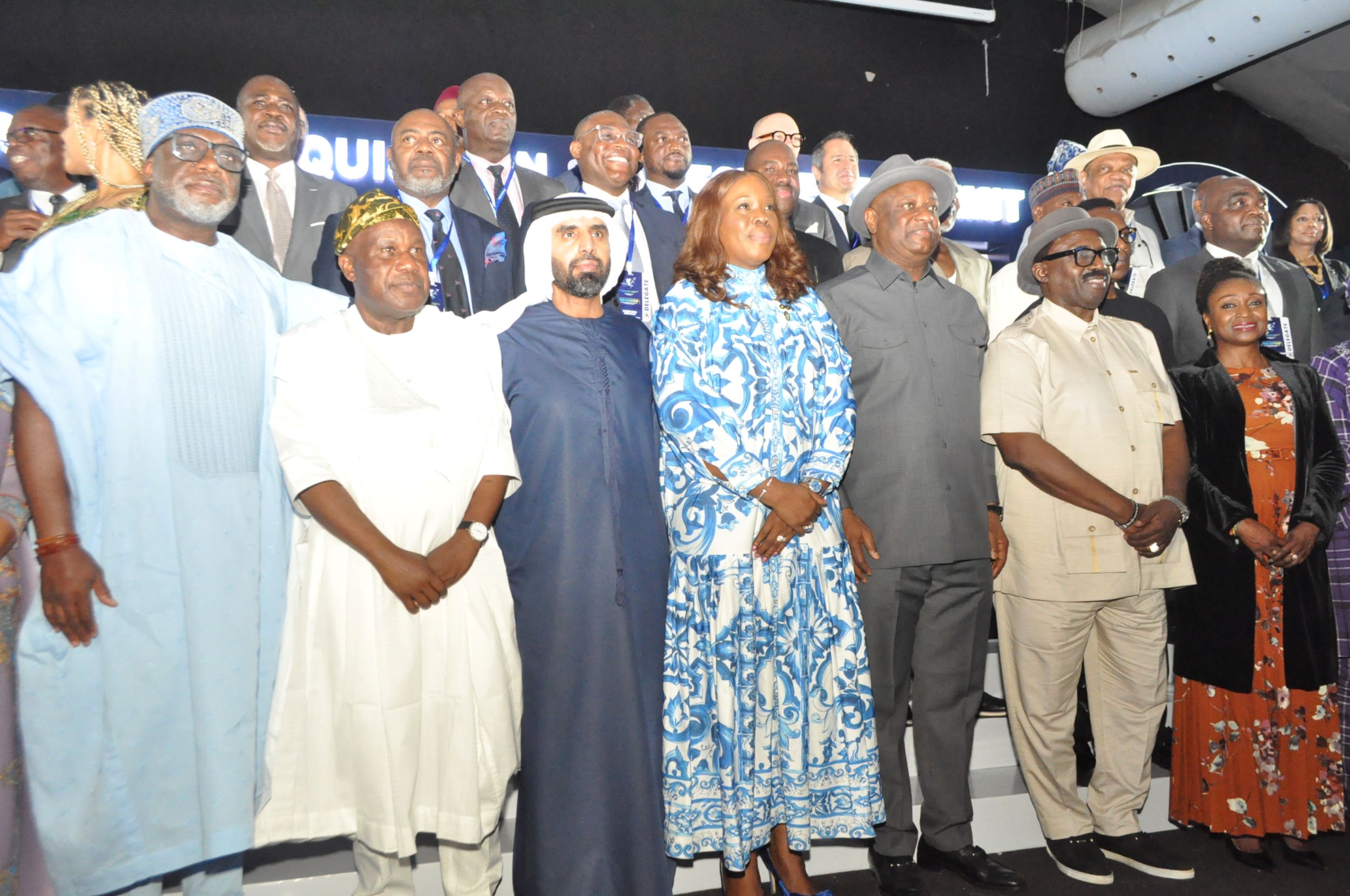
 PIX From left: Chairman, United Nigeria Airlines, Prof. Obiora Okonkwo; Chairman, Senate Committee on Aviation, Senator Buhari Abdulfatai; Consul General of United Arab Emirates, Lagos, H.E. Mr. Sadem Alaberi; Representative of Lagos State Governor, Commissioner for Commerce Cooperative Trade and Investment, Mrs. Folashde Ambrose; Minister of Aviation and Aerospace Development, Mr. Festus Kayamo; Director General, Nigerian Civil Aviation Authority (NCAA) Capt. Chris Najomo and Secretary General, African Civil Aviation Commission, Adetunke Adeyemi, during the Nigerian Aircraft Acquisition and Investment Summit (NAAIS) 2026 in Lagos on 1/4/2026. Photo Sundsy Eshiet
Nigeria’s push to reposition its aviation sector as a global investment destination gained significant momentum on Wednesday as the Nigerian Aircraft Acquisition and Investment Summit (NAAIS 2026) officially commenced in Lagos, drawing top-tier global financiers, aircraft manufacturers, and industry stakeholders.
Held at the iconic Federal Palace Hotel, the summit marks a defining moment in Nigeria’s aviation transformation agenda, with the Minister of Aviation and Aerospace Development, Festus Keyamo, leading a strong call for international partnerships and capital inflows into the sector.
In his keynote address, Keyamo declared that Nigeria is ready for large-scale aviation investments, stressing that recent reforms have significantly strengthened institutional frameworks and boosted investor confidence.
He assured global partners that the country has moved beyond policy intentions to tangible structural improvements, including regulatory alignment, enhanced compliance systems, digital transformation, and infrastructure renewal across airports nationwide.
According to the Minister, data from the International Air Transport Association highlights Nigeria’s growing aviation relevance, with 2.1 million international passenger departures recorded in 2023, direct connectivity to 38 countries, and 24 airports offering scheduled commercial services. He added that 17 new international routes introduced in the past five years further reinforce Nigeria’s position as a strategic aviation hub in Africa.
“These figures reflect not just market size, but connectivity strength and strategic importance, especially when viewed against Nigeria’s population of over 200 million people,” Keyamo noted.
He emphasised that ongoing airport development projects at both federal and state levels demonstrate a coordinated national effort to deepen connectivity, strengthen trade infrastructure, and position Nigeria as a gateway for regional and intercontinental travel.
Beyond passenger traffic, the Minister drew attention to the immense potential of air cargo, describing it as a critical growth frontier. He explained that while air cargo accounts for less than one percent of global trade volume, it represents about 35 percent of trade value—making it a vital driver for high-value exports, pharmaceuticals, agribusiness, and e-commerce.
“Aviation is not just about moving people; it is an economic platform that supports trade, logistics, and national competitiveness,” he said, adding that cities such as Lagos, Abuja, Kano, and Port Harcourt must evolve into integrated economic hubs.
Keyamo also referenced projections by Boeing, which estimate that Africa will require over 1,200 new aircraft and more than 70,000 aviation professionals over the next 20 years. He stressed that Nigeria must strategically position itself to capture this opportunity by aligning aircraft acquisition with local Maintenance, Repair and Overhaul (MRO) capabilities, workforce development, and efficient airport systems.
The summit, he explained, is designed to move beyond discussions to practical solutions by convening key players across the aviation value chain—including OEMs, lessors, banks, insurers, and regulators—to create structured financing models and unlock access to affordable aircraft leasing and acquisition.
Industry observers describe NAAIS 2026 as a critical platform for addressing long-standing challenges in aircraft financing, fleet modernisation, and airline sustainability in Nigeria. It is also expected to foster new partnerships that will strengthen local capacity, enhance route economics, and improve the competitiveness of Nigerian carriers.
Keyamo reiterated that Nigeria has made measurable progress in key areas important to investors, including creditor assurance, revenue repatriation, and institutional transparency.
“We are building an aviation ecosystem that is investable, competitive, and globally relevant. Nigeria is no longer a market of potential alone—it is a market of opportunity backed by reform and structure,” he said.
As deliberations continue, stakeholders are optimistic that the summit will deliver actionable outcomes capable of transforming Nigeria into a leading aviation hub in Africa—where capital meets opportunity, and policy reforms translate into measurable growth.
NAAIS 2026 opens in Lagos with Festus Keyamo calling for global investment in Nigeria’s aviation sector, highlighting reforms, cargo growth, and aircraft financing opportunities.
Discover more from Ameh News
Subscribe to get the latest posts sent to your email.