Stakeholders push nationwide awareness drive as new handbook equips households and communities with practical water safety tools
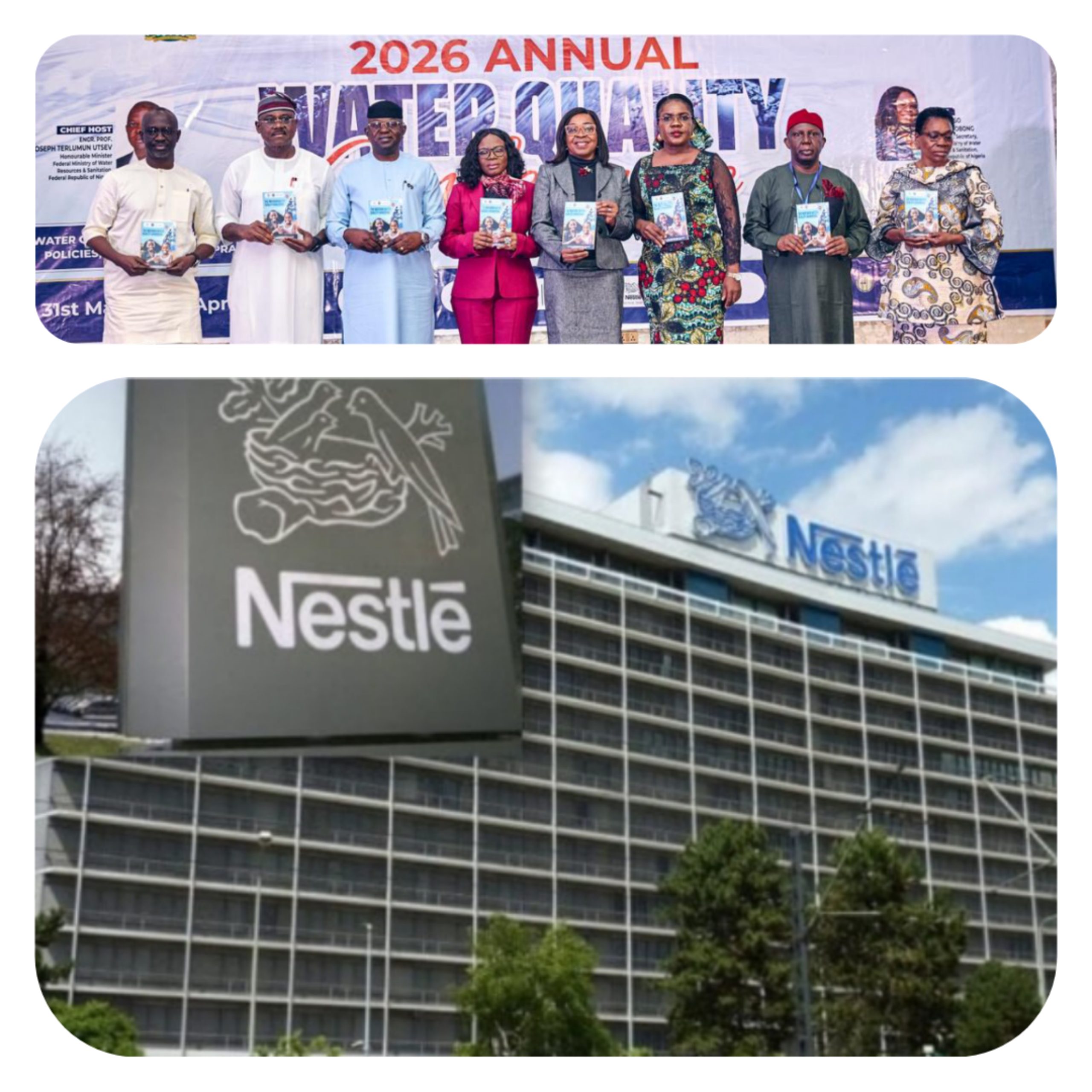 In a strategic move to address persistent water safety challenges and reduce the risks of contamination, Nestlé Nigeria Plc, in partnership with the Federal Ministry of Water Resources and Sanitation and the Organised Private Sector in Water, Sanitation, and Hygiene (OPS-WASH), has launched a National Water Quality Advocacy Handbook aimed at empowering Nigerians with practical knowledge to ensure safe water use.
The handbook was unveiled at the Annual Water Quality Conference held in Abuja, signalling a renewed commitment by both public and private sector stakeholders to tackle water quality issues that continue to impact millions of Nigerians.
The initiative forms a critical part of Nestlé Nigeria’s broader Water Quality Advocacy campaign and is designed to bridge the gap between technical water safety standards and everyday practices at the household and community levels.
Bridging Knowledge Gaps in Water Safety
The newly launched handbook translates complex water quality principles into easy-to-understand, actionable steps tailored for a wide range of users, including households, policymakers, regulators, and industry players. It provides guidance on identifying contamination risks, proper water handling and storage, simple household treatment techniques, and strategies to protect water sources.
A key message of the handbook is that water clarity does not guarantee safety, as invisible contaminants can still pose serious health risks. This insight is expected to drive behavioural change, especially in underserved and rural communities where access to treated water remains limited.
Government Push for Awareness and Behavioural Change
Speaking at the event, the Honourable Minister of Water Resources and Sanitation, Joseph Terlumun Utsev, stressed that improving water quality outcomes in Nigeria requires sustained public education and awareness.
According to him, equipping citizens with the right knowledge is essential to reducing waterborne diseases and improving overall health outcomes. He described the handbook as a vital tool that will take water safety education directly to communities and promote responsible water use nationwide.
Private Sector Commitment to Water Stewardship
Delivering remarks on behalf of Nestlé Nigeria’s Managing Director, Wassim Elhusseini, Corporate Affairs and Sustainability Lead, Victoria Uwadoka, reaffirmed the company’s commitment to responsible water management.
She noted that water plays a central role not only in Nestlé’s operations but also in public health and economic development. Beyond providing safe, high-quality products, she said the company is focused on protecting shared water resources and improving access to potable water in communities.
Uwadoka explained that the development of the handbook reflects a collaborative effort to strengthen water quality standards and encourage safe practices, particularly at the household level where water is most frequently handled and consumed.
Call for Multi-Stakeholder Collaboration
Also speaking, the National Coordinator of OPS-WASH, Dr Nicholas Igwe, underscored the importance of coordinated action across stakeholders.
He noted that addressing Nigeria’s water and sanitation challenges requires alignment between policy frameworks and grassroots implementation. According to him, the handbook will not only deepen awareness but also help identify gaps requiring technical expertise and financial support.
Nationwide Rollout and Grassroots Engagement
To maximise its impact, the handbook will be made widely accessible through both digital platforms and physical distribution channels. Government agencies and community-based organisations, including RUWASSA, will play a key role in disseminating the material.
This will be supported by a nationwide sensitisation campaign aimed at driving adoption of safe water practices and embedding long-term behavioural change across communities.
Towards a National Water Safety Culture
With water safety increasingly recognised as a public health priority, stakeholders believe the handbook could serve as a catalyst for building a national culture of responsible water use.
As Nigeria grapples with challenges such as inadequate infrastructure, pollution, and climate-related pressures on water resources, initiatives like this are expected to play a crucial role in safeguarding health, enhancing resilience, and supporting sustainable development.
Nestlé Nigeria, in partnership with the Federal Ministry of Water Resources and OPS-WASH, launches a National Water Quality Handbook to promote safe water practices, reduce contamination risks, and improve public health across communities.
Discover more from Ameh News
Subscribe to get the latest posts sent to your email.