 Nigeria has positioned itself at the forefront of Africa’s aviation expansion drive, with the Minister of Aviation and Aerospace Development, Festus Keyamo, declaring the country open for massive investment as global projections signal unprecedented growth across the continent.
Speaking at the Nigeria Aircraft Acquisition and Investment Summit held at Federal Palace Hotel from April 1 to 2, 2026, Keyamo outlined a compelling vision anchored on capital inflow, investor confidence, and sectoral capacity as the pillars for building a globally competitive aviation industry.
He cited projections by Airbus, which estimate that Africa will require about 1,460 new aircraft between 2024 and 2043, driven by rapid urbanisation and a rising middle class. Similarly, Boeing forecasts demand for 1,205 aircraft, alongside a 6% annual growth in air traffic, necessitating over 76,000 additional aviation personnel across the continent.
According to the minister, these figures underscore a strategic shift in global aviation growth toward emerging markets, with Nigeria primed to be a major beneficiary due to its population scale, geographic advantage, and economic relevance.
“Today, Nigeria comes before the world not with aspiration alone, but with evidence of reforms and readiness,” Keyamo stated, emphasising that the country is transitioning from policy reform to actionable investment frameworks.
For decades, he noted, limited access to affordable aircraft financing has constrained Nigerian airlines—hindering fleet renewal, route expansion, and competitiveness. However, under the leadership of Bola Ahmed Tinubu, the government has moved to address these structural challenges.
A major breakthrough has been Nigeria’s strengthened implementation of the Cape Town Convention and its Aircraft Protocol. This includes the issuance of the Federal High Court Practice Direction (2024) and the Irrevocable De-Registration and Export Request Authorisation (IDERA) framework, both designed to enhance creditor protection, simplify aircraft repossession, and reduce leasing risks.
“These reforms matter because capital does not chase opportunity alone—it chases certainty,” the minister explained.
Nigeria has also tackled the long-standing issue of trapped airline revenues. According to the International Air Transport Association, the country cleared 98% of blocked airline funds by mid-2024, restoring confidence among global carriers and investors.
Beyond policy, Keyamo highlighted significant investments in infrastructure and capacity development. Nearly $500 million has been committed to upgrading Lagos’ international airport, reinforcing its status as a key African aviation hub.
In addition, Nigeria is deepening local technical capacity through Maintenance, Repair and Overhaul (MRO) facilities, including projects by Air Peace in Lagos and XEJET in Abuja. Partnerships with global institutions such as Boeing and Cranfield University are also supporting workforce development and safety training.
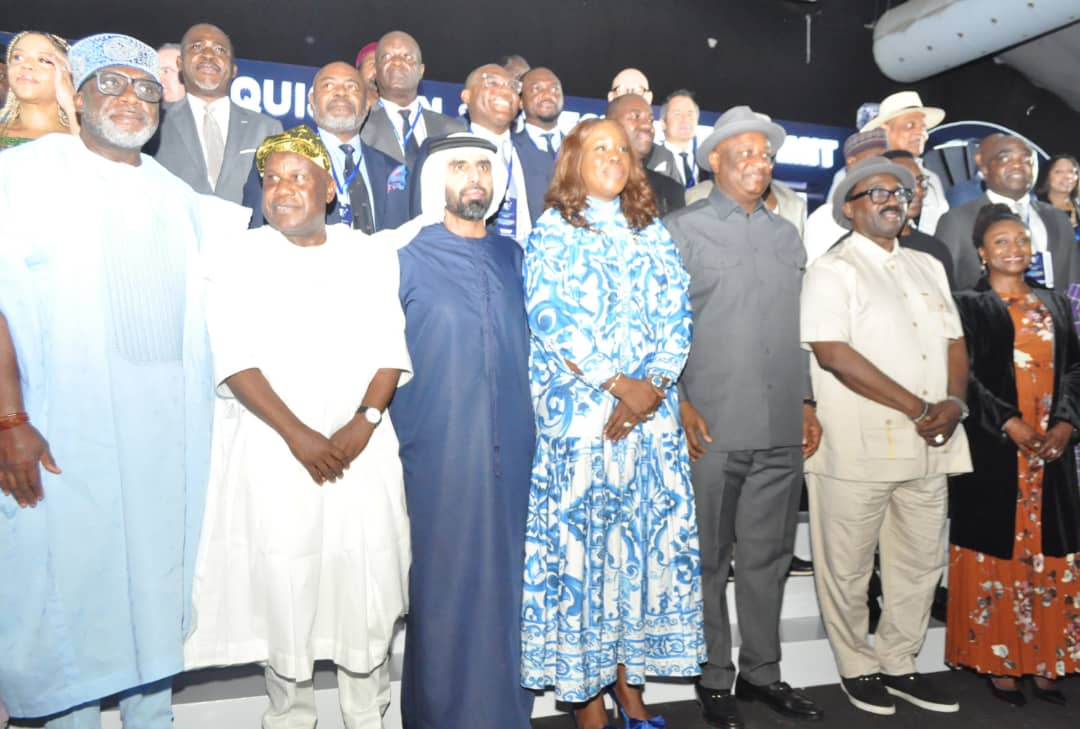 From left: Chairman, United Nigeria Airlines, Prof. Obiora Okonkwo; Chairman, Senate Committee on Aviation, Senator Buhari Abdulfatai; Consul General of United Arab Emirates Lagos, H.H. Mr. Sadem Alaberi; Representative of Lagos State Governor, Commissioner for Commerce Cooperative Trade and Investment, Mrs. Folashde Ambrose; Minister of Aviation and Aerospace Development, Mr. Festus Kayamo; Director General, Nigerian Civil Aviation Authority (NCAA) Capt. Chris Najomo and Secretary General, African Civil Aviation Commission Adetunke Adeyemi, during the Nigerian Aircraft Acquisition and Investment Summit (NAAIS) 2026 in Lagos on 1/4/2026.
.Current industry data further reflects Nigeria’s aviation strength: over 2.1 million international passenger departures in 2023, direct connectivity to 38 countries, and 17 new international routes added within five years—serving a population of approximately 240 million.
Keyamo stressed that the country’s aviation strategy extends beyond passenger movement to cargo and trade logistics. With air cargo accounting for 35% of global trade value despite less than 1% of volume, he described aviation as a critical economic platform for exports, pharmaceuticals, agribusiness, and e-commerce.
“Aviation is not just about mobility; it is about economic competitiveness,” he said, noting plans to develop cargo hubs, cold-chain systems, and smart airport ecosystems across cities like Lagos, Abuja, Kano, and Port Harcourt.
The summit brought together aircraft manufacturers, lessors, financial institutions, airlines, regulators, and policymakers to transition from dialogue to deal-making. Notably, several agreements were signed during the event, signalling growing investor confidence.
Keyamo concluded with a strong call to global partners:
“Nigeria is ready. What we seek now is partnership—one that unlocks affordable financing, strengthens technical capacity, and positions Nigeria not just as an aviation market, but as a platform for aviation growth across Africa.”
With reforms gaining traction and investor sentiment improving, Nigeria now stands at what the minister described as “the threshold of a new aviation era,” where capital, credibility, and capacity converge to unlock the full potential of the sector.
Nigeria’s Aviation Minister Festus Keyamo unveils major investment opportunities as Airbus and Boeing project over 1,400 new aircraft demand across Africa, signalling a new growth era.
Discover more from Ameh News
Subscribe to get the latest posts sent to your email.