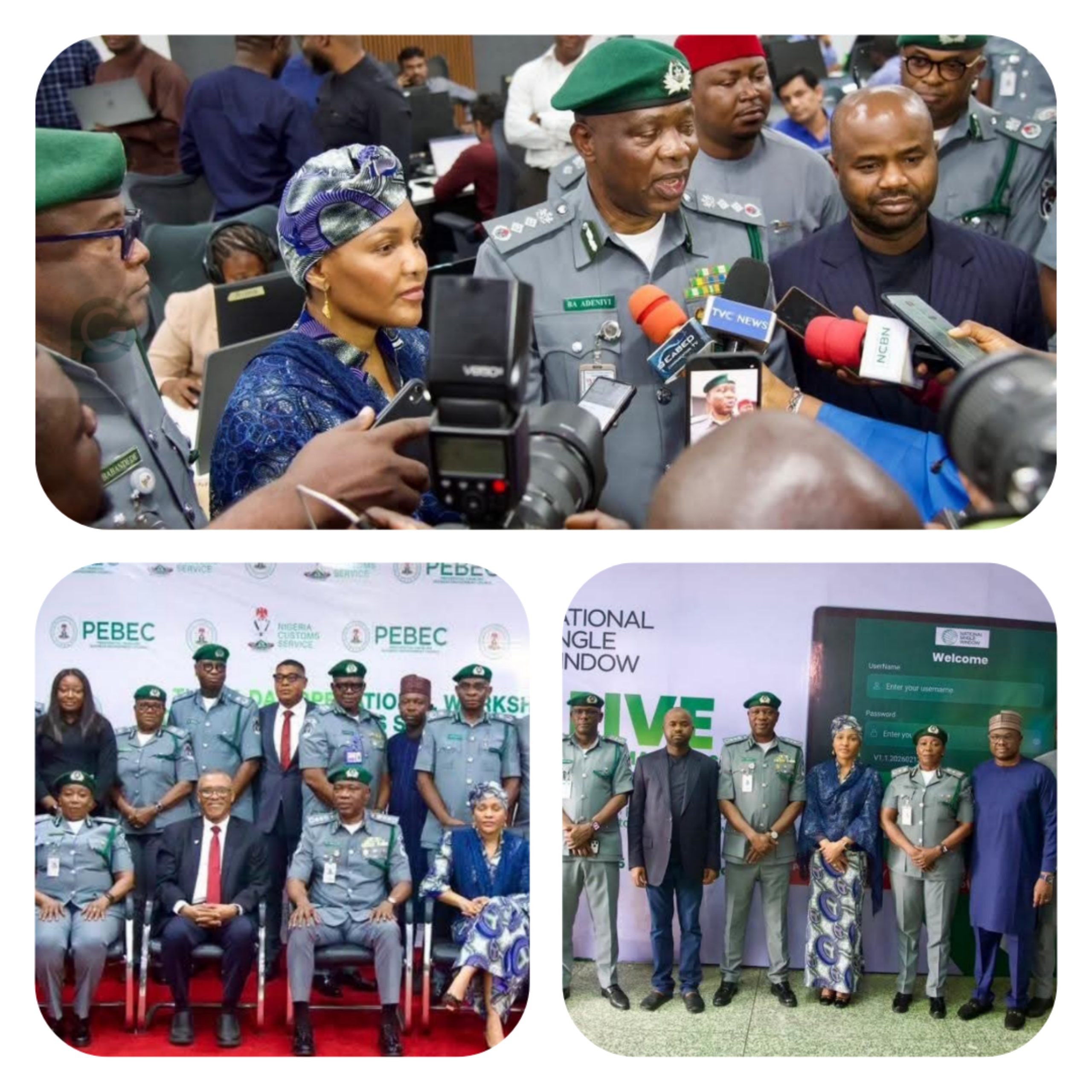
 The Nigeria Customs Service, in collaboration with the Presidential Enabling Business Environment Council (PEBEC), has launched an ambitious and results-oriented reform agenda designed to significantly improve port efficiency, reduce cargo clearance timelines, and strengthen Nigeria’s overall trade competitiveness.
The reform initiative was formally unveiled at the commencement of a three-day operational workshop held in Apapa on Tuesday, 7 April 2026, bringing together senior customs officials, trade facilitators, and key regulatory stakeholders under the theme: “Customs Leadership in Port Efficiency, Inspection Reform and Clearance Timeline.”
The workshop is part of a broader national effort to address longstanding operational bottlenecks at Nigerian seaports, particularly delays linked to inspection procedures, fragmented inter-agency coordination, and inefficiencies in cargo processing systems.
A Shift from Policy to Execution
Declaring the workshop open, the Comptroller-General of Customs, Adewale Adeniyi, said the Service was entering a decisive phase of reform focused not merely on policy formulation, but on measurable implementation and sustained operational discipline.
According to him, the reform agenda is anchored on five strategic pillars: joint inspections across relevant agencies, adoption of risk-based cargo clearance systems, optimisation of scanning infrastructure, strict enforcement of service timelines, and enhanced inter-agency collaboration at the ports.
Adeniyi stressed that the time had come for institutional commitments to translate into real-world outcomes that would be felt by importers, exporters, and logistics operators across the country.
“This workshop is about closing the distance between knowing and doing. The Service must now focus on translating established best practices into consistent operational outcomes,” he said.
He explained that despite significant investments in digitalisation and modern scanning technologies, Nigeria’s port efficiency challenges could only be resolved if implementation gaps were closed and operational discipline strengthened across all commands.
Digital Systems, Intelligence-Led Clearance in Focus
The Customs chief further highlighted a shift toward intelligence-led cargo processing, noting that reforms must ensure that technology investments lead to faster, more transparent, and predictable clearance processes.
He warned that inefficiencies in execution could undermine gains from recent reforms, stressing that the Service would now prioritise accountability and performance tracking across operational units.
To reinforce this commitment, Adeniyi disclosed that the workshop would produce a detailed reform execution matrix, which would serve as a live monitoring tool for tracking progress across commands nationwide.
“The reform implementation matrix will not end up in a filing cabinet. It will be actively monitored, and I will personally follow the progress reports,” he said.
He also urged officers of the Service to demonstrate higher levels of professionalism, integrity, and consistency in carrying out their duties, noting that reform success would depend largely on human conduct as much as technological systems.
PEBEC Pushes Risk-Based Inspection Model
In her remarks, the Director-General of PEBEC, Zahrah Mustapha-Audu, reaffirmed the Council’s commitment to improving Nigeria’s business environment through regulatory efficiency and smarter border management systems.
She emphasized the urgent need to transition from manual and blanket inspection practices to a more targeted, data-driven, and risk-based approach that focuses enforcement resources where they are most needed.
“We must move from inspecting everything to inspecting the right thing,” she stated, adding that excessive inspection processes often contribute to delays, increased logistics costs, and reduced investor confidence.
According to her, streamlined and transparent cargo clearance procedures are critical to reducing the cost of doing business in Nigeria and improving the country’s competitiveness in regional and global trade corridors.
Customs Mandate Expands in Trade Facilitation Drive
Earlier in the workshop, Deputy Comptroller-General for Tariff and Trade, Caroline Niagwan, noted that the evolving role of Customs now places the Service at the centre of Nigeria’s trade facilitation and economic growth agenda.
She explained that operational efficiency must be consistently reflected across all ports and commands, adding that reforms must be fully embedded into daily operations rather than treated as isolated initiatives.
Stakeholder Engagement at National Single Window
As part of efforts to strengthen coordination across the trade ecosystem, the Customs leadership and PEBEC delegation also conducted a strategic visit to the National Single Window facility.
During the visit, they engaged with the Chairman of the Nigeria Revenue Service, Zacch Adedeji, alongside other key stakeholders, to assess ongoing implementation progress and identify operational gaps affecting efficiency.
Discussions at the facility centred on improving data integration, reducing duplication of regulatory processes, and enhancing real-time information sharing among agencies responsible for trade and revenue administration.
Toward a More Competitive Trade Environment
The reform drive marks one of the most coordinated attempts in recent years to reposition Nigeria’s port system as a more efficient, transparent, and investor-friendly gateway for international trade.
Stakeholders at the workshop expressed optimism that sustained collaboration between Customs, PEBEC, and other regulatory agencies could significantly reduce cargo dwell time, improve revenue generation, and strengthen Nigeria’s position in global logistics rankings.
Nigeria Customs Service and PEBEC have launched a joint reform agenda to improve port efficiency, introduce risk-based inspections, and reduce cargo clearance delays across Nigerian ports.
Discover more from Ameh News
Subscribe to get the latest posts sent to your email.