 As Nigeria’s pension industry expands in scale and complexity, fresh concerns are emerging over the ability of the National Pension Commission (PenCom) to effectively function as an impartial adjudicator in disputes involving contributors, employers, and Pension Fund Administrators (PFAs).
With pension assets growing into trillions of naira under the Contributory Pension Scheme (CPS), industry stakeholders warn that the current dispute resolution framework may be overstretched, raising fundamental questions about neutrality, enforcement, and institutional independence.
Rising Disputes in a Growing Industry
From delayed benefit payments and remittance gaps to employer defaults and documentation discrepancies, pension-related disputes are becoming more frequent. In most cases, PenCom serves as the primary arbiter, leveraging its regulatory authority to mediate and enforce compliance.
While this system has helped resolve numerous complaints without resorting to litigation, analysts argue that the increasing complexity of cases is exposing structural limitations.
Experts Weigh In on Neutrality Concerns
Economist Celestine Ukpong believes the core issue lies in institutional design.
“PenCom has done relatively well within its mandate, but adjudication requires a higher level of independence. When a regulator is also a judge, even the perception of bias can weaken confidence in the system,” he said.
Similarly, public relations expert and founder of Henryjvaleens, Dr Ejike Nduilo, emphasised the reputational implications of the Commission’s dual role.
“Trust is the currency of any financial system. Even if PenCom acts fairly, the absence of a clearly independent adjudication structure creates doubt among stakeholders. Perception, in this case, is just as important as reality,” Nduilo noted.
From a financial and compliance standpoint, chartered accountant Peter Adebayo pointed to enforcement challenges as a critical concern.
“The real issue is not just decision-making, but enforcement. In cases involving large employers or public institutions, compliance can be slow. Without a legally binding authority comparable to a court, resolutions may not achieve the desired impact,” Adebayo explained.
Efficiency Versus Independence
Despite these concerns, PenCom’s dispute resolution framework has recorded notable successes, particularly in routine cases. Retirees and contributors have benefited from faster resolution timelines compared to traditional court processes, reducing delays and associated costs.
However, analysts caution that administrative efficiency should not come at the expense of institutional independence.
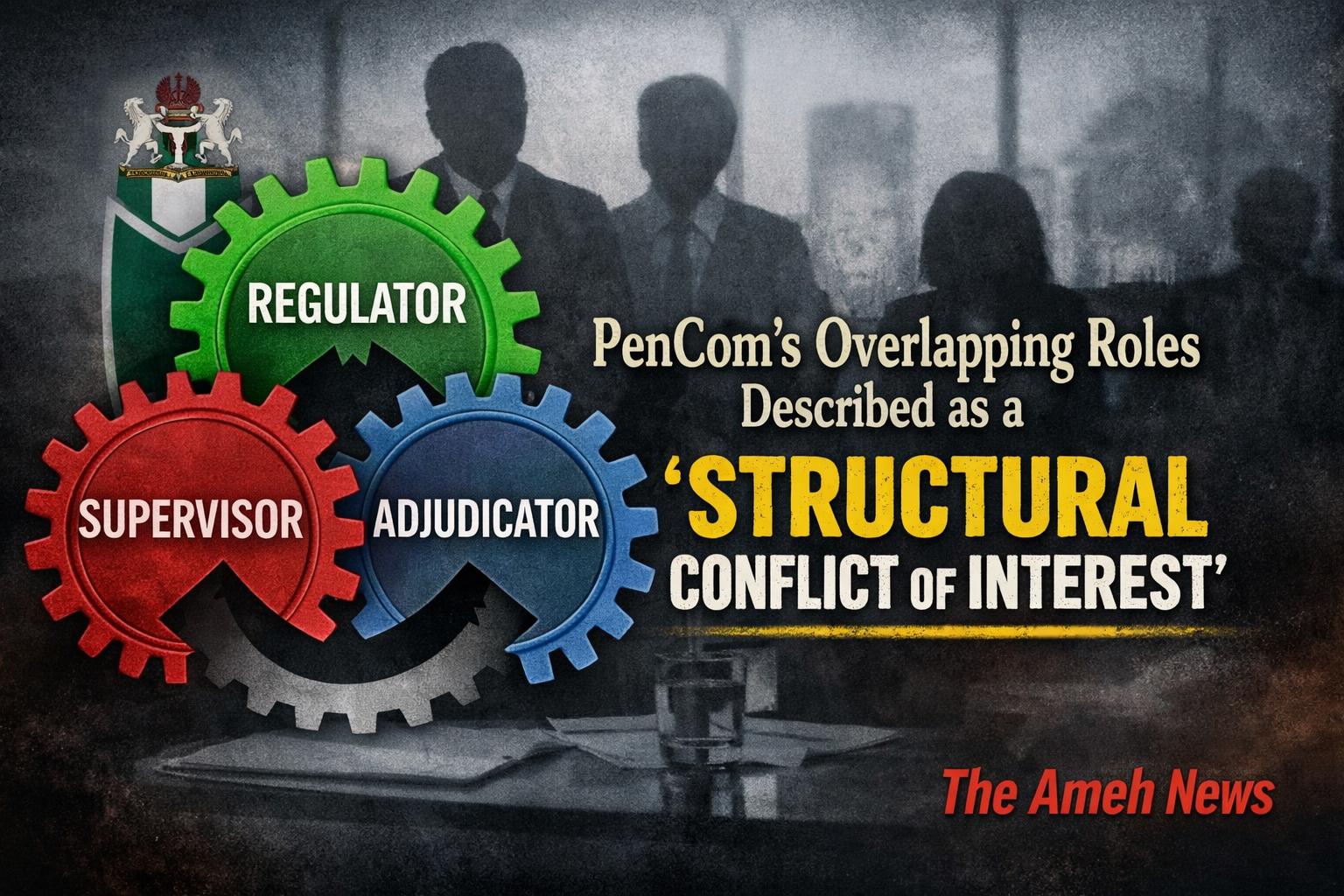
PenCom’s overlapping roles as regulator, supervisor, and adjudicator create what experts describe as a “structural conflict of interest,” especially when disputes involve entities it licenses and oversees.
Enforcement and Legal Limitations
Another critical challenge lies in enforcement. While PenCom can issue directives and impose sanctions, compliance is not always immediate—particularly in cases involving government agencies or large corporate entities.
Legal practitioners note that PenCom’s decisions can still be contested in court, often leading to prolonged legal battles that delay justice for affected pensioners.
Global Best Practices and the Nigerian Gap
In more advanced pension systems, dispute resolution is handled by independent ombudsmen or tribunals with clear legal authority to issue binding decisions.
Nigeria’s current framework lacks this separation, leaving PenCom to operate within a hybrid structure that combines regulation with quasi-adjudication.
Experts argue that as the industry continues to grow, this model may become increasingly unsustainable.
Calls for Reform Gain Momentum
Stakeholders are now calling for the establishment of an independent Pension Adjudication Tribunal to complement PenCom’s regulatory functions.
Such a body, they argue, would:
Ensure impartial dispute resolution
Eliminate conflicts of interest
Strengthen enforcement through binding decisions
Enhance confidence in the pension system
There are also recommendations for greater transparency, including public reporting of dispute outcomes and the implementation of digital complaint tracking systems.
A Defining Moment for Pension Governance
Nigeria’s pension industry remains a critical pillar of long-term economic stability. However, as disputes grow in complexity, the need for a more robust and independent adjudication mechanism is becoming increasingly evident.
While PenCom has demonstrated competence in resolving routine disputes and enforcing compliance, its dual role continues to attract scrutiny from experts and stakeholders alike.
As Celestine Ukpong, Dr Ejike Nduilo, and Peter Adebayo collectively suggest, the path forward lies not in questioning PenCom’s capability, but in strengthening the institutional framework within which it operates.
Without structural reforms to ensure full independence in adjudication, PenCom’s role as both regulator and judge may remain effective—but inherently constrained.
Economists and industry experts question PenCom’s dual role in pension dispute resolution, urging reforms to ensure neutrality, enforcement, and investor confidence.
Discover more from Ameh News
Subscribe to get the latest posts sent to your email.