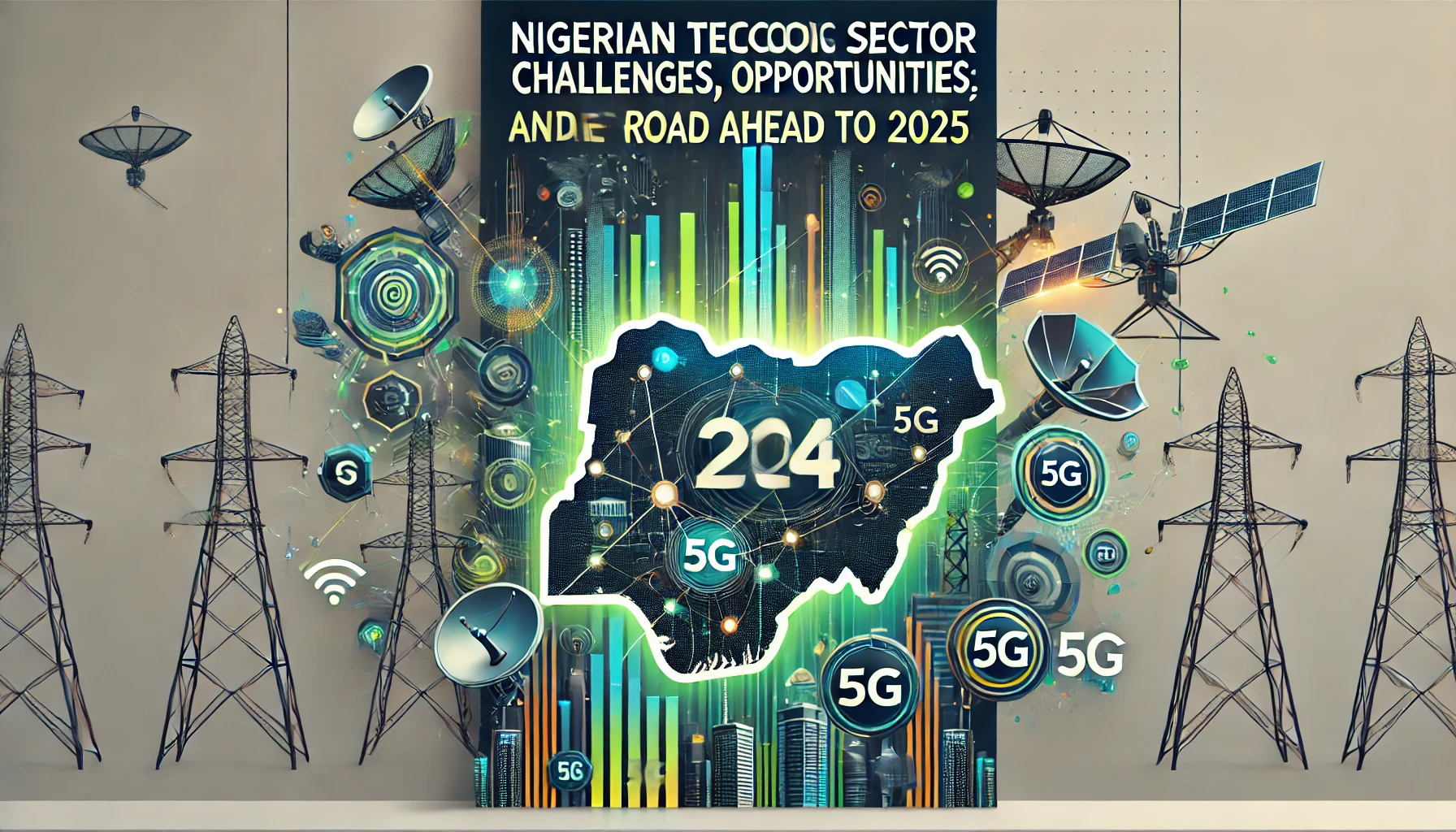
 The Nigerian telecom sector, a cornerstone of the nation’s digital economy, faced a whirlwind year in 2024. Despite navigating complex challenges, the sector showcased remarkable resilience, driven by evolving technologies and a growing appetite for digital connectivity. This reflection unpacks the industry’s journey in 2024, highlighting its challenges, opportunities, and the roadmap toward 2025 through insightful case studies.
Challenges in 2024
The year presented hurdles that tested the mettle of stakeholders across the telecom landscape.
1. Infrastructure Deficits:
Persistent infrastructure gaps, particularly in rural areas, limited access to reliable connectivity. This highlighted the urban-rural digital divide, as operators struggled to expand broadband coverage due to high deployment costs and regulatory bottlenecks.
2. Energy Crisis:
With rising energy costs and an unreliable power supply, telecom operators faced escalating operational expenses. The reliance on diesel generators to power base stations further compounded financial pressures.
3. Regulatory Complexities:
Inconsistencies in policy implementation, alongside prolonged approval processes, created uncertainty for investors and delayed key projects.
4. Cybersecurity Threats:
The rapid digitization of services exposed networks to increasing cyberattacks, requiring heightened investments in robust cybersecurity frameworks.
Opportunities in 2024
Despite these challenges, the sector seized several opportunities to foster growth:
1. 5G Rollout:
The commercial deployment of 5G networks gained traction, offering ultra-fast connectivity and low-latency solutions. This revolutionized sectors like healthcare, manufacturing, and education.
2. Digital Transformation:
The demand for digital services, driven by remote work and e-commerce, spurred innovation. Telecom companies partnered with fintech firms to expand digital payment solutions, particularly in underserved regions.
3. Increased Investments:
Foreign direct investments flowed into the sector, with global tech giants eyeing Nigeria’s burgeoning digital economy. These investments were channeled into infrastructure development and skill-building initiatives.
4. Youth-driven Innovations:
Nigeria’s tech-savvy youth spearheaded innovations in app development, gaming, and tech startups, providing new revenue streams for the telecom industry.
Case Studies: Stories of Resilience
1. MTN Nigeria’s 5G Expansion:
MTN Nigeria emerged as a trailblazer, rolling out 5G services in urban centers. By leveraging partnerships with global tech firms, the company reduced deployment costs while enhancing user experience. Their collaboration with local governments facilitated faster approvals and community buy-in.
2. Airtel Africa’s Rural Outreach:
Airtel launched a rural connectivity initiative, installing solar-powered base stations in off-grid areas. This not only expanded coverage but also aligned with sustainable energy goals.
3. MainOne’s Cybersecurity Initiative:
MainOne, a leading provider of connectivity solutions, prioritized cybersecurity by establishing a state-of-the-art Security Operations Center (SOC). This center provided real-time threat detection and mitigation for clients across West Africa.
The Road Ahead: Vision for 2025
As 2025 beckons, the telecom sector’s trajectory hinges on collaboration among stakeholders, innovation, and proactive policy reforms.
Bridging the Digital Divide:
Collaborative efforts between the government and private sector are essential to achieving universal broadband access. Incentivizing investments in rural connectivity through subsidies or tax breaks could be transformative.
Energy Transition:
Adopting renewable energy solutions for powering telecom infrastructure will reduce operational costs and align with global sustainability goals.
Strengthening Cybersecurity:
As digital adoption accelerates, telecom companies must prioritize robust cybersecurity frameworks, ensuring trust and reliability in their networks.
Policy Alignment:
Streamlining regulatory processes and fostering a predictable investment climate will attract more investors to the sector.
Youth Empowerment:
Investing in tech education and incubation hubs will harness Nigeria’s youthful energy, driving local innovations that can compete on the global stage.
The Nigerian telecom sector, despite its challenges, stands at the cusp of transformative growth. With a strategic focus on infrastructure, innovation, and inclusivity, the road ahead to 2025 promises a future where connectivity fuels socioeconomic progress and positions Nigeria as a digital powerhouse in Africa.
Discover more from Ameh News
Subscribe to get the latest posts sent to your email.