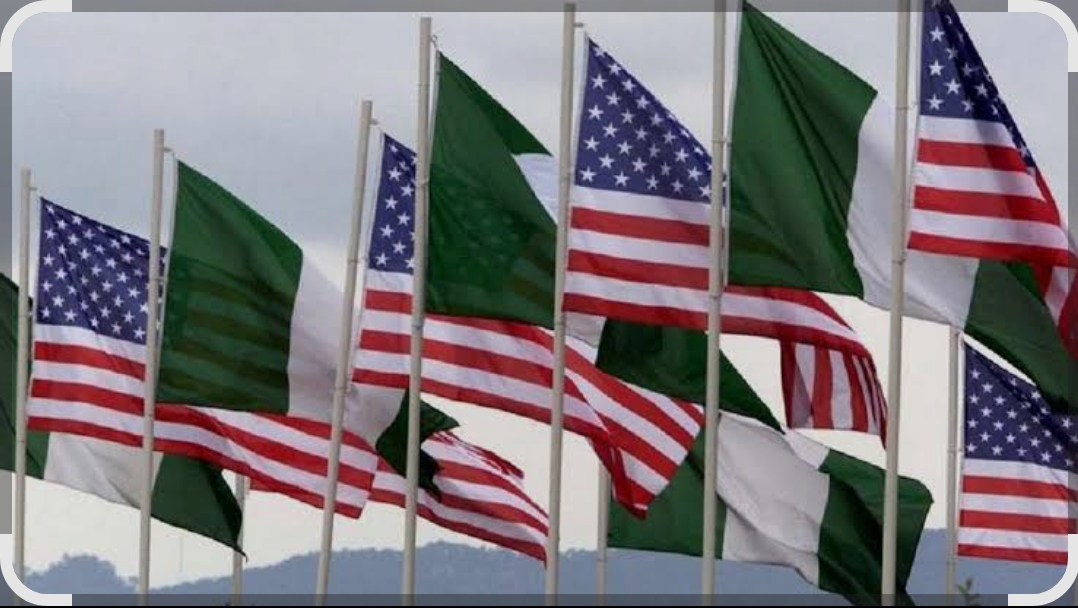
 The Trump administration’s decision to expand its travel ban to include Nigeria — Africa’s most populous nation and largest economy — is facing intense criticism from policy analysts, human rights advocates, and members of the Nigerian diaspora.
According to a CNN report, the expanded list will see the United States block permanent immigration from six new countries: Nigeria, Myanmar, Kyrgyzstan, Eritrea, Sudan, and Tanzania. The administration claims the restrictions are necessary due to national security concerns, citing gaps in identity verification systems and passport security in the affected nations.
But experts argue that the rationale lacks credible evidence. Data from the Cato Institute reveals that between 1975 and 2017, not a single person born in Nigeria, Myanmar, Tanzania, or Eritrea was responsible for a terror-related death on U.S. soil.
Critics also point out that the ban applies only to permanent immigrant visas, while temporary visas such as student and business travel remain unaffected. This selective approach, according to CNN and immigration analysts, casts doubt on the administration’s stated security concerns and raises questions about the real motives behind the policy.
The move has also been criticized as contradictory to President Trump’s own immigration goals. According to White House aides quoted by CNN, the administration seeks immigrants who are well-educated, English-speaking, and capable of contributing economically to American society.
By those standards, Nigerian immigrants stand out. A Migration Policy Institute report cited by CNN notes that 59% of Nigerian immigrants aged 25 or older in the U.S. hold at least a bachelor’s degree — nearly double the rate for U.S.-born citizens. Nigerians also excel in the workforce, with 54% employed in white-collar roles across business, science, management, and the arts — far above the 39% national average for native-born Americans.
Financially, their contributions are substantial. Nigerian immigrants earned over $14 billion and paid more than $4 billion in taxes in 2018, according to the New American Economy Research Fund. The global Nigerian diaspora also sent back nearly $24 billion in remittances to support the Nigerian economy that same year.
CNN also highlights Nigeria’s evolving economy, which has moved beyond oil dependency. Today, the services sector accounts for over 50% of Nigeria’s GDP, while technology contributes about 10%, according to the Center for Global Development. The country is also the second-largest African trading partner of the United States.
Former U.S. Ambassador to Nigeria John Campbell called the ban “policy incoherence” especially given the Trump administration’s publicly stated goal of doubling trade and investment in Africa.
The travel ban, CNN reports, also carries racial overtones. Trump has previously faced backlash for derogatory remarks about immigrants from African nations and other developing countries. In 2017, The New York Times reported that Trump said Nigerians would never “go back to their huts” after seeing America. A year later, The Washington Post reported he preferred immigrants from Norway over those from Haiti and African nations, which he allegedly referred to as “shithole countries.”
With this new travel restriction taking effect, thousands of Nigerians pursuing permanent residency in the U.S. now face an uncertain future, despite their proven contributions to American society.
As President Trump ramps up his campaign trail, the Nigeria ban serves as a reminder of how immigration , especially from countries populated by people of colour, remains a deeply divisive and politicized issue in U.S. policymaking.
@2025 The Ameh News: All Rights Reserved
Discover more from Ameh News
Subscribe to get the latest posts sent to your email.