 Another disturbing episode in Nigeria’s aviation sector nearly mirrored the infamous Ibom Air incident, underscoring growing concerns about lax enforcement of safety protocols and the culture of “no consequences.”
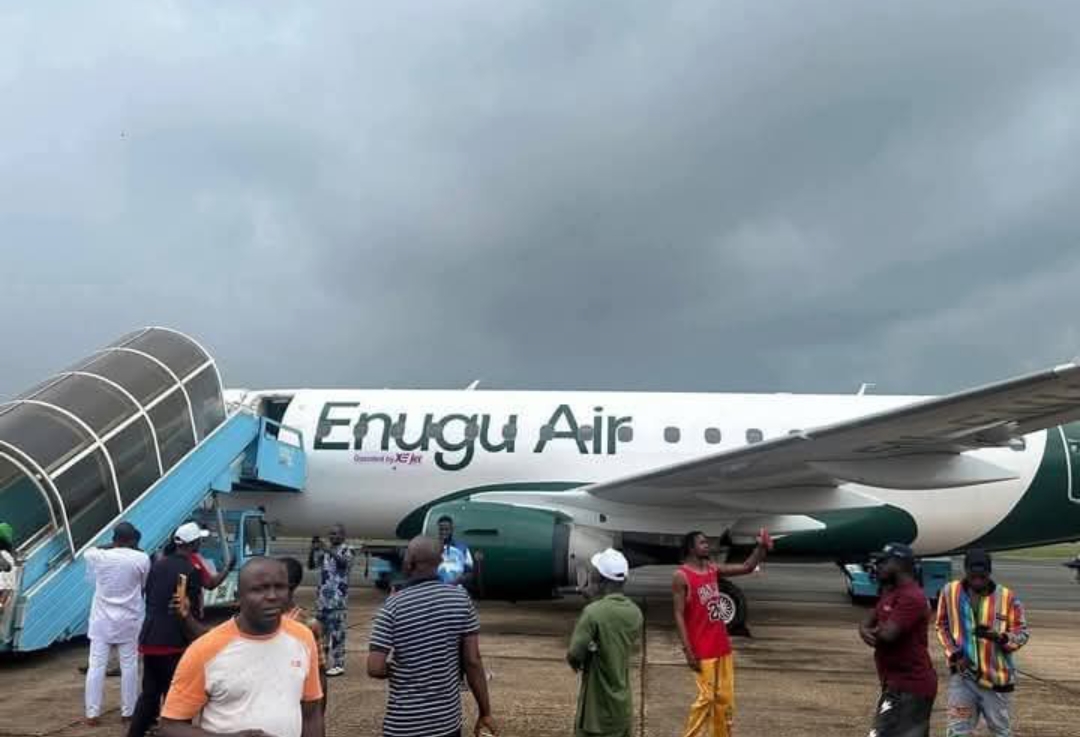
On Friday, August 16, during an Enugu Air flight from Abuja to Lagos, a passenger openly defied repeated instructions to switch off his mobile phone as the aircraft taxied. The female captain halted briefly on the runway and announced to passengers that if the individual remained recalcitrant, she would have no choice but to turn back.
The situation escalated when fellow passengers, alarmed by the potential disruption, shouted at the unruly passenger until he reluctantly complied.
What made the incident more unsettling, however, was the defiant remark the passenger threw at the cabin crew when appealed to by the flight purser:
“Wetin happen for Ibom Air go happen for here now now.”
That statement drew a chilling line between past misconduct and the present — a clear reference to the Ibom Air saga where disorderly behaviour went largely unpunished, creating a dangerous precedent.
Observers have warned that this pattern reflects Nigeria’s weak reward-and-sanction system, where breaches of critical safety rules are trivialised, and offenders face little more than a “slap on the wrist.”
Celestine Ukpong, an economist and investment analyst, called for a firmer regulatory approach to curb the trend.
He said:
“The NCAA and FAAN should mandate that every air passenger disclose their phone to security officers and switch it off before boarding. If any crew member discovers that a passenger’s phone is still on during the takeoff process, that individual must face the law without exception. This is the only way to deter recklessness and safeguard aviation safety.” or “All mobile phones should be collected from passengers before boarding, tagged with either their name or the device’s serial number, and kept securely by the crew. These would then be returned to each passenger at the departure hall after landing. This measure would completely eliminate the risk of passengers leaving their devices on during flight.”
Aviation analysts argue that if past offenders had faced real consequences, such reckless defiance would not be recurring. Instead, Nigeria’s handling of recent incidents, described as K1, K2, and K3 breaches, has projected an image of inconsistency and lack of seriousness in upholding aviation safety.
“The problem is systemic,” one industry watcher noted. “When institutions are weak, people feel empowered to flout rules because they know there will be no consequences. That’s why one passenger could confidently reference Ibom Air as though it was a joke.”
The broader concern, critics say, is cultural. Nigeria, they argue, has developed a reputation for celebrating bad behaviour while ignoring excellence. The fallout from the Ibom Air case, where public figures openly sided with misconduct, is a testament to this misplaced value system.
Instead of rallying behind rule enforcement and institutional strength, some Nigerians have glamorised defiance, even turning it into a badge of power and arrogance.
The Enugu Air incident, thankfully, ended without escalation. But it has reignited questions about Nigeria’s aviation discipline, the credibility of its regulatory oversight, and the deeper societal failure where strong personalities are elevated above strong institutions.
As Olaleye Olawale, who shared the account, aptly concluded:
“No serious nation tramples on its own laws or chooses when to enforce them or not. Nigeria has consciously created a template where bad behaviour is rewarded, and it will haunt the aviation sector for a long time to come.”
@2025 The Ameh News: All Rights Reserved
Discover more from Ameh News
Subscribe to get the latest posts sent to your email.