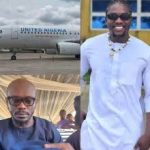
 When United Nigeria Airlines announced on November 17, 2025, that it had deboarded two high-profile Nigerian social media personalities—Martins Vincent Otse (VeryDarkMan) and Freedom Atsepoyi (Mr. Jollof)—following an altercation during boarding at Asaba International Airport, the news spread rapidly across the country.
But beyond the momentary drama, the incident has reopened an important conversation about passenger behaviour, aviation safety protocols, and the growing responsibility of airlines in maintaining order onboard.
The Altercation That Sparked National Attention
The altercation occurred during the boarding of Flight UN0523. According to the airline’s Public Relations Officer, Chibuike Uloka, MNIPR, the confrontation escalated sufficiently to trigger the activation of international aviation safety procedures.
Crew members intervened swiftly, separating the passengers and alerting airport security. Both individuals were removed from the aircraft and handed to authorities.
The aircraft later departed safely, but the incident highlighted what experts say is an increasing trend of disruptive behaviour among travelers, particularly among high-profile individuals who command large online followings.
Aviation Safety Rules: Zero Tolerance for Disruption
Commercial aviation is one of the world’s most highly regulated industries, with strict global standards designed to prevent even the slightest risk to passengers and crew.
Under ICAO (International Civil Aviation Organization) and IATA (International Air Transport Association) guidelines, airlines have the authority—and obligation—to remove any passenger exhibiting aggressive, violent, or disruptive behaviour before takeoff.
Key global aviation safety protocols include:
- No Compromising Crew Authority: The pilot-in-command legally holds full authority to deny boarding or deboard any passenger whose actions may threaten safety.
- Mandatory De-escalation Procedures: Cabin crew must immediately attempt to calm disruptive passengers while notifying security personnel.
- Immediate Offloading if Conflict Persists: If behaviour continues, the passenger must be removed from the aircraft before the doors close.
- Zero Tolerance for Physical Violence or Abusive Conduct: Fighting, harassment, threats, or intoxication are grounds for immediate removal.
- Reporting to Security Agencies: Airlines must hand disruptive passengers over to airport authorities for investigation.
Air travel analysts note that Nigeria is increasingly aligning with these international best practices, especially as the country strengthens enforcement against unruly passengers.
United Nigeria Airlines Reinforces Its Safety Commitment
In its official statement, United Nigeria Airlines stressed that safety is the foundation of its operations. The airline emphasized that no form of disruption—regardless of a passenger’s status—would be tolerated.
“United Nigeria Airlines maintains a zero-tolerance policy for any conduct that compromises safety, security, or the integrity of our travel experience,” the statement said.
By responding swiftly, the airline demonstrated adherence to both international safety standards and local civil aviation regulations, ensuring that the integrity of the flight was not compromised.
Growing Concern Over Celebrity Influence and Public Conduct
Aviation observers note that incidents involving celebrities or online influencers receive heightened attention due to their public visibility. But they warn that such confrontations can have serious consequences—not only for the individuals involved but for every passenger sharing the aircraft.
Aviation safety consultant Dr. Gbolahan Adedeji explains:
“People sometimes forget that a commercial aircraft is a highly controlled environment. There is simply no room for chaos at 30,000 feet. One disruptive passenger can jeopardize hundreds of lives.”
Setting the Tone for Passenger Conduct in Nigeria
The Asaba incident may become a reference point in ongoing discussions within Nigeria’s aviation community about stricter enforcement of behavioural standards.
Industry experts believe that as Nigerian airlines expand their networks, public education on acceptable in-flight behavior will become increasingly important.
The Civil Aviation Authority has repeatedly reminded passengers that the right to fly comes with strict obligations—courtesy, cooperation with crew instructions, and respect for safety protocols.
A Teachable Moment for the Travelling Public
Although the Asaba altercation involved two well-known personalities, aviation experts say the lesson applies to everyone:
Air travel demands discipline, emotional control, and adherence to safety rules—regardless of social status or personal disagreements.
United Nigeria Airlines closed its statement with a reminder of its mission: Flying to Unite.
As public debate continues online, one point is clear—the airline’s swift response underscores the vital role of enforcing global aviation safety rules to protect lives.
United Nigeria Airlines’ removal of VeryDarkMan and Mr. Jollof after an altercation at Asaba Airport highlights strict global aviation safety rules and raises concerns over passenger conduct in Nigeria.
Discover more from Ameh News
Subscribe to get the latest posts sent to your email.