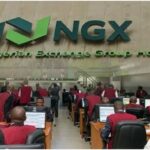
The Nigerian financial markets were rattled this week after Access Holdings Plc formally announced that its Board of Directors will not meet to consider and approve the Group’s unaudited financial statements for Q3 2025 until October 28, 2025. The disclosure, filed with the Nigerian Exchange Limited (NGX) on September 30, 2025, was accompanied by a reminder that a “Closed Period” for insiders remains in effect until 24 hours after the results are released.
The official statement, signed by Sunday Ekwochi, Company Secretary, read in part:
“This is to inform the Nigerian Exchange Limited (‘The Exchange’) and the investing public that a meeting of the Board of Directors of Access Holdings Plc (‘the Company’) has been scheduled for Tuesday, October 28, 2025. The meeting will, amongst other things, consider and approve the Group’s Unaudited Financial Statements for the Quarter Ending September 30, 2025 (‘the Results’). In line with the Exchange’s Listing Rules, the Company’s insiders are reminded that the earlier declared Closed Period remains until twenty-four (24) hours after the Results are released to the public.”
While the disclosure aligned with regulatory requirements, it triggered unease among investors and analysts. Many expected the earnings report to have been published earlier, in line with industry norms. The announcement effectively confirmed a delay, fueling speculation about the underlying reasons and sparking sell-offs in Access Holdings’ shares.
At 9:38 AM, trading dashboards reflected sharp reactions, with volumes spiking as jittery shareholders sought to exit positions. Market trackers logged trades flagged under codes such as 33 46456 / 85 / X / 45076_ACCE…, underscoring the heightened investor activity linked directly to Access Holdings’ notice.
For context, Access Holdings is not just another bank—it is Nigeria’s largest lender by assets and a continental player with a footprint in more than 20 markets. As such, its performance signals wider trends in the banking and financial services sector.
Financial experts weighed in swiftly. Bismarck Rewane, CEO of Financial Derivatives Company, noted that, “Markets don’t like uncertainty. When companies delay filings, investors assume the worst. In an environment where confidence is already thin, such announcements create anxiety.”
Similarly, Muda Yusuf, Director of the Centre for the Promotion of Private Enterprise (CPPE), stressed the reputational risks: “The delay does not necessarily mean financial distress, but it highlights how fragile investor confidence is in Nigeria. Transparency and timeliness in corporate reporting are non-negotiable.”
However, analysts at Coronation Asset Management offered a more cautious interpretation, suggesting that Access Holdings’ sprawling footprint across Africa and Europe could simply mean extra time is required to harmonize financial reporting. “Consolidating diverse financials across multiple jurisdictions is complex. The fundamentals of Access Holdings remain strong, and investors should not overreact,” the analysts wrote in a market note.
Reflection:
The Access Holdings earnings delay and Closed Period notice underline the delicate balance between corporate governance and investor trust. In a volatile economy where inflation, forex scarcity, and regulatory uncertainty weigh heavily on markets, even routine disclosures can become flashpoints. The sharp investor reaction shows how quickly speculation can unsettle one of Nigeria’s most stable financial institutions.
As the October 28 board meeting date approaches, stakeholders will be watching closely. If the eventual Q3 numbers affirm strong fundamentals, the panic may fade into a footnote. But if the results confirm fears, this delay will be remembered as a turning point in investor sentiment toward one of Africa’s most ambitious banking groups.
Access Holdings’ Q3 2025 earnings delay and Closed Period notice sparked investor panic on the Nigerian Stock Exchange. Analysts, including Bismarck Rewane and Muda Yusuf, weigh in on transparency, governance, and the wider implications for Nigeria’s financial markets.
Discover more from Ameh News
Subscribe to get the latest posts sent to your email.