In a significant move to strengthen regulatory oversight, the Nigerian Communications Commission (NCC) and the Nigerian Customs Service (NCS) have pledged to deepen collaboration on monitoring imported communication devices, enhancing public safety, and boosting national revenue.
The announcement followed a courtesy visit by the Executive Vice Chairman and Chief Executive Officer of the NCC, Aminu Maida, to the Customs House in Maitama, Abuja. During the visit, Maida extended congratulations to Comptroller-General of Customs, Adewale Adeniyi, on his recent election as Chairperson of the World Customs Organisation Council—a recognition of Adeniyi’s leadership both domestically and internationally.
Speaking on the partnership, Maida emphasized the strategic importance of the NCC’s Device Management System (DMS), a platform designed to track imported mobile phones and block substandard devices. He explained that the system not only protects consumers but also strengthens Customs’ ability to generate revenue.
“One of the least understood factors affecting telecom service quality is the device itself. Even with significant investment in network infrastructure, subscribers using substandard phones will continue to experience poor service. This is why the DMS project is critical for both revenue and consumer protection,” Maida said.
He also raised concerns about the uncontrolled use of network boosters. While boosters can improve connectivity for individuals, their unregulated deployment often distorts signals and reduces overall network performance. Maida urged Customs to restrict the importation of uncertified boosters and ensure that only approved devices enter the Nigerian market.
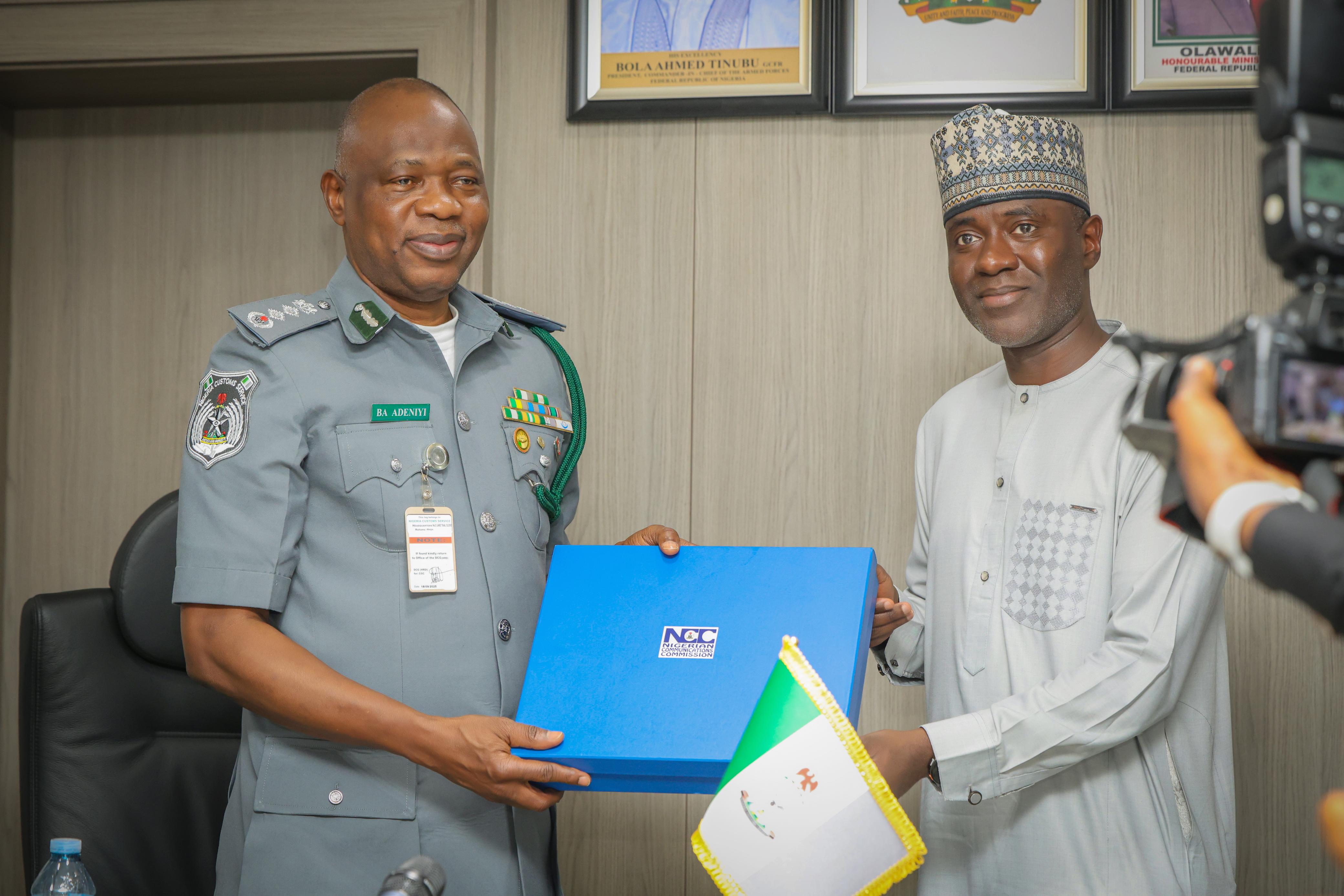 Comptroller-General Adeniyi welcomed the collaboration, highlighting that the Customs Service is now looking beyond revenue generation to the security implications of unchecked technology imports. He stressed that closer synergy with the NCC will allow both agencies to strengthen monitoring systems, ensuring that mobile phones, network boosters, and other telecom equipment are properly certified and classified under the Customs tariff regime.
“Unchecked importation of telecom devices poses risks to national security and revenue. By working closely with the NCC, we can ensure only authorised importers bring devices into the country. Our officers will be trained on certification processes and tariff code alignment to curb abuses at the borders,” Adeniyi said.
Beyond regulatory and revenue concerns, Adeniyi highlighted the need for joint vigilance in densely populated urban areas such as Abuja. The concentration of high-rise buildings, sensitive institutions, and places of worship requires coordinated monitoring to prevent accidents and disasters, reinforcing the broader public safety mandate of both agencies.
Both agencies committed to sustaining the spirit of collaboration, combining regulatory oversight, consumer protection, and revenue optimisation to ensure a safer and more efficient telecommunications ecosystem in Nigeria.
NCC and Nigerian Customs Service strengthen collaboration to monitor imported telecom devices, block substandard equipment, boost revenue, and enhance public safety in Nigeria.
Discover more from Ameh News
Subscribe to get the latest posts sent to your email.