…..Fiscal Reform Marks a New Era of Transparency as FIRS, Customs, and Other Revenue Agencies Lose Retention Privileges
 In a landmark fiscal reform move, the Federal Government has officially terminated the long-standing practice of “cost-of-collection” deductions by major revenue-generating agencies such as the Federal Inland Revenue Service (FIRS), Nigeria Customs Service (NCS), and the Nigerian Upstream Petroleum Regulatory Commission (NUPRC).
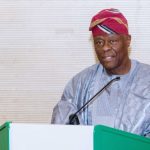
Minister of Finance and Coordinating Minister of the Economy, Mr. Wale Edun, announced this sweeping policy change in Abuja on Thursday during the launch of the National Development Update, noting that “all generated funds must now go directly into the Federation Account Allocation Committee (FAAC)” in line with constitutional provisions.
According to Edun, this decision — mandated by President Bola Ahmed Tinubu — signals a new era of fiscal transparency, efficiency, and accountability in Nigeria’s public finance system.
“Funds have flowed to the Federation Account, but the point is this — efficiency of that spending is critical,” Edun stated.
“We have been mandated by His Excellency, Mr. President, to take a look at deductions — not just those for the cost of collection, but deductions generally.”
A Flashback: The End of an Era of Agency Retention
For decades, agencies such as FIRS, Customs, and NUPRC retained a percentage of the revenues they collected as an operational cost — a system critics say bred opacity and inefficiency.
FIRS, for instance, retained ₦254.82 billion in 2024 and was projected to receive ₦43.83 billion for the first half of 2025. The NUPRC withheld about four percent of royalties and rents collected on behalf of the Federation, while Customs previously retained seven percent of total collections until the National Assembly replaced it with a four percent Free on Board (FOB) import levy in August 2025.
Now, Edun said, those deductions have been “removed once and for all,” allowing more funds to reach the three tiers of government for developmental purposes.
“When you look at the gross figure, you see all kinds of deductions before you get to the net distributable figure. I must inform you that even during the last FAAC allocation, most of those deductions have been removed once and for all,” Edun confirmed.
Driving Fiscal Discipline and Renewed Hope
The minister emphasised that this reform aligns with Tinubu’s broader fiscal restructuring agenda — aimed at restoring fiscal discipline, enhancing public sector accountability, and increasing the funds available for infrastructure, education, and social welfare.
He stressed that the Constitution clearly provides for all revenues to be paid into the Federation Account and distributed according to the approved formula. “That is what is now being done,” Edun declared.
Protecting Citizens Amid Reform
While acknowledging that ongoing economic reforms have created temporary hardship, Edun assured that President Tinubu’s Renewed Hope social protection measures remain on course.
He disclosed that 10 million households — representing about 50 million Nigerians — would receive direct cash transfers through the national social safety net programme by the end of October 2025.
“Each person who benefits is biometrically identified. Once we had the right technology in place, the programme took off,” he said.
“By the end of the year, our commitment is to have covered 50 million households.”
Grassroots Development and Fiscal Future
To ensure equitable development, the minister revealed that the National Economic Council (NEC) had approved a ward-based development programme across Nigeria’s 8,809 wards. This initiative, he said, would “bring the gains home,” ensuring the benefits of economic reforms are felt at the grassroots level.
As Nigeria transitions into this new fiscal discipline era, analysts describe the termination of cost-of-collection deductions as a bold and overdue step toward transparent revenue management — one that could significantly improve FAAC inflows and restore confidence among the federating units.
A Reflection on Fiscal Legacy
For years, the cost-of-collection arrangement served as both a lifeline and a loophole — ensuring operational funding for revenue agencies but reducing the shareable pool of national revenue. With the Tinubu administration’s reforms, the old order gives way to a more transparent, constitutionally compliant fiscal structure, positioning Nigeria for more sustainable growth.
“That is where the connection will be — bringing the gains home, drilling down to ensure all Nigerians participate in a growing, stable, and positive trajectory of the Nigerian economy,” Edun concluded.
The Federal Government has abolished the decades-old cost-of-collection deductions by FIRS, Customs, and NUPRC. Finance Minister Wale Edun says all revenues must now flow into FAAC to promote transparency, fiscal discipline, and equitable national development.
Discover more from Ameh News
Subscribe to get the latest posts sent to your email.