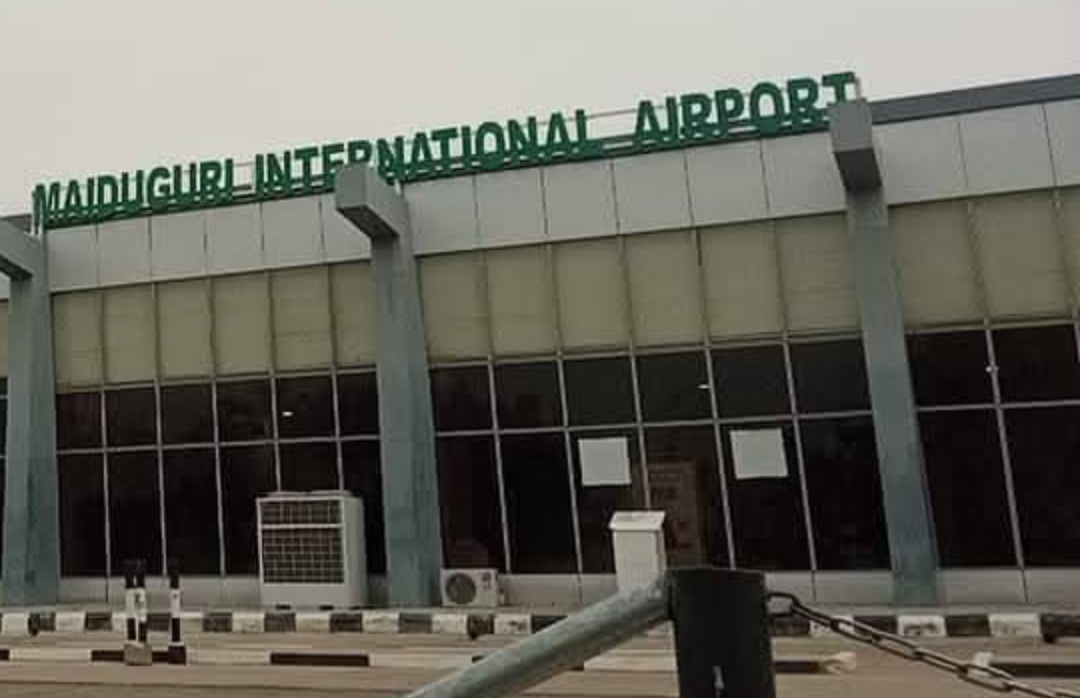
 Maiduguri International Airport is on the verge of a historic transformation as the multi-billion-naira upgrade project, positioning the airport as a strategic regional aviation hub that will connect Nigeria directly to Chad, Cameroon, and Niger Republic.
In an exclusive interview with Ibrahim Bello, International Terminal Manager of the Maiduguri International Airport, he described the project as a symbol of renewed collaboration between the Borno State Government, the Federal Airports Authority of Nigeria (FAAN), and the Federal Ministry of Aviation and Aerospace Development.
According to Bello, the initiative began when Governor Babagana Umara Zulum personally met with the Minister of Aviation and Aerospace Development, Mr. Festus Keyamo, SAN, to discuss upgrading the state’s aviation infrastructure. The minister subsequently visited the airport with key aviation agencies, including FAAN, the Nigerian Airspace Management Agency (NAMA), and the Nigerian Civil Aviation Authority (NCAA), to conduct a facility assessment that birthed a comprehensive redevelopment plan.
“The governor took it upon himself to execute the physical construction, while FAAN provided the technical drawings, equipment, and manpower,” Bello said. “We are now fully ready, because many of the key facilities have already been installed.”
Modern Infrastructure and Passenger Comfort
The upgraded terminal represents a complete modernization of airport infrastructure in Nigeria’s northeast. It now features digital check-in counters integrated with weighing scales, advanced security screening systems, automated conveyor belts, and a fully equipped passenger carousel.
With a new passenger holding capacity of 500 people, up from less than 300 previously, the airport can now handle multiple airline operations simultaneously without congestion.
“Maiduguri now has the capacity to support more than two or three scheduled flights at once,” Bello added. “Passengers will experience world-class convenience comparable to major city airports.”
Strategic Regional Advantage
Geographically, Maiduguri’s location provides unmatched access to the Lake Chad Basin, a key trade zone bordering three countries. Bello highlighted that the airport is Nigeria’s only airport that shares borders with Chad, Cameroon, and Niger, giving it a unique strategic advantage for regional air connectivity and cargo operations.
“This positioning gives Maiduguri a competitive edge to become a regional hub,” he explained. “We are conducting route analyses for flights to N’Djamena, Yaoundé, and Niamey. We also hope to reconnect with Central Africa’s historic trade corridors—routes that once thrived during the Trans-Saharan trade era.”
The terminal manager disclosed that discussions are ongoing with domestic and regional airlines that have expressed interest in operating from Maiduguri once international operations commence.
Security, Agencies, and Border Preparedness
Security remains a top priority, and Bello assured that the airport enjoys robust security coordination between the Nigerian Air Force, Immigration, Customs, DSS, and other security units.“We have multi-layered security here. The Air Force, the strike group, and civilian patrol units work together to keep the airport safe,” he said.
All necessary border control facilities for international operations, including customs, immigration, and quarantine offices, are being finalized as part of the new design layout.
Hajj Operations and Humanitarian Aviation
Maiduguri International Airport continues to play a major role in Hajj operations, serving both Borno and Yobe States, despite lacking a dedicated Hajj terminal due to the military’s occupation of the facility during the insurgency years.
“We’ve managed Hajj and domestic flights simultaneously, and with FAAN’s support, we’ve handled operations seamlessly,” Bello said. “We’ve successfully conducted two Hajj operations since I assumed duty here.”
In addition to scheduled commercial flights, the airport hosts non-scheduled humanitarian operations for international organizations like United Nations Humanitarian Air Service (UNHAS), World Food Programme (WFP), Médecins Sans Frontières (Doctors Without Borders), and the International Committee of the Red Cross (ICRC)—a testament to its critical role in humanitarian logistics across the region.
Cargo and Economic Opportunities
Bello also emphasized the huge cargo potential of Maiduguri Airport, driven by the region’s livestock trade, agricultural exports, and proximity to regional markets. The airport, he noted, already serves as a central point for Yobe, Gombe, Bauchi, and Yola—states with strong agricultural bases.
“We’re in discussions with the Ministry of Livestock and other private investors to establish structured cargo operations,” he revealed. “Maiduguri’s location is perfect for both domestic and international cargo, especially in agro-exports and livestock logistics.”
Runway Maintenance and Future Projections
The airport’s runway has been well maintained and improved with FAAN’s support, allowing it to handle modern aircraft with ease. Bello added that initial regional operations would likely begin with medium-range aircraft such as Embraer and Bombardier jets, catering to the growing passenger base in the region.
“Many people who currently travel to Chad and Niger by road will embrace air travel once the flights start,” he said. “Our projections show steady passenger growth once international routes are launched.”
A New Gateway for Northeast Nigeria
With its modernized facilities, strategic location, and robust inter-agency cooperation, Maiduguri International Airport is set to become a cornerstone of Nigeria’s regional aviation development, enhancing trade, tourism, and economic integration across the Lake Chad Basin and Central Africa.
“This project is not just about infrastructure—it’s about connecting people, economies, and opportunities,” Bello concluded. “Maiduguri is ready for takeoff into a new era.”
Maiduguri International Airport 100% completed of its major modernization project, set to transform into a regional aviation hub linking Nigeria with Chad, Cameroon, and Niger, driving trade and connectivity across the Lake Chad Basin.
Discover more from Ameh News
Subscribe to get the latest posts sent to your email.