Liquefied Natural Gas (LNG) does not reach domestic markets by chance. Behind every cargo delivered is a web of highly engineered, capital-intensive infrastructure that determines who has energy security, who sets prices, and who holds strategic leverage in the global gas trade.
This reality was underscored in a widely shared explainer by energy analyst Jack Prandelli, who noted that LNG import and regasification terminals are not merely industrial installations but strategic gateways linking global LNG flows to national economies. Energy experts say these facilities are fast becoming some of the most critical assets in the global energy transition era.
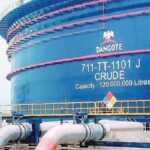
At the operational level, an LNG import and regasification terminal integrates several specialised components. Marine unloading facilities allow LNG carriers or Floating Storage and Regasification Units (FSRUs) to berth safely and transfer cargo. Cryogenic transfer systems, operating at approximately –162 degrees Celsius, move LNG from ship to shore, while full-containment storage tanks provide strategic buffers that enable seasonal balancing and protect markets from short-term supply shocks.
Regasification units then convert LNG back into its gaseous state using seawater, ambient air, or closed-loop systems before the gas is sent through high-pressure pipelines into national transmission networks, power plants, and industrial clusters. These processes are supported by robust safety systems, including flare stacks, exclusion zones, and real-time monitoring technologies.
According to Dr. Adewale Ogunleye, an energy economist and gas infrastructure consultant, the real value of LNG terminals lies beyond the hardware. “LNG infrastructure determines market access,” he said. “A country with regasification capacity can tap into global gas markets, while one without it remains exposed to pipeline politics and supply disruptions.”
Industry analysts note that this strategic advantage has become increasingly visible in recent years, as supply shocks, geopolitical tensions, and extreme weather events have exposed the fragility of energy systems overly dependent on single sources of gas. LNG terminals, experts argue, provide optionality—the ability to source gas from multiple suppliers across different regions.
Ms. Laura Bennett, a global gas markets analyst, explained that LNG terminals also reshape pricing dynamics. “Once a country has LNG import capacity, it can arbitrage between regional gas markets,” she said. “That optionality improves price discovery and limits the ability of any single supplier to dictate terms.”
Beyond energy security, LNG terminals underpin long-term commercial frameworks. They often anchor multi-year offtake agreements, tolling structures, and capacity contracts that provide predictable cash flows for investors while ensuring steady supply for utilities and power producers. These contractual arrangements, experts say, are what transform LNG infrastructure into a durable economic moat.
Market participants echoed this view in responses to Prandelli’s post, arguing that the competitive advantage in LNG lies not in the gas molecule itself but in the terminals, contracts, and flexibility they create across the value chain. Companies with integrated positions in LNG shipping, regasification, and downstream distribution are therefore seen as better positioned to weather market volatility.
As governments across Europe, Asia, and emerging markets accelerate investments in LNG infrastructure, analysts warn that the stakes extend well beyond energy supply. “In today’s energy landscape, LNG terminals are geopolitical assets,” Ogunleye added. “They influence trade routes, diplomatic relationships, and national resilience during crises.”
In this context, LNG import and regasification infrastructure has evolved into far more than physical capacity. It is a tool of strategic choice—quietly shaping energy security, market stability, and geopolitical influence long before LNG is converted back into gas for homes and industries.
Experts explain why LNG import and regasification terminals are critical to energy security, price stability, and geopolitical leverage, highlighting the infrastructure and strategy behind global gas markets.
LNG doesn’t arrive by chance. Energy experts reveal how LNG import and regasification infrastructure underpins global gas security, pricing power, and geopolitical influence.
Discover more from Ameh News
Subscribe to get the latest posts sent to your email.