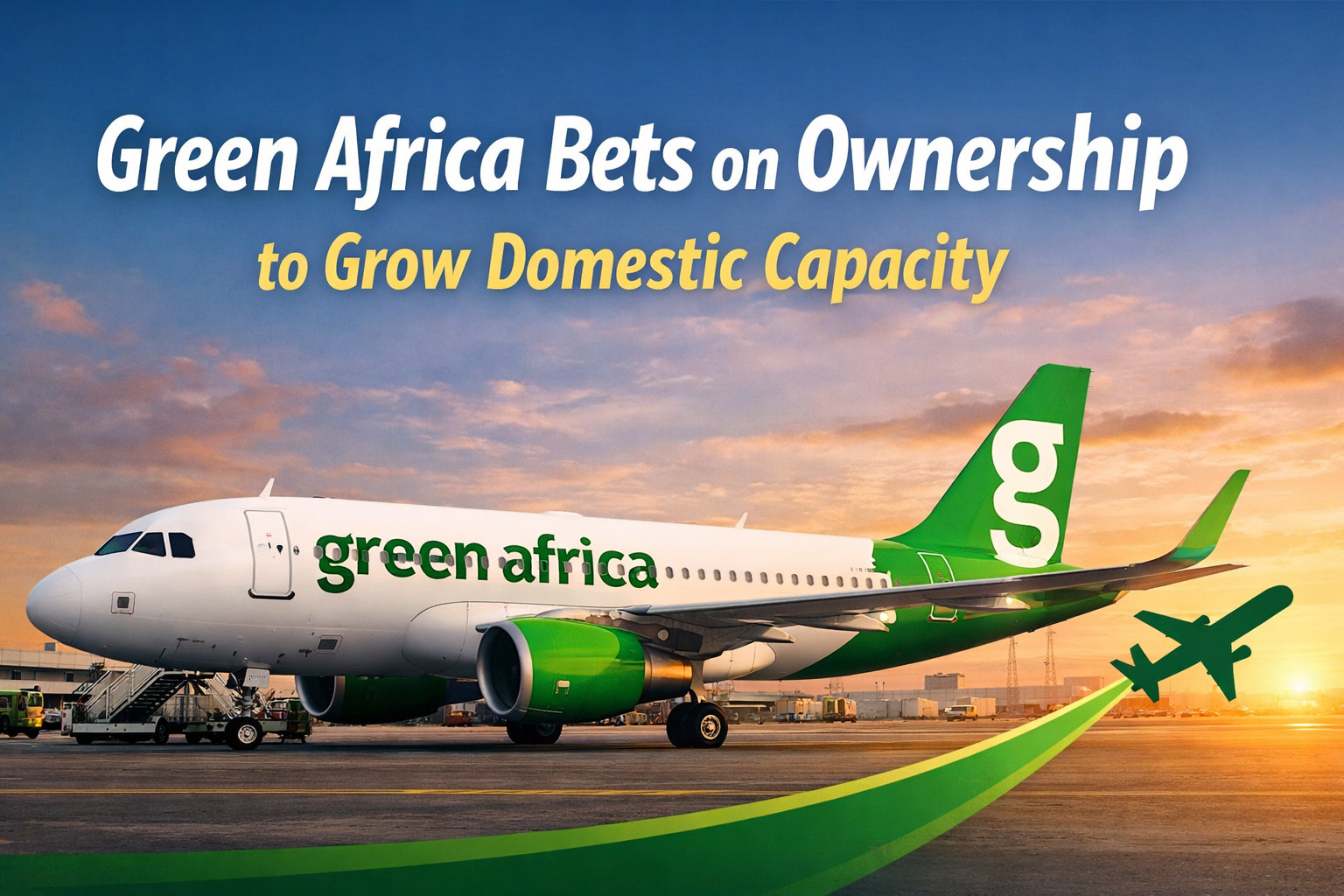
 Green Africa Airways has reinforced its domestic operational capacity with the acquisition of its second owned aircraft, marking another milestone in the airline’s steady transition toward asset ownership and long-term sustainability under Nigeria’s evolving dry lease policy framework.
The development underscores the carrier’s growing confidence in the domestic aviation market and reflects a broader shift within the industry toward reducing exposure to foreign exchange volatility and dollar-denominated lease obligations.
From Market Entry to Measured Growth
When Green Africa launched operations in 2021, Nigeria’s aviation sector was navigating one of its most turbulent periods, shaped by post-pandemic recovery pressures, rising operating costs, and constrained access to foreign exchange. Like many start-up carriers, the airline initially relied on leased aircraft to establish its route network and build market presence.
As regulatory reforms around dry leasing gained momentum, opportunities emerged for financially disciplined operators to deepen fleet ownership. Green Africa’s first owned aircraft signalled a strategic pivot from dependence on short-term leasing toward a more sustainable fleet structure.
The addition of a second owned aircraft confirms that the shift was intentional and rooted in long-term planning rather than a one-off expansion decision.
Operational Stability and Cost Efficiency
Industry observers note that increased aircraft ownership enhances operational control, improves cost predictability, and strengthens scheduling reliability—critical factors for domestic airlines operating in a high-cost environment.
With two owned aircraft now supporting its network, Green Africa is better positioned to deploy capacity efficiently across key domestic routes while managing maintenance cycles and operational planning with greater flexibility.
The move also aligns with national objectives aimed at building indigenous aviation capacity and retaining value within the local economy, as ownership reduces capital flight associated with foreign leasing arrangements.
Implications for Nigeria’s Aviation Ecosystem
Green Africa’s growing owned fleet highlights the potential impact of supportive policies when combined with prudent airline management. It reflects a gradual but important shift toward locally anchored growth in Nigeria’s aviation sector, benefiting not only airlines but also allied services such as maintenance, training, and ground handling.
As Nigeria continues to refine its dry lease policy and broader aviation reforms, Green Africa’s approach may offer a practical template for other domestic carriers seeking stability and scalability in a challenging operating environment.
Green Africa Expands Domestic Capacity with Second Owned Aircraft Under Dry Lease Policy
Green Africa Airways boosts domestic operations with the acquisition of its second owned aircraft, reinforcing fleet stability and long-term growth under Nigeria’s dry lease aviation policy.
Discover more from Ameh News
Subscribe to get the latest posts sent to your email.