 Mrs. Olubunmi Kuku, Managing Director, the Federal Airports Authority of Nigeria (FAAN)
In an exclusive interview with CNBC Africa, Mrs. Olubunmi Kuku, Managing Director of the Federal Airports Authority of Nigeria (FAAN), provided an in-depth update on Nigeria’s cashless airport policy, ongoing Murtala Muhammed International Airport (MMIA) rehabilitation, and the country’s plans to become a regional transit hub.
Cashless Policy: Progress and Challenges
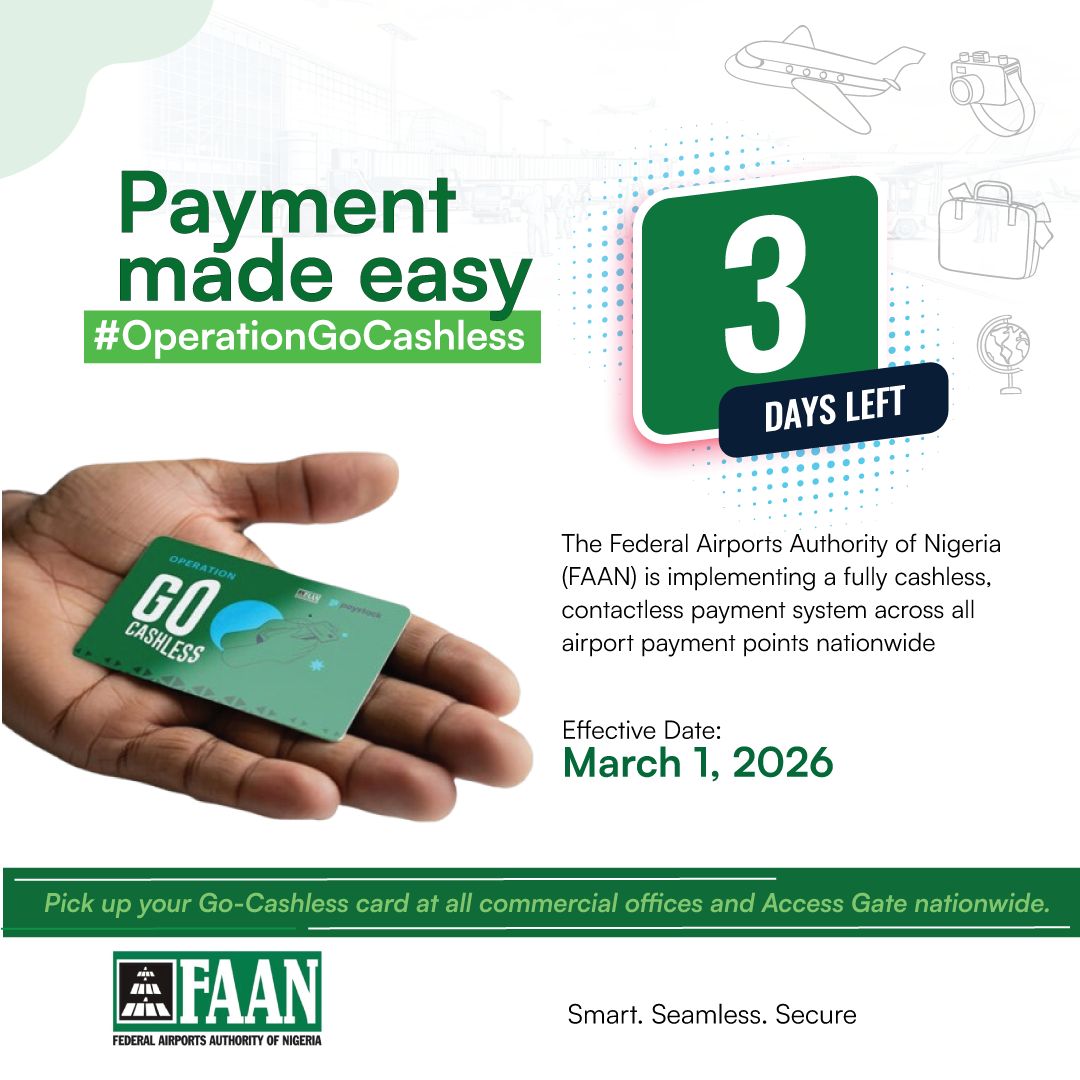
FAAN first introduced its cashless policy in July 2025, intensifying enforcement in October of the same year, following two federal government circulars requiring the reduction of cash usage at airports. Lagos and Abuja were prioritized due to high passenger traffic.
According to FAAN operational data:
100,000 passengers have registered for the cashless system between October 2025 and March 3, 2026, with 62,000 registering in the first three days of March alone (FAAN Operational Report, March 2026).
Lagos Airport experienced a 35% spike in congestion during the first week of enforcement due to commuter skepticism and limited digital payment channels (FAAN Traffic Report, March 2026).
In contrast, Abuja Airport recorded a 12% congestion increase during the same period, highlighting how location and commuter behavior affect adoption (FAAN Traffic Report, March 2026).
Kuku emphasized that the root cause of the initial congestion was the airport’s placement within densely populated communities, which complicated early enforcement. “Many passengers and commuters did not believe the policy would be implemented,” she said.
To ease the transition, the Federal Government granted a hybrid waiver, allowing continued use of cash alongside digital payments while FAAN enhances infrastructure and adoption. Kuku described this as a “strategic win” that enables the authority to pilot and scale the system without disrupting passenger flow.
Airport Upgrades and Transit Hub Strategy
FAAN is concurrently rehabilitating MMIA, one of Africa’s busiest airports, on a 22–24 month timeline. A minor fire incident in early March briefly disrupted operations but caused minimal delays.
A temporary terminal, constructed in just three months, now accommodates airlines including Air France, KLM, and Ethiopian Airlines, ensuring uninterrupted service while renovations continue. Infrastructure improvements also include:
Biometric e-gates for entry and exit
Redesigned passenger flow for efficient check-ins and touchpoints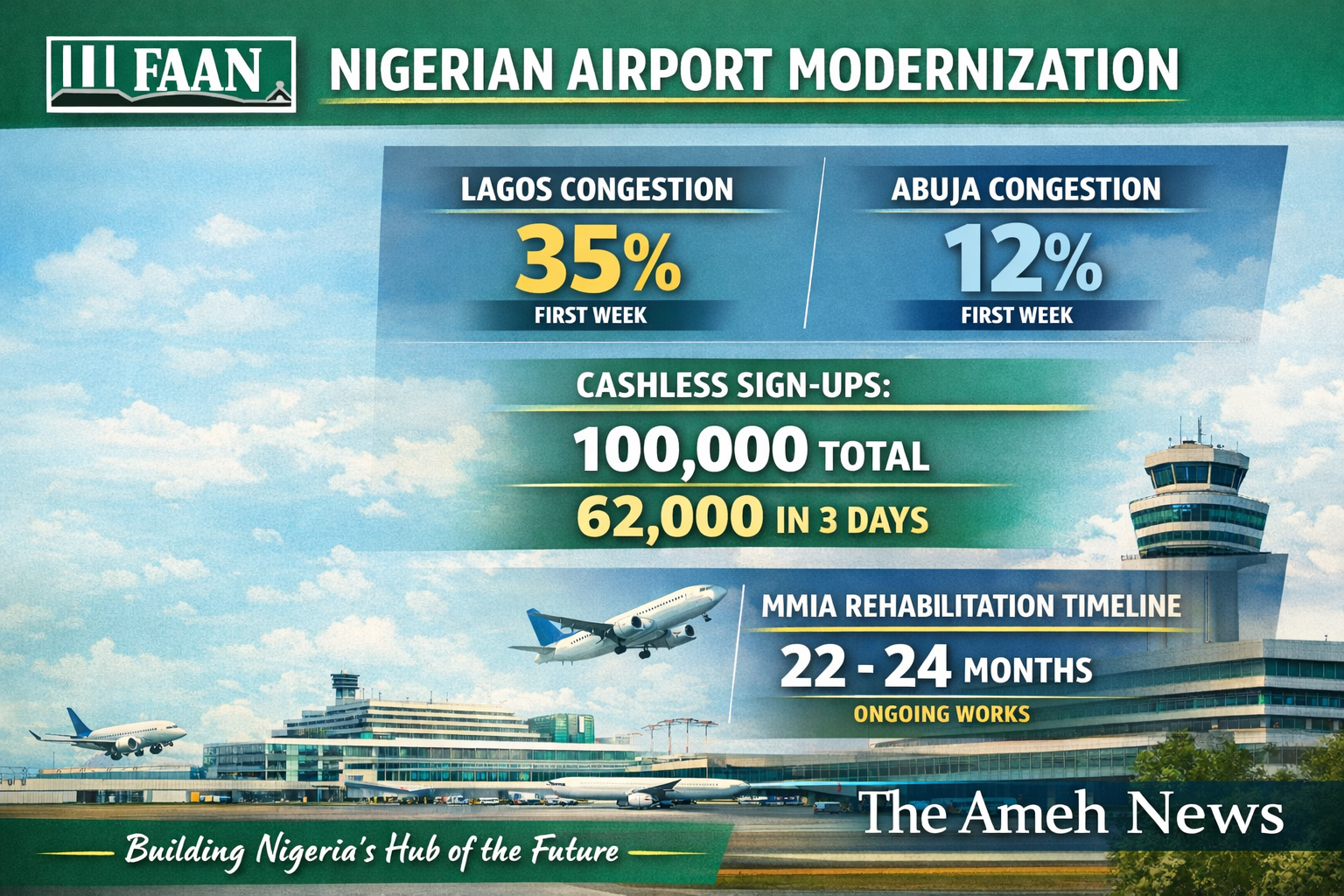
Transit facilities to support the development of MMIA as a regional transit hub
Kuku explained that passenger experience guides all upgrades: “We are redesigning operations from the curbside to the terminal exit to ensure seamless movement, whether passengers are traveling domestically or transiting through Nigeria.”
Economic Context and Passenger Traffic
Nigeria’s air travel penetration remains low, with less than 2% of the population flying annually (Nigerian Civil Aviation Authority, 2026). FAAN’s hub strategy aims to leverage bilateral air service agreements, expanded airline routes, and modernized facilities to attract both transit passengers and cargo traffic.
In the process, winners and losers are:
Winners:
Passengers – faster, more secure airport experience and smoother processing with digital payments.
Airlines – access to modern terminals, improved operational efficiency, and enhanced transit options.
FAAN and Federal Government – strategic positioning of Nigeria as a regional hub and modernized airport infrastructure.
Losers:
Cash-dependent commuters, especially in Lagos, experienced initial inconvenience.
Small-scale airport vendors, unprepared for digital payments, saw short-term revenue declines.
Kuku concluded by emphasizing FAAN’s long-term vision:
“Our goal is to modernize Nigeria’s airports while ensuring that passengers, airlines, and stakeholders benefit. With careful planning and infrastructure development, Nigeria can become a competitive transit hub in Africa.”
FAAN Boss discusses the progress of Nigeria’s cashless airport policy, Lagos and Abuja congestion data, MMIA rehabilitation, and plans to establish Nigerian airports as regional transit hubs.
Furthermore, the FAAN Managing Director Olubunmi Kuku highlights Nigeria’s cashless airport policy, ongoing Murtala Muhammed Airport upgrades, congestion statistics, and hub strategy, focusing on passenger experience and operational efficiency.
Discover more from Ameh News
Subscribe to get the latest posts sent to your email.