 Operations at Murtala Muhammed International Airport were thrown into temporary disruption following a fire outbreak that destroyed critical air traffic control infrastructure, prompting swift intervention by the Nigerian Airspace Management Agency (NAMA).
The incident, which affected sections of the airport’s legacy terminal, led to the loss of vital air-to-ground communication systems—equipment essential for coordinating aircraft movements within Nigeria’s busiest aviation hub. The disruption initially impacted inbound flight operations, raising concerns across the aviation ecosystem.
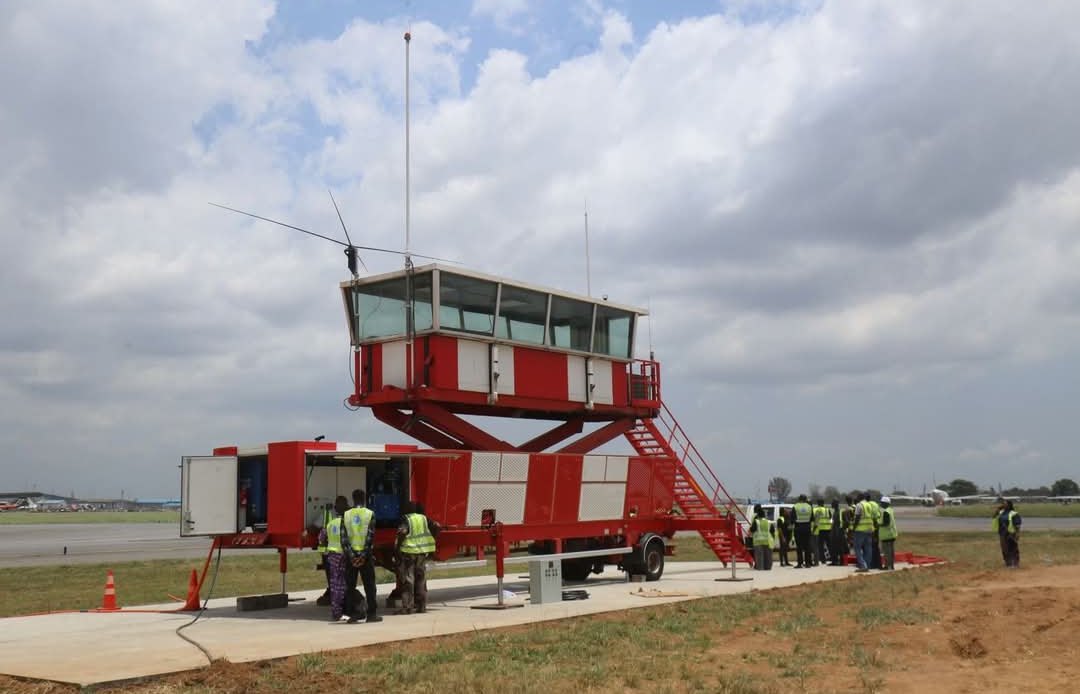
In a rapid response to the emergency, NAMA deployed a mobile Air Traffic Control (ATC) tower to restore operational stability and ensure continuity in flight navigation services. The agency described the move as part of its contingency and resilience framework aimed at preventing a complete shutdown of airspace operations.
Managing Director of NAMA, Farouk Umar, who led an on-site assessment, confirmed that the fire caused extensive damage to communication equipment but reassured stakeholders that safety protocols remained intact.
According to him, backup systems were immediately activated, with critical facilities temporarily relocated from other parts of the country to sustain aerodrome control and approach services. “Safety has not been compromised. What we have done is to activate contingency measures to ensure seamless operations,” he stated.
However, deploying the mobile control tower was not without challenges. NAMA disclosed that the designated installation site initially presented structural difficulties due to unstable ground conditions. This necessitated urgent engineering intervention to stabilize the terrain before installation could proceed.
Support from China Civil Engineering Construction Corporation (CCECC), currently handling major reconstruction works at the airport, proved crucial. The firm provided technical assistance that enabled rapid site preparation and successful positioning of the mobile tower within a short timeframe.
Industry analysts say the quick deployment highlights the increasing importance of emergency preparedness within Nigeria’s aviation sector, particularly at Lagos airport, which serves as the country’s primary international gateway and handles a significant share of passenger and cargo traffic.
The fire incident also brings renewed attention to aging aviation infrastructure and the urgent need for modernization. The affected terminal is part of an ongoing large-scale rehabilitation project approved by the Federal Government to upgrade facilities, improve safety systems, and enhance passenger experience.
While the exact cost of the damage is yet to be disclosed, aviation stakeholders estimate that the destruction of specialized communication systems could run into millions of dollars, given the high cost of aviation-grade technology.
Despite the setback, NAMA maintained that Nigeria’s airspace remains safe, secure, and fully operational. The mobile control tower is expected to function as a temporary but critical solution, ensuring uninterrupted coordination of flights while permanent systems are restored.
Experts believe the incident could serve as a turning point for deeper investments in redundant systems, digital air traffic management, and infrastructure resilience to guard against future disruptions in the sector.
NAMA deploys a mobile control tower at Lagos’ Murtala Muhammed International Airport after a fire destroyed key communication systems, ensuring continued flight operations. A fire outbreak at Lagos airport destroys critical ATC systems as NAMA deploys a mobile control tower to maintain safe and uninterrupted airspace operations.
Discover more from Ameh News
Subscribe to get the latest posts sent to your email.