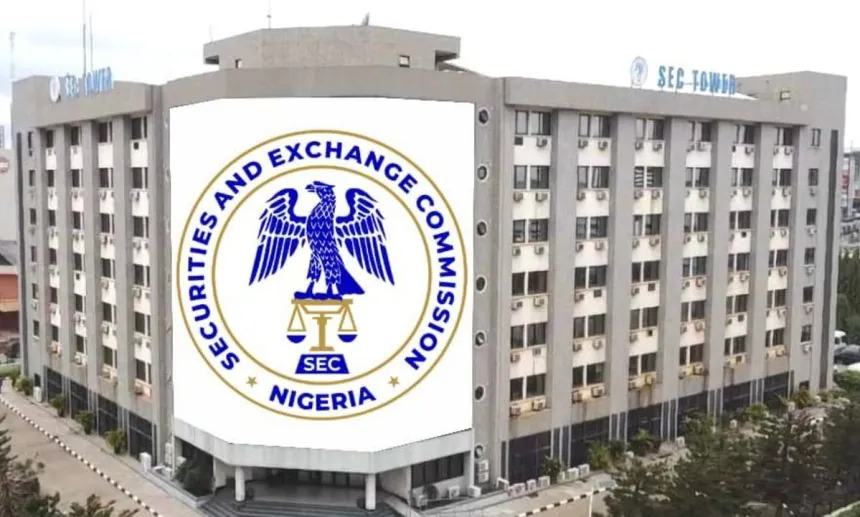
 In a decisive move to deepen Nigeria’s capital market and enhance regulatory oversight, the Securities and Exchange Commission (SEC) has unveiled a comprehensive set of proposed rules governing the public offering of securities by Free Trade Zone Entities (FTZEs).
The exposure draft, issued under the provisions of the Investments and Securities Act 2025, establishes a clear framework for eligibility, compliance, and disclosure requirements for companies operating within Nigeria’s free trade zones that intend to access public funds.
₦7.5bn Capital Requirement Signals Higher Entry Bar
At the core of the proposal is a minimum paid-up share capital threshold of ₦7.5 billion, a benchmark that underscores the SEC’s intent to admit only financially robust and investment-ready entities into the market.
Industry observers note that this requirement could significantly filter out smaller or less structured firms, while positioning larger, more stable FTZEs to tap into equity financing.
Strict Eligibility and Operational Track Record
To qualify, FTZEs must be duly licensed by recognised Free Trade Zone Authorities such as the Nigeria Export Processing Zone Authority (NEPZA) and the Oil and Gas Free Zone Authority (OGFZA). In addition, applicants are required to demonstrate at least three years of operational history, including a minimum of two years engaged in their core revenue-generating activities within a free trade zone.
The rules also mandate that such entities maintain experienced and competent senior management teams, reinforcing the Commission’s commitment to strong corporate governance standards.
End to Regulatory Arbitrage: Tax Compliance Mandatory
A major highlight of the proposed framework is the requirement that FTZEs seeking to raise capital from the public must submit to Nigeria’s tax laws and regulations, despite their traditional tax-advantaged status within free zones.
This provision is widely seen as a bold step to eliminate regulatory loopholes and ensure a level playing field between free zone entities and companies operating in the domestic economy.
Enhanced Disclosure and Post-Listing Obligations
The SEC further emphasised that FTZEs will be subject to continuous disclosure requirements, including periodic financial reporting and compliance with all post-listing obligations applicable to publicly quoted companies.
This is expected to boost transparency, protect investors, and strengthen overall market integrity.
Comprehensive Registration Requirements
Entities seeking approval to offer shares must submit extensive documentation, including:
Evidence of licensing by a Free Trade Zone Authority
Certified corporate governance documents such as Memorandum and Articles of Association
Verified details of the shareholding structure and paid-up capital
Information on board composition
A formal “No Objection” letter from the relevant zone authority
A binding commitment to list on a recognised securities exchange
The SEC clarified that the rules apply strictly to entities operating within designated free trade zones and exclude businesses licensed by free zone authorities but operating outside such zones.
Stakeholder Engagement and Market Impact
The Commission has opened a two-week window for stakeholders and the general public to submit comments, reflecting its consultative approach to rule-making.
Analysts say the initiative aligns with broader economic reforms under the administration of Bola Ahmed Tinubu, particularly efforts to expand investment channels, improve market discipline, and attract both domestic and foreign capital.
If adopted, the rules are expected to reshape the participation of free zone enterprises in Nigeria’s financial markets, unlocking new funding opportunities while reinforcing accountability and regulatory compliance.
Ultimately, the SEC’s proposal signals a strategic shift toward integrating free trade zone businesses into the mainstream capital market ecosystem—balancing incentives with stricter oversight to drive sustainable economic growth.
SEC proposes new rules for Free Trade Zone Entities, setting a ₦7.5bn capital threshold and mandatory tax compliance to strengthen Nigeria’s capital market transparency and investor protection.
Nigeria’s SEC introduces proposed rules for FTZEs seeking public listing, including ₦7.5bn minimum capital, tax compliance, and stricter disclosure requirements to boost market integrity.
Discover more from Ameh News
Subscribe to get the latest posts sent to your email.