By The Ameh News
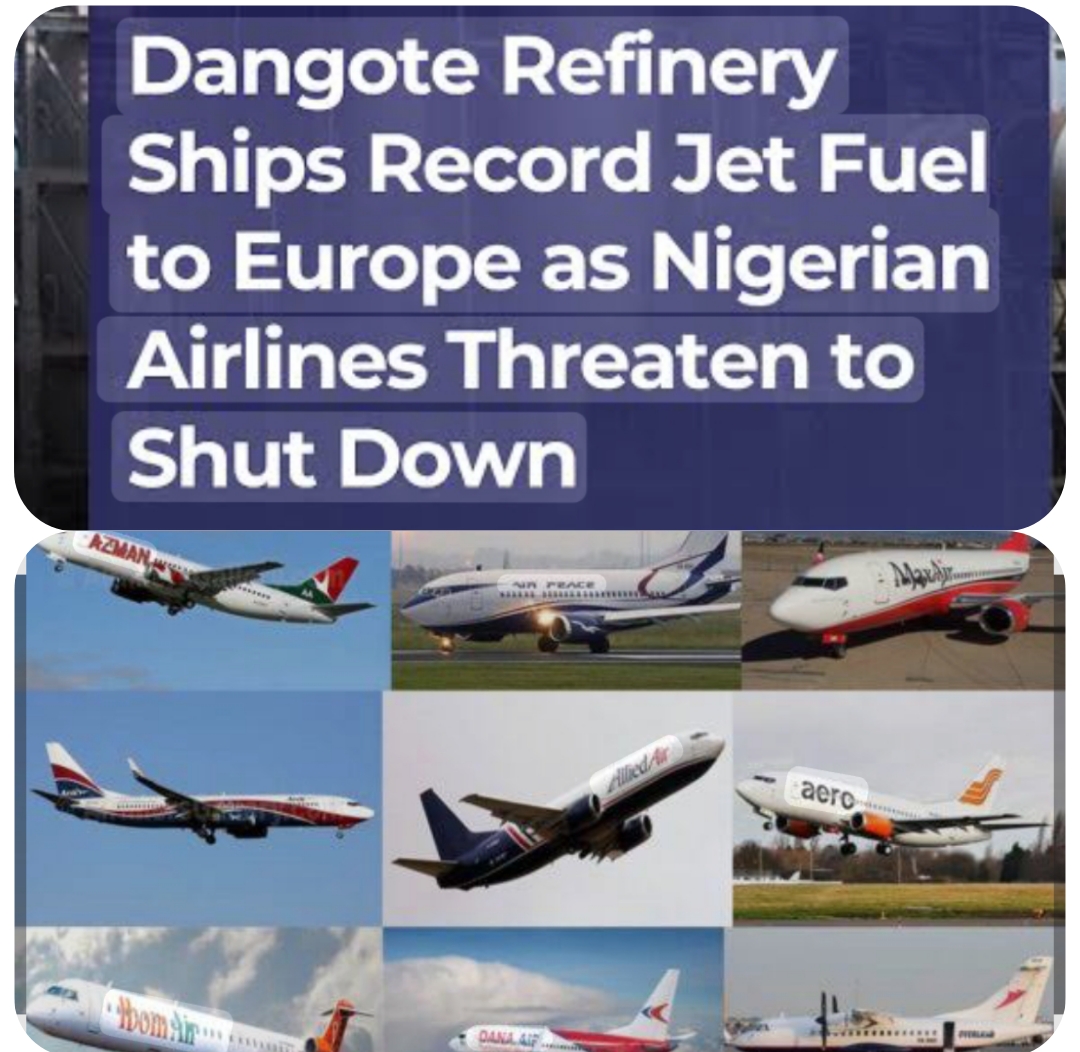 A widening imbalance is emerging in Nigeria’s aviation and energy landscape as the Dangote Refinery records an extraordinary 770% increase in jet fuel exports, while domestic airlines continue to struggle under the weight of soaring operational costs and constrained access to affordable aviation fuel.
The refinery’s rapid ascent as a major supplier of Jet A1 fuel to international markets marks a significant milestone for Nigeria’s industrial capacity. Within just two years of operations, the facility has not only boosted refining output but also repositioned Africa within global aviation fuel supply chains, supplying key markets across Europe, Asia, and beyond.
However, this export-driven growth is unfolding against the backdrop of a deepening crisis among local carriers. Nigerian airlines are grappling with persistently high fuel prices, foreign exchange volatility, and rising maintenance costs—factors that have collectively squeezed margins and forced operational cutbacks.
Aviation analysts say the situation reflects a structural disconnect between domestic production and local accessibility.
“On paper, Nigeria should be enjoying lower aviation fuel costs due to local refining,” said aviation economist Celestine Ukpong. “But in practice, pricing is still largely influenced by global benchmarks and dollar-denominated transactions. This leaves local operators exposed, even when the product is refined domestically.”
Ukpong noted that the refinery’s export orientation is commercially logical, given stronger margins in international markets. However, he warned that without deliberate policy safeguards, critical sectors like aviation could face prolonged instability.
Similarly, industry expert Dr Ejike Nduilo emphasised that the issue goes beyond pricing alone. According to him, supply chain logistics, distribution inefficiencies, and lack of clear domestic supply obligations are compounding the challenge.
“The refinery is a private enterprise, and it will naturally prioritise markets that guarantee profitability,” Nduilo explained. “But aviation is a strategic sector. If airlines continue to face these pressures, the ripple effects will be felt across tourism, trade, and national connectivity.”
Data from industry operators reveal that Jet A1 fuel accounts for up to 40% of airlines’ operating expenses in Nigeria, making it the single largest cost component. In recent months, several carriers have been forced to reduce flight frequencies, adjust ticket pricing upward, or suspend certain routes altogether.
Airline executives have repeatedly called for a more coordinated framework that ensures domestic availability of fuel at competitive rates. Some have advocated for pricing in naira or the introduction of government-backed stabilisation mechanisms to shield operators from exchange rate shocks.
Energy market observers, however, argue that the refinery’s export success should not be overlooked. The surge in jet fuel exports is contributing to foreign exchange earnings, reducing Nigeria’s reliance on imported refined products, and strengthening its position in global energy markets.
“This is a classic case of competing economic priorities,” said a Lagos-based energy consultant. “On one hand, exports bring in much-needed forex. On the other hand, domestic industries require protection to remain viable. The solution lies in balance, not restriction.”
Calls are now intensifying for regulatory intervention to bridge this gap. Stakeholders are urging the federal government to introduce policies that prioritise local supply without undermining the refinery’s commercial viability. Proposed measures include domestic supply quotas, tax incentives for local sales, and improved distribution infrastructure.
The unfolding scenario highlights a broader economic dilemma for Nigeria: how to leverage its industrial gains for global competitiveness while ensuring that key domestic sectors are not left behind.
As discussions continue among policymakers, refinery operators, and aviation stakeholders, the coming months will be critical in determining whether Nigeria can align its refining success with the sustainability of its aviation industry.
Dangote Refinery’s jet fuel exports surge 770%, boosting Nigeria’s global energy profile, but domestic airlines face rising costs and limited access, prompting calls for urgent policy intervention.
According to the report Dangote Refinery’s jet fuel exports highlight Nigeria’s growing global influence, but local airlines struggle with high costs, sparking concerns over supply imbalance and sector sustainability.
Discover more from Ameh News
Subscribe to get the latest posts sent to your email.