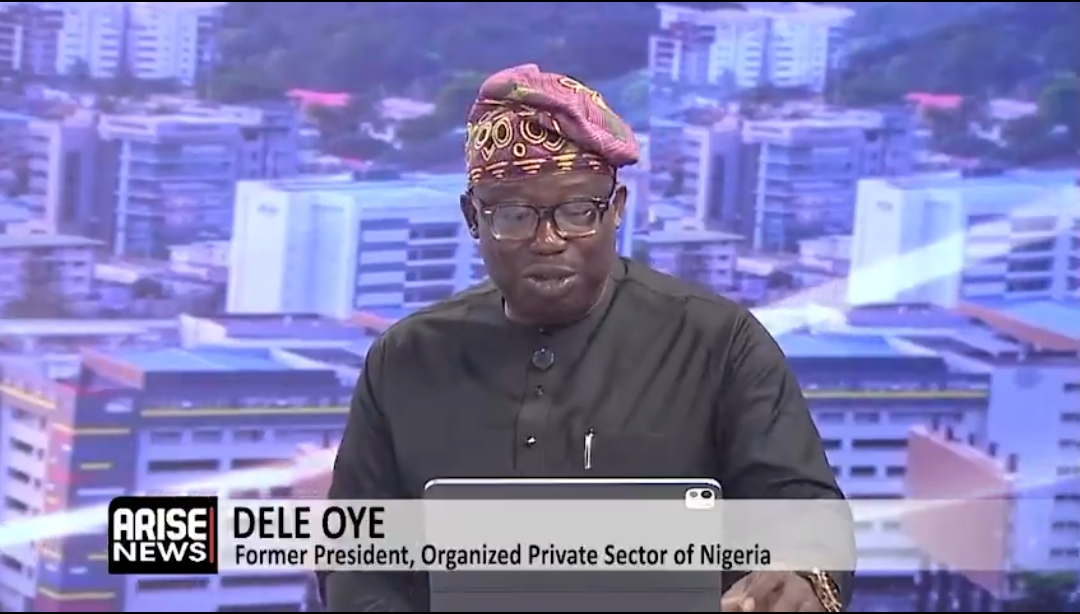
 The controversy surrounding Nigeria’s long-delayed refinery rehabilitation programme deepened on Thursday after former President of the Organised Private Sector of Nigeria, Dele Oye, raised serious concerns over the competence and credibility of the Chinese firms selected to rehabilitate the Warri and Port Harcourt refineries.
Speaking during an interview on ARISE NEWS, Oye alleged that one of the companies engaged for the projects primarily operates as a real estate company, while another lacks both the technical experience and financial capacity required for refinery turnaround maintenance.
The remarks have triggered fresh debate over transparency, procurement integrity, and accountability in Nigeria’s oil and gas sector, especially at a time when the country continues to battle rising fuel import costs and mounting pressure on foreign exchange reserves.
Questions Over Contractors’ Competence
According to Oye, independent due diligence conducted on the two Chinese firms selected for the refinery rehabilitation projects uncovered significant concerns about their qualifications and operational records.
The companies identified were Sanjiang Chemical Company Limited and Xingcheng (Fuzhou) Industrial Park Operation and Management Co. Ltd..
Oye claimed that one of the firms has no established track record in refinery turnaround maintenance — a highly technical process involving the overhaul, repair, and modernisation of refining infrastructure.
He further alleged that the company is facing financial constraints that may affect its ability to mobilise manpower, equipment, and technical resources needed for such a large-scale national project.
The second company, according to him, appears to be more active in real estate and industrial park management than in refinery engineering or petroleum infrastructure rehabilitation.
“These firms appear less experienced and less qualified compared to contractors that previously handled refinery rehabilitation projects in Nigeria and still failed to deliver expected outcomes,” Oye stated during the interview.
Concerns Over $1.5 Billion Refinery Funding
Oye also questioned the silence surrounding the reported $1.5 billion approved for the rehabilitation of the Warri Refinery, insisting that Nigerians deserve explanations regarding the utilisation of the funds.
The Warri Refining and Petrochemical Company has remained largely inactive for years despite repeated government assurances and several rounds of rehabilitation announcements.
The former OPS leader said the lack of transparency around refinery rehabilitation contracts continues to weaken public confidence in the government’s energy reform agenda.
Industry stakeholders have repeatedly raised concerns over the huge sums committed to refinery rehabilitation with little visible improvement in domestic refining capacity.
Nigeria’s Push for Energy Security
The Warri and Port Harcourt refineries are considered strategic national assets expected to play key roles in reducing Nigeria’s dependence on imported petroleum products.
Successive administrations have pledged to restore local refining operations to strengthen energy security, conserve foreign exchange, and reduce pressure on fuel supply chains.
However, years of underperformance, operational shutdowns, and failed maintenance contracts have continued to frustrate efforts to revive the facilities.
Energy analysts warn that controversies surrounding contractor selection and project execution could further delay Nigeria’s ambition of achieving self-sufficiency in refined petroleum products.
The concerns are emerging at a time when Nigeria is attempting to reposition its downstream petroleum sector amid growing competition from private refiners, including the Dangote Refinery.
Pressure Mounts on NNPC
The latest allegations are expected to increase pressure on Nigerian National Petroleum Company Limited (NNPC Ltd.) to provide greater clarity on the contractor selection process, project funding structure, technical evaluation procedures, and timelines for refinery completion.
Stakeholders within the oil and gas industry are also calling for stronger oversight, independent technical audits, and greater private sector participation to prevent another cycle of failed refinery rehabilitation efforts.
For many Nigerians, the debate goes beyond refinery repairs; it reflects broader concerns about governance, public accountability, and the efficient management of strategic national assets in Africa’s largest oil-producing economy.
Former OPS President Dele Oye raises concerns over Chinese firms selected for Warri and Port Harcourt refinery rehabilitation, questioning their technical expertise, financial capacity, and transparency surrounding the $1.5 billion refinery project.
Discover more from Ameh News
Subscribe to get the latest posts sent to your email.