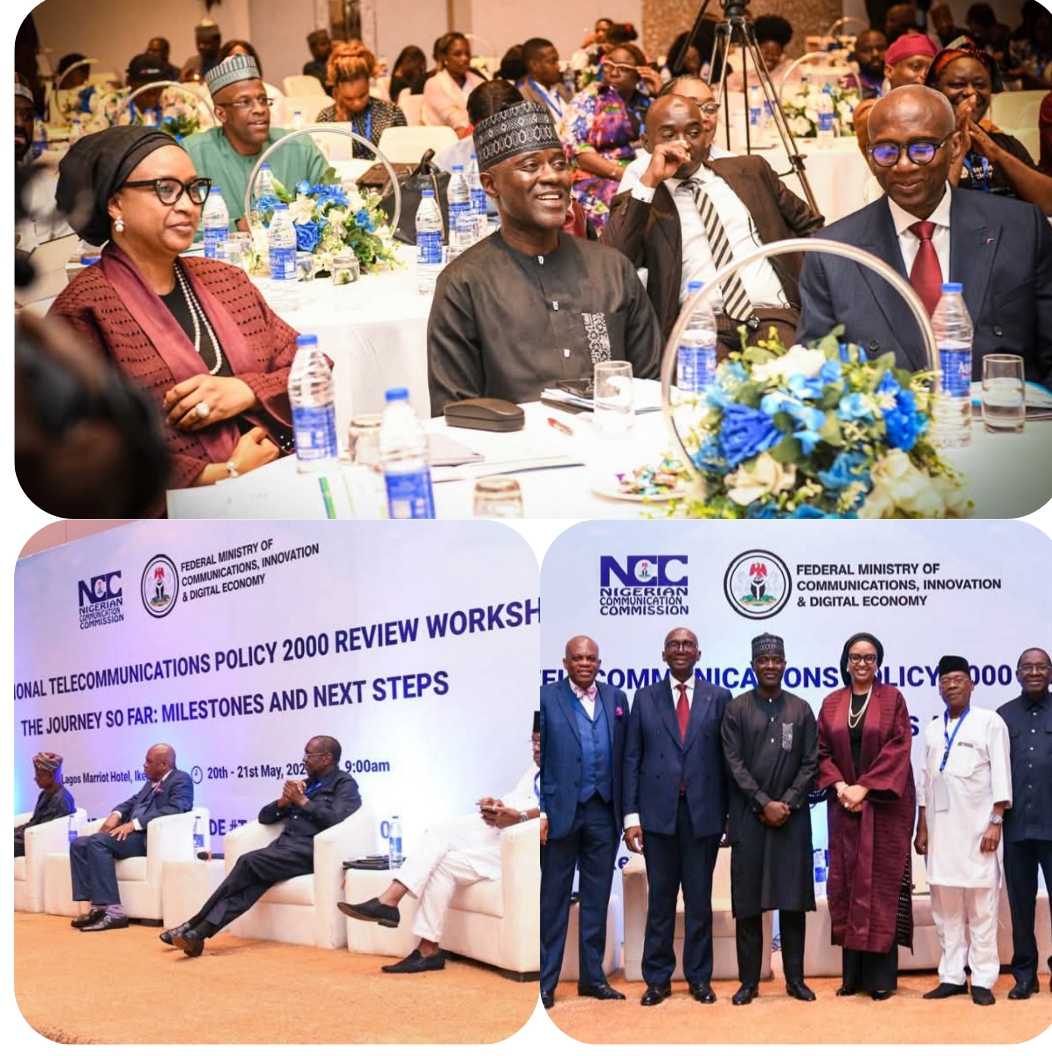
 Nigeria has launched a significant policy recalibration of its digital communications sector as the Nigerian Communications Commission commenced a two-day Stakeholders’ Policy Review Workshop in Lagos to reassess the National Telecommunications Policy (NTP) 2000 and reposition the country for the next phase of its digital economy.
The high-level engagement, held at the Marriott Hotel Ikeja, brought together regulators, telecom operators, policymakers, technology experts, and development partners to reflect on the evolution of Nigeria’s telecoms landscape over the past 25 years and define a more future-ready regulatory direction.
A Turning Point in Nigeria’s Digital Journey
Opening the workshop, the Executive Vice Chairman/Chief Executive Officer of the NCC, Dr Aminu Maida, described the telecommunications industry as no longer a standalone sector but a “foundational ecosystem” that now underpins virtually every aspect of national development—from finance and education to agriculture, manufacturing, and governance.
He noted that the review of the 2000 policy framework has become necessary due to rapid technological disruption and the emergence of new digital realities that were not foreseen when the original policy was designed.
According to him, emerging technologies such as Artificial Intelligence (AI), satellite broadband, Internet of Things (IoT), digital sovereignty systems, critical national information infrastructure, and network resilience frameworks now demand a stronger, more adaptive regulatory environment.
Economic Stakes of Digital Transformation
Dr Maida referenced data from the GSMA, stressing that accelerated digitisation across key sectors of the economy could significantly boost national productivity. He projected that Nigeria could add up to 2% to its Gross Domestic Product (GDP), create as many as two million jobs, and generate approximately ₦1.6 trillion in additional tax revenue if digital adoption is strategically deepened.
He further emphasised that modern telecom regulation must evolve beyond traditional oversight functions to address increasingly complex areas such as cybersecurity, data governance, digital financial systems, and online safety—issues now central to both economic stability and national security.
From Policy Legacy to Future Framework
Participants at the workshop engaged in technical and strategic sessions aimed at evaluating the legacy and impact of the NTP 2000, which laid the foundation for Nigeria’s telecom liberalisation and early digital growth.
Discussions also focused on bridging the persistent digital divide through collaborative implementation models involving both public and private sector stakeholders. Another key theme was how to build a resilient communications ecosystem that balances innovation with trust, security, and consumer protection.
Experts and stakeholders also examined international telecommunications policy models, drawing lessons from global best practices to strengthen Nigeria’s regulatory approach in a rapidly evolving digital landscape.
In addition, feedback sessions on the Commission’s proposed policy directions provided an opportunity for industry stakeholders to contribute insights on improving implementation, regulatory efficiency, and sector competitiveness.
Building a Future-Ready Digital Economy
The NCC described the ongoing review process as a strategic national reset moment aimed at aligning Nigeria’s telecommunications governance with global technological realities.
As deliberations continue, the workshop is expected to produce a more robust policy framework that reflects the realities of the modern digital economy and positions Nigeria to compete more effectively in the global technology ecosystem.
Ultimately, the review signals a shift from legacy-driven regulation to a forward-looking digital governance model designed to support innovation, inclusion, resilience, and sustainable growth.
Nigeria’s telecommunications regulator, NCC, has begun a major review of the National Telecommunications Policy (NTP) 2000 in Lagos, aiming to modernise the country’s digital governance framework, strengthen cybersecurity, and unlock economic growth through emerging technologies like AI, IoT, and satellite broadband.
NCC begins review of Nigeria’s National Telecommunications Policy 2000 in Lagos, targeting digital transformation, cybersecurity, AI regulation, and economic growth through updated telecom frameworks.
Discover more from Ameh News
Subscribe to get the latest posts sent to your email.