The ongoing controversy surrounding regulatory intervention in Union Bank of Nigeria has triggered intense debate across Nigeria’s financial and legal circles, with emerging expert opinions suggesting that the crisis extends far beyond public commentary and touches the core of banking stability, corporate governance, and investor protection.
What began as criticism of the Central Bank of Nigeria over its decision to dissolve the bank’s leadership and supervise its restructuring is now evolving into a broader national conversation about how regulators should respond when financial institutions face systemic vulnerabilities.
Financial analysts, economists, governance experts, and communication strategists who spoke to The Ameh News argued that while legal questions remain before the courts, the underlying financial realities surrounding the bank’s acquisition and capital structure cannot be ignored.
The dispute stems from the 2022 acquisition of nearly 94 per cent stake in Union Bank by Titan Trust Bank Limited through Dubai-registered entities linked to the Tropical General Investments Group.
The transaction, reportedly financed largely through a $300 million Afreximbank facility, has since become the focal point of regulatory scrutiny after forensic audit findings allegedly revealed that borrowed funds connected to the acquisition ultimately reflected within Union Bank’s own books.
Industry insiders say the situation became more severe as the naira depreciation triggered massive revaluation losses, weakened the bank’s capital adequacy ratio, increased non-performing loan exposure, and created a substantial capital gap.
Court documents referenced in the ongoing appeal also reportedly showed that a special examination had been conducted and formally presented to the bank’s former management and board before the CBN stepped in.
Experts Say Debate Must Move Beyond Sentiment
Speaking on the controversy, media scholar, leadership coach, and Lagos Business School lecturer, Dr Akin Olaniyan aniyan, said public conversations around the matter have been heavily shaped by emotional narratives rather than institutional realities.
According to him, financial journalism must distinguish between legal procedure and systemic risk management.
“Many people are reacting to headlines without understanding the deeper implications of allowing a systemically important bank to drift into instability,” Olaniyan told The Ameh News.
He explained that regulators globally are empowered to act swiftly when depositors’ funds and financial stability are threatened.
“The issue before the public should not merely be whether a board was dissolved. The bigger issue is whether the regulator had credible grounds to believe the institution faced serious financial and governance challenges. From the information already in the public domain, this appears to be a stability-driven intervention rather than an arbitrary action,” he stated.
Olaniyan further warned that sensational narratives capable of eroding public trust in the banking sector could have unintended economic consequences if not responsibly handled.
‘Debt-Funded Acquisitions Carry Long-Term Risks’ — Economist
Economist Celestine Ukpong said the Union Bank controversy exposes deeper structural concerns within Nigeria’s financial system, particularly around debt-funded acquisitions in the banking sector.
Ukpong noted that using borrowed funds to acquire financial institutions often creates long-term vulnerabilities, especially in volatile foreign exchange environments.
“When acquisition financing is heavily leveraged and the exchange rate moves against the institution without adequate hedging mechanisms, the consequences can become catastrophic,” he explained.
He added that the CBN’s intervention may have prevented wider systemic consequences capable of affecting millions of depositors and investors.
“The reality is that no responsible regulator waits for a total collapse before stepping in. The banking system thrives on confidence, and preserving that confidence sometimes requires difficult and unpopular decisions,” Ukpong said.
The economist also dismissed claims that the case had severely damaged investor confidence, pointing instead to the strong response recorded under Nigeria’s ongoing banking recapitalisation exercise.
According to available industry data, Nigerian banks raised over N4.65 trillion under the recapitalisation programme as of April 2026, while the Nigerian Exchange continued to post strong market performance.
Communication Crisis Worsened Public Perception — PR Expert
For public relations strategist and founder of Henryjvaleens, Dr Ejike Nduilo, the Union Bank saga also highlights the communication gap that often accompanies major regulatory actions in Nigeria.
Nduilo said that although regulators may possess legal authority to intervene, inadequate public communication can fuel misinformation and speculation.
“In crisis communication, perception moves faster than facts. Once the public begins to interpret silence as secrecy, narratives spiral quickly,” he said.
According to him, the CBN and key stakeholders could have managed public reactions more effectively through clearer and more proactive communication.
“People want transparency. They want reassurance that their deposits are safe and that the intervention is not politically motivated. Regulatory institutions must understand that modern governance requires communication alongside enforcement,” Nduilo added.
Financial Accountability Must Remain Central — Peter Adebayo FCA
Reacting to the controversy, chartered accountant and financial analyst Peter Adebayo said the focus should remain on financial accountability and prudential compliance.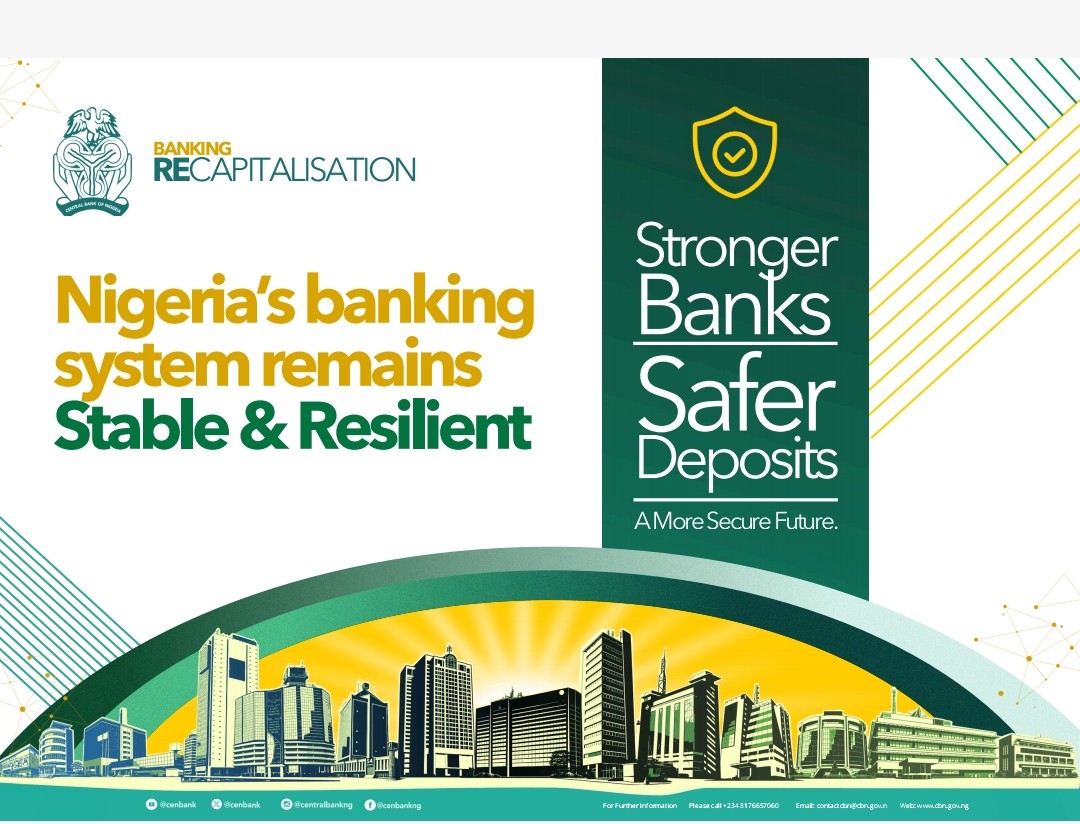 Adebayo explained that the banking sector operates under stricter standards because banks manage public trust and depositors’ funds.
“When a bank begins to show signs of capital erosion, rising exposure to bad loans, and dependence on regulatory forbearance, the regulator has a responsibility to act decisively,” he stated.
He added that the ongoing appeal process would ultimately clarify the constitutional and procedural dimensions of the case, but stressed that the financial indicators already in public discussion suggest serious regulatory concerns existed.
“The legal process must run its course, but the public should understand that preserving the stability of a financial institution serving millions of Nigerians is not a matter regulators can treat casually,” Adebayo noted.
Legal Battle Heads to Appeal Court
The legal dispute now shifts to the Court of Appeal, where both the CBN and Union Bank are challenging aspects of the Federal High Court ruling.
The appeals reportedly question whether the plaintiffs possessed the legal standing to sue, whether the action was statute-barred due to delayed filing, and whether the CBN acted within the powers granted under the Banks and Other Financial Institutions Act 2020 and the CBN Act 2007.
Despite the controversy, Union Bank continues operations nationwide under regulatory supervision, serving nearly eight million customers through hundreds of branches across Nigeria.
For many industry watchers, the central issue remains whether the intervention was an abuse of power or a necessary move to stabilise a strategically important financial institution before more serious systemic damage occurred.
As Nigeria’s appellate courts prepare to weigh the legal merits of the dispute, analysts insist the broader lesson may ultimately reshape future conversations around corporate governance, acquisition financing, banking supervision, and financial sector transparency in Africa’s largest economy.
Experts including Dr Akin Olaniyan, Celestine Ukpong, Dr Ejike Nduilo, and Peter Adebayo FCA react to the Union Bank controversy, backing CBN’s intervention as debate over banking stability and governance intensifies.
Discover more from Ameh News
Subscribe to get the latest posts sent to your email.