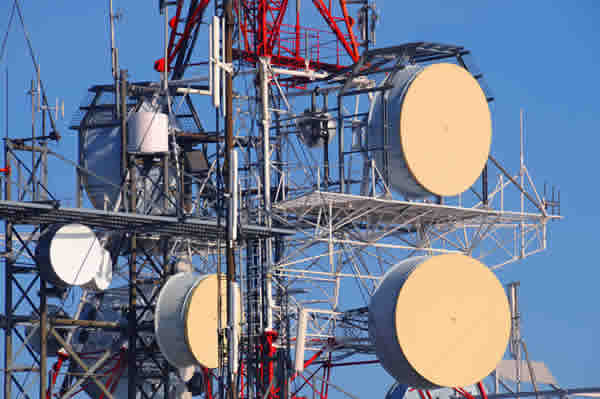
 Nigeria’s telecommunications sector contributed ₦4.7 trillion to real GDP in Q1 2026, cementing its position as one of the fastest-growing pillars of the country’s digital economy, official and industry data show, even as economists and regulators warn that underlying financial inefficiencies are eroding the gains from rapid digital expansion.
The sector’s performance, driven by surging voice traffic and accelerating mobile data consumption, reflects Nigeria’s deepening reliance on digital infrastructure for commerce, banking, entertainment and public services.
However, officials and market participants say the growth narrative masks a widening structural gap in Africa’s digital economy—estimated by fintech industry analyses at around $30 billion annually in lost or delayed liquidity flows, largely due to fragmented payment systems, currency conversion bottlenecks and inefficient cross-border settlement rails.
“We are scaling connectivity faster than we are scaling settlement systems” — central bank adviser
A senior policy adviser at a West African central bank, speaking on condition of anonymity due to lack of authorisation to comment publicly, said digital adoption had significantly outpaced financial infrastructure development.
“We are scaling connectivity faster than we are scaling settlement systems,” the adviser said.
“The telecoms sector is now systemically important, but the payment architecture across markets remains fragmented.”
The official warned that while mobile penetration and data usage continue to rise, the inability to move capital across borders efficiently is creating “structural drag” on digital commerce.
Telecom boom driven by data consumption surge
Nigeria’s telecom expansion has been underpinned by a sustained increase in mobile broadband usage and digital service adoption, according to sector data and operator disclosures.
MTN Nigeria reported strong quarterly growth in data revenues earlier this year, citing rising smartphone penetration and increased data consumption per user as key drivers of performance.
An industry executive at one major telecom operator described the trend as “a consumption-led boom rather than a productivity-led transformation.”
“People are online more than ever, but monetisation of digital activity is not keeping pace with usage,” the executive said.
Economists flag “efficiency gap” in digital economy
Economists say the headline growth figures obscure inefficiencies in how digital value is converted into real economic output.
Dr Akin Olaniyan, a Lagos-based economist and leadership lecturer at the Lagos Business School, said Nigeria’s digital economy is expanding on “strong demand fundamentals” but remains constrained by systemic frictions.
“The telecom sector is delivering measurable GDP contributions,” Olaniyan said.
“But GDP does not capture the cost of delayed settlements, FX inefficiencies, or cross-border liquidity constraints. That is where the leak is happening.”
He added that Africa’s digital economy risked becoming “data-rich but liquidity-poor” if payment infrastructure does not evolve in tandem with connectivity.
Regulators acknowledge pressure on financial rails
A senior official at Nigeria’s communications regulatory environment said the telecom sector had effectively become “critical national infrastructure,” but acknowledged that coordination with financial regulators remained a challenge.
“We regulate connectivity, spectrum and service quality,” the official said.
“But the financial layer that sits on top of telecom infrastructure is increasingly where the real economic bottlenecks are emerging.”
The official added that inter-agency collaboration between telecom and financial authorities was “still evolving” as digital commerce scales rapidly.
Fintech response: targeting the “missing layer”
Against this backdrop, fintech infrastructure firms are attempting to address what they describe as the “missing middle” of Africa’s digital economy.
Anthony Oduu, co-founder of cross-border payments platform Verto, said the core challenge is not connectivity, but liquidity mobility across fragmented markets.
“Africa has solved the problem of access to digital services,” Oduu said in a statement shared with reporters.
“The next constraint is not connectivity—it is the movement of money across borders in real time.”
Verto operates infrastructure designed to facilitate cross-border settlement and foreign exchange liquidity for businesses operating across multiple African jurisdictions.
Structural mismatch between data and money flows
Analysts say the divergence between digital activity and financial settlement capacity is becoming more pronounced as Nigeria’s telecom sector expands.
While data flows are instantaneous, payment settlement across African markets often remains delayed, fragmented, or dependent on intermediated FX channels.
A Lagos-based fintech analyst described the situation as “a dual-speed economy.”
“Data moves at internet speed,” the analyst said.
“Money still moves at banking speed—sometimes slower across borders.”
Outlook
Nigeria’s telecom sector is expected to remain a key driver of GDP growth in 2026, supported by rising demand for mobile internet services and continued expansion of digital platforms.
However, economists and fintech executives warn that without parallel upgrades to payment infrastructure and cross-border settlement systems, a significant portion of Africa’s digital economic potential could remain unrealised.
As one central bank adviser put it:
“The risk is not that Africa is not growing digitally. The risk is that it is growing faster than it can settle.”
Nigeria’s telecom sector contributed ₦4.7 trillion to Q1 2026 GDP, but regulators and economists warn that a $30 billion Africa-wide liquidity gap in digital payments is limiting the full impact of rapid digital expansion.
Discover more from Ameh News
Subscribe to get the latest posts sent to your email.