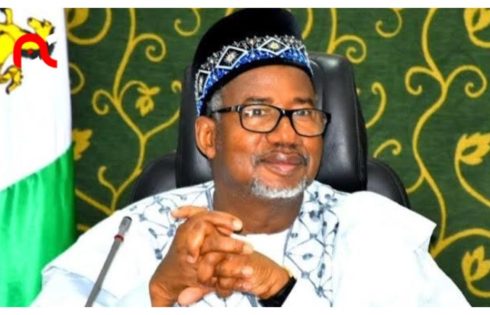
 As political parties conclude their governorship primaries, the battle to succeed Bala Mohammed in 2027 is gradually taking shape.
Mohammed is the current governor of Bauchi state.
Although five candidates have emerged from the major political parties in the state, political observers believe the contest is increasingly narrowing to a three-horse race involving Yakubu Adamu of the All Progressives Movement (APM), former governor Mohammed Abdullahi Abubakar of the All Progressives Congress (APC), and Senator Shehu Buba Umar of the Peoples Redemption Party (PRP).
The candidate of the African Democratic Congress (ADC), Haliru Dauda Jika, and the Peoples Democratic Party (PDP) (Wike-led faction), Usman Adamu Sufi, remain in contention. However, their parties are yet to demonstrate the statewide structure and momentum required to challenge the leading trio.
Yakubu Adamu
Yakubu Adamu enters the race with what many analysts consider one of the strongest political advantages — the backing of Governor Bala Mohammed.
The immediate past Commissioner of Finance is banking on the incumbency influence and the growing agitation for power rotation to Bauchi North.
His emergence followed Governor Bala Mohammed’s defection to the APM alongside a significant portion of his political structure.
From elected officials and party executives to grassroots mobilisers across the state’s 20 local government areas, the governor’s movement has effectively transformed the APM into a major political force.
For many observers, the greatest strength of Yakubu Adamu’s candidacy lies not necessarily in the party itself but in the extensive political machinery behind him.
Bala Mohammed remains one of the most influential political figures in Bauchi State and is expected to deploy his vast network to rally support for the APM candidate.
Beyond the advantage of structure, Yakubu Adamu is also expected to benefit from increasing calls for a power shift to Bauchi North.
The zone has not produced a governor in many years, fuelling sentiments among political stakeholders that power should rotate for equity, balance, and inclusiveness. Should the campaign gain wider acceptance across the state, it could significantly boost his electoral prospects.
However, the APM candidate is not without challenges.
Apart from allegations by the Economic and Financial Crimes Commission (EFCC), Yakubu Adamu faces another hurdle many political analysts consider significant.
Since the return to democratic rule in 1999, no sitting governor in Bauchi State has successfully installed a preferred successor at the end of his tenure.
The state’s political history has consistently favoured change over continuity.
Former governor, Ahmadu Adamu Mu’azu completed two terms between 1999 and 2007 under the PDP but failed to hand over to a successor of his choice, as Isa Yuguda of the ANPP emerged victorious in the 2007 election.
Likewise, Isa Yuguda, who governed the state from 2007 to 2015, could not transfer power to his preferred candidate, as Mohammed Abdullahi Abubakar of the APC won the governorship election in 2015.
Whether Bala Mohammed can break that political jinx may become one of the defining questions of the 2027 race.
Mohammed Abubakar
For the All Progressives Congress (APC), the emergence of Mohammed Abdullahi Abubakar has exposed deep cracks within the party.
The governorship primary triggered the exit of key stakeholders, including Shehu Buba Umar, while many members remain dissatisfied with the process.
Several party members have reportedly defected over allegations of injustice, candidate imposition, and lack of internal democracy.
Aggrieved stakeholders and aspirants accused the APC leadership of sidelining due process during the conduct of governorship, National Assembly, and State Assembly primaries.
They alleged that no genuine direct primaries were conducted and claimed candidates emerged through what they described as imposition rather than democratic selection.
Some groups also accused the Coordinating Minister of Health and Social Welfare, Muhammad Ali Pate, and former governor Isa Yuguda of influencing the emergence of Mohammed Abdullahi Abubakar as the party’s governorship candidate.
Among those who exited the party was the member representing Jama’are/Itas-Gadau Federal Constituency, Hon. Rabilu Bala Kashuri, who resigned following his unsuccessful bid for re-election.
Similarly, Katagum Federal Constituency aspirant, Hon. Tijjani Mohammed Aliyu, accused the party of conducting a flawed primary characterised by predetermined results and violations of party guidelines.
Another APC chieftain, Hon. Abubakar Dahuwa Abdulkadir, also quit the party, describing the process as unfair and undemocratic.
In the same vein, Hon. Sulaiman Sunusi Lalaye, an aspirant for the Bauchi State House of Assembly, cited persistent irregularities and injustice as reasons for leaving the party.
Political tensions escalated further when Senator Shehu Buba Umar dumped the APC for the PRP to pursue his governorship ambition.
Unless urgent reconciliation efforts are undertaken, the APC may struggle to maintain its competitiveness.
Mohammed Abdullahi Abubakar and Minister Muhammad Ali Pate are expected to spearhead efforts to reunite aggrieved members and restore confidence within the party.
APC’s success in healing its internal divisions could ultimately determine how formidable the party remains ahead of the election.
Shehu Buba
Shehu Buba Umar remains one of the strongest contenders in the race owing to his grassroots appeal, political audacity, and growing influence across Bauchi South, the state’s most populous senatorial district.
His defection from the APC and emergence as the PRP governorship candidate have injected fresh momentum into the contest.
Unlike many politicians who depend heavily on party structures, Shehu Buba’s strength is largely rooted in his personal political brand and growing popularity among grassroots supporters.
He enjoys significant influence in Bauchi South, widely regarded as the state’s biggest electoral battleground due to its voting strength.
A commanding performance in the zone could place him in a strong position as the campaign intensifies.
The senator is also expected to benefit from protest votes by APC members dissatisfied with the outcome of the party’s primary election.
For many observers, his candidacy offers a viable alternative for voters seeking change without aligning with the ruling APM.
His role as Chairman of the Senate Committee on National Security and Intelligence has further enhanced his visibility and projected him as a politician with influence beyond Bauchi State.
Nevertheless, significant challenges remain.
The allegation linking him to banditry during his political disagreement with Governor Bala Mohammed is expected to resurface during campaigns. Although the claim was denied and never substantiated, opponents may seek to weaponise it politically.
More importantly, the PRP faces the daunting task of building a statewide structure capable of matching the organisational strength of both the APM and APC.
Political popularity may attract attention, but elections are often won through effective grassroots mobilisation, polling unit management, and voter turnout operations.
For Shehu Buba, the real test will be translating growing public sympathy into a formidable electoral machine.
Discover more from Ameh News
Subscribe to get the latest posts sent to your email.