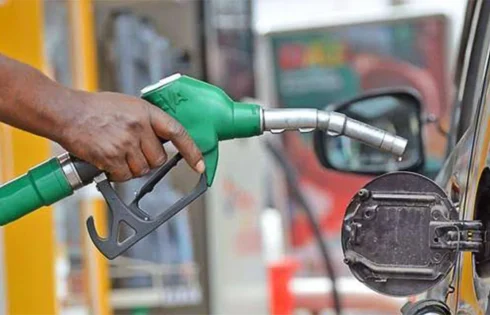
 Independent petroleum marketers on Monday pushed for the restoration of importation rights and projected that the pump price of Premium Motor Spirit, popularly called petrol, could fall below N800 per litre as the Federal Government intensified efforts to force down the cost of petrol.
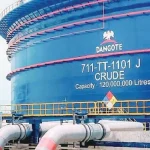
The development came as the Federal Government met with major operators in the downstream petroleum sector, including representatives of the Dangote Petroleum Refinery, over what it described as the disconnect between falling global crude oil prices and the relatively high pump prices of petrol in the domestic market.
The stakeholders’ meeting on cost-reflective pricing of PMS, held at the headquarters of the Nigerian Midstream and Downstream Petroleum Regulatory Authority in Abuja, brought together the Federal Competition and Consumer Protection Commission, the Independent Petroleum Marketers Association of Nigeria, the Major Energy Marketers Association of Nigeria, the Depot and Petroleum Products Retailers Association of Nigeria, the Depot and Petroleum Products Marketers Association of Nigeria, the Nigerian Association of Road Transport Owners, and other major operators in the sector.
Also in attendance were chief executives and representatives of TotalEnergies, Eterna Plc, Matrix Energy Group, officials of the NMDPRA, and delegates from the Dangote refinery.
The PUNCH reports that petrol prices have remained a major source of hardship for households and businesses in Nigeria, with pump prices surging following the spike in global crude oil prices triggered by tensions in the Middle East, particularly between Iran and the United States.
Although crude prices have moderated after diplomatic efforts eased the tensions, the reduction has yet to be fully reflected in domestic petrol prices, prompting the Federal Government to convene a stakeholders’ meeting aimed at driving a fair reduction in pump prices.
The National President of the Independent Petroleum Marketers Association of Nigeria, Abubakar Maigandi, urged the government to permit independent marketers to import petroleum products directly, saying greater competition would ultimately reduce prices.
Maigandi also called for support for local refineries, particularly the Dangote Petroleum Refinery, while stressing the need to allow marketers to import products whenever necessary.
“Our major concern is that if products are to be distributed, let IPMAN buy products directly from the Dangote refinery and then, if we request importation, let IPMAN import by themselves. What we are trying to encourage is our local refinery. Let the government allow the local refinery to function properly and assist those who intend to refine products too,” he said.
The IPMAN president assured Nigerians that independent marketers were prepared to slash petrol prices significantly and projected that pump prices could fall below N800 per litre under the right market conditions.
“The price of the product is coming down bit by bit. Even when the price was increased, it was not increased at the same time. Likewise, now, as the price is coming down, we too are bringing the price down. If you check prices all over the country, you will see that independent petroleum marketers are reducing their prices gradually. Presently, we have reduced by N125 per litre nationwide,” he stated.
Miagandi added, “At any time when there is a reduction in price, we are ready to reduce the price to even below N800 per litre, not even N900. It depends on the way we buy the product from the private depot owners and the Dangote refinery.
“I thank God that the Dangote refinery has accepted independent petroleum marketers to start purchasing products directly. It is a plus, and very soon the populace will see the change in terms of price.”
The renewed push for importation comes amid an intense pricing battle in the downstream sector following the commencement of large-scale production at the Dangote refinery and the deregulation of the petrol market
Speaking to journalists after a closed-door session with the stakeholders, the Minister of State for Petroleum Resources (Oil), Senator Heineken Lokpobiri, said the government remained concerned that current petrol prices were not reflective of prevailing crude oil prices in the international market.
According to him, the government had engaged marketers in frank discussions aimed at ensuring that the reduction in global crude prices translates into lower pump prices for Nigerians.
Lokpobiri said, “The engagements are ongoing. We had very fruitful and frank discussions with the marketers and the leaders of the downstream sector of the petroleum industry with a view to driving down the price of PMS.
“My own opinion is that the petrol prices are not cost-reflective; they are not reflective of the cost of crude oil. But the marketers are also saying that crude oil prices are still high.
“In fact, somebody told us right there that the crude oil price for a month is still over $90 per barrel. But we are saying that when Brent crude was over $118 per barrel, the price was rapidly going up. Now that the price has come down drastically, why has petrol not come down correspondingly? That is a worry.”
The minister said the government had communicated the concerns of consumers to operators and directed them to return with practical measures that would lead to lower petrol prices.
“We have said that these are the issues of concern to the government. They have also said they will go back and think about what they can put together with a view to addressing the issue of the high cost of PMS that is not reflective of the price of crude in the market.
“We told them the concern of the Nigerian consumer, and they have also said they will go back and think of what concrete steps can be taken with a view to ensuring that the price drops,” he stated.
On when Nigerians should expect a reduction in petrol prices, Lokpobiri said discussions were still ongoing and declined to give a deadline. “As we called you today, we will call you as soon as possible. But the important thing is that discussions are ongoing,” he added.
Before the closed-door meeting, Lokpobiri warned petroleum marketers against using profits from previously acquired expensive fuel inventories as justification for maintaining high petrol prices, insisting that the benefits of lower replacement costs must be passed on to consumers.
The government said the continued disconnect between falling international crude oil prices and domestic petrol prices had become a source of concern, warning petroleum marketers against sustaining high pump prices of Premium Motor Spirit despite declining global crude prices and insisting that Nigerians should enjoy the benefits of lower replacement costs in a deregulated market.
He insisted that temporary gains realised from inventories purchased when crude oil prices were higher should not become the basis for sustaining elevated pump prices after global oil prices had declined.
“I am aware that PMS pricing is influenced by several factors beyond crude oil prices, but it is equally important to distinguish between genuine replacement cost and windfall gains arising from inventory management.
“Temporary gains realised from inventories acquired at higher prices should not become the basis for sustaining elevated pump prices after replacement costs have declined. As inventories are replenished at lower costs, the benefits of those lower costs should be transmitted to consumers in a timely and transparent manner. That is the essence of a competitive and efficiently functioning market,” he stated.
Discover more from Ameh News
Subscribe to get the latest posts sent to your email.